How To Grow & Care For Arrowhead Plant — Everything You Need to Know

How To Grow & Care For Arrowhead Plant — Everything You Need to Know
If you’ve ever wandered through a plant shop and spotted those arrow-shaped leaves in shades of green, cream, pink, and burgundy, you’ve probably met the arrowhead plant. It’s one of those houseplants that quietly does its job without demanding much attention, which is exactly why it’s earned a permanent spot on so many windowsills.
Also known by its botanical name Syngonium podophyllum, the arrowhead plant is a member of the aroid family, related to pothos and philodendron. And like its cousins, it’s forgiving, adaptable, and genuinely fun to watch grow. This guide covers everything you need to know about growing and caring for arrowhead plant, from light and soil to propagation and troubleshooting.
Why Gardeners Love It

There’s something satisfying about a plant that changes its look as it matures. Young arrowhead plants have compact, arrow-shaped leaves that sit close together, but as the plant ages, the leaves get larger and often split into lobed shapes, sometimes even developing a climbing habit.
I’ve grown a handful of these over the years, and what keeps me coming back is how low-key they are. You don’t need a horticulture background to keep one thriving — just consistent, basic care and a little patience.
They’re also incredibly versatile. You can keep them bushy and compact on a shelf, let them trail from a hanging basket, or give them a moss pole and watch them climb. Few houseplants offer that kind of flexibility.
Key Features and Appearance
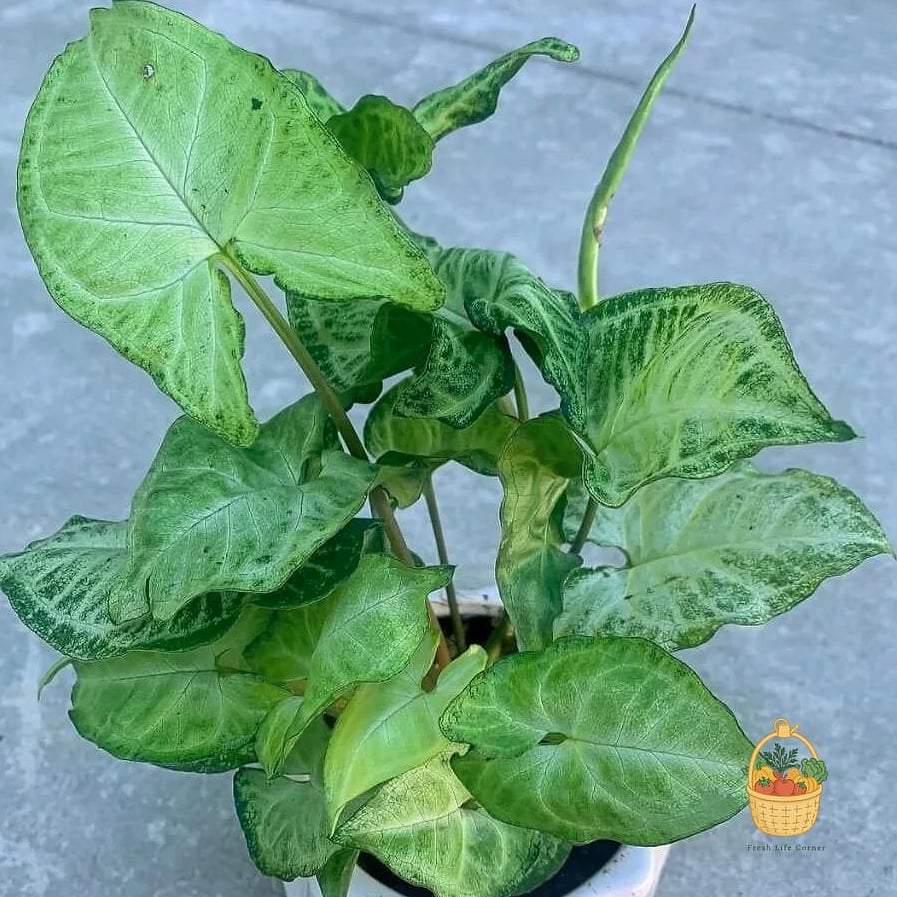
The name “arrowhead” comes from the plant’s signature leaf shape, which resembles the tip of an arrow when young. As the plant matures, though, those leaves can shift dramatically, developing deep lobes or even finger-like segments.
Foliage colors vary widely depending on the variety. You’ll find solid green types, pink-blushed cultivars, silvery variegated forms, and deep burgundy varieties like ‘Maria Red’ or ‘Neon Robusta.’ This diversity is part of the appeal — there’s a Syngonium out there for nearly every aesthetic.
In its juvenile stage, the plant grows in a compact, upright form. Given time and something to climb, it transitions into a vining plant that can reach several feet in length, which is worth knowing if you’re deciding where to place it.
Growing Conditions

Arrowhead plants are native to tropical rainforests in Central and South America, so they’re accustomed to warm, humid conditions with dappled light filtering through a forest canopy. Recreating that environment indoors isn’t difficult, which is part of why this plant has become so popular.
Bright, indirect light is ideal. A spot near an east-facing window or a few feet back from a south- or west-facing one works well. Direct sun can scorch the leaves, especially the variegated varieties, while deep shade tends to slow growth and mute those beautiful colors.
If you’re growing arrowhead plant in a dim office or a room without much natural light, a simple grow light can make a noticeable difference. I’ve used one on a particularly shady bookshelf and watched a formerly leggy plant fill back out within weeks.
Temperature-wise, aim for something between 60 and 85°F. These plants are not frost hardy, so if you keep yours outdoors in summer, bring it in well before nighttime temperatures dip. Outdoors, arrowhead plant only survives year-round in USDA hardiness zones 10 through 12; everywhere else, it’s strictly an indoor grower or a seasonal patio plant.
Humidity helps too, though arrowhead plant is more tolerant of average household air than many other tropical houseplants. That said, if your home runs dry in winter, a pebble tray or occasional misting won’t hurt.
Soil and Watering Needs
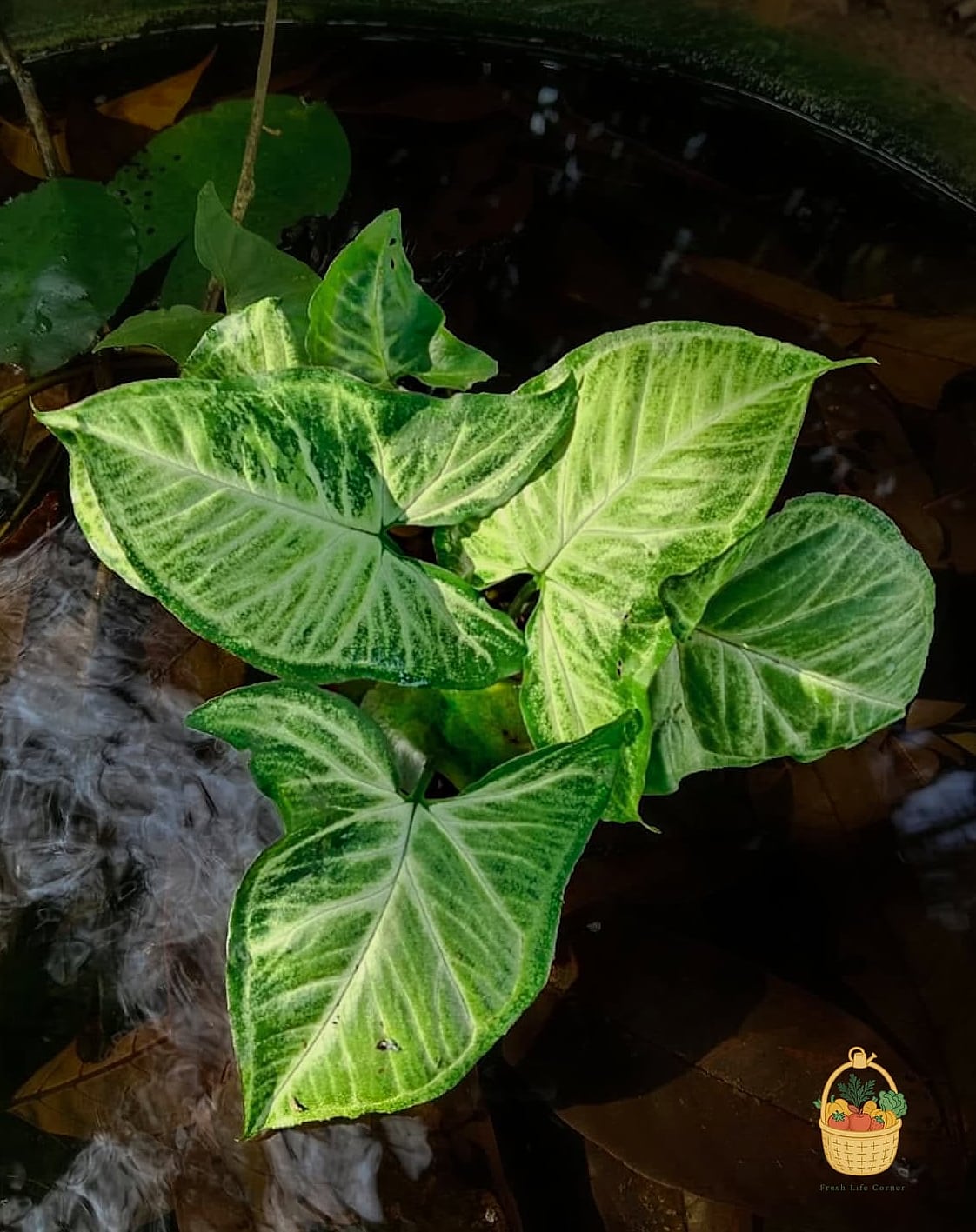
Well-draining soil is non-negotiable with this plant. A standard indoor potting mix amended with perlite works nicely, or you can use an aroid-specific blend if you want to get a little fancier. The goal is soil that holds moisture without staying soggy.
For watering, let the top inch or two of soil dry out between waterings. Stick a finger in the pot, and if it feels dry at that depth, it’s time to water. Overwatering is, honestly, the most common way people run into trouble with this plant — soggy roots invite root rot fairly quickly.
Underwatering shows up as drooping, slightly curled leaves, while overwatering tends to cause yellowing leaves and a mushy stem base. Both are fixable if you catch them early, which is one more reason to check on your plant regularly rather than watering on autopilot.
Choose a container with drainage holes. Terracotta pots are a solid choice because they wick away excess moisture, which is helpful if you tend to water a bit generously.
Fertilizing and Pruning
During spring and summer, when growth is most active, feed your arrowhead plant every four to six weeks with a balanced liquid fertilizer diluted to half strength. Fall and winter growth naturally slows, so it’s fine to cut back on feeding or stop altogether until the following spring.
Slow-release fertilizer pellets mixed into the soil at the start of the growing season are another low-effort option if you don’t want to remember a monthly feeding schedule.
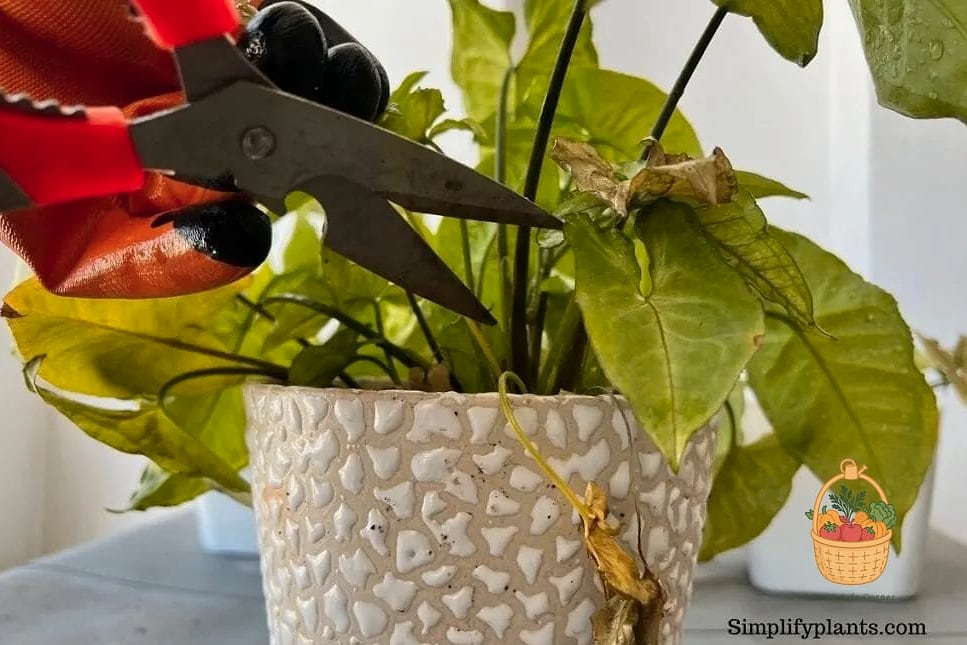
Pruning keeps the plant looking full rather than sparse and leggy. Snip stems just above a leaf node using clean pruning shears, and don’t be shy about it — arrowhead plants respond well to a trim and often push out new growth from the cut point. This is also a great way to control size if your plant starts climbing further than you’d like.
Common Problems and Solutions
Yellowing leaves usually point to overwatering, though it can occasionally signal a nutrient deficiency if the plant hasn’t been fed in a while. Cut back on watering first and see if new growth improves before assuming it’s a fertilizer issue.
Pests like aphids and spider mites can show up occasionally, particularly on stressed or dusty plants. A gentle wipe-down of the leaves every so often helps, and if pests do appear, insecticidal soap or a diluted neem oil spray usually clears things up without much fuss.
Leggy, sparse growth is typically a light issue. If your plant is stretching toward a window with long gaps between leaves, it’s asking for brighter conditions. Move it closer to a light source or introduce a grow light.
Brown, crispy leaf edges often mean low humidity or too much direct sun. Moving the plant slightly further from a bright window and increasing ambient humidity usually solves it.
Propagation Tips

Propagation by cuttings is the easiest way to multiply your arrowhead plant, and honestly, it’s one of the more satisfying propagation projects out there since roots tend to show up fast.
Snip a stem section with at least one node and a leaf or two attached. Place it in a jar of water, node submerged, and set it somewhere with bright, indirect light. Roots typically appear within one to two weeks.
Once roots are a couple of inches long, transplant the cutting into well-draining soil. You can also skip the water step entirely and root cuttings directly in moist soil, though the water method makes it easier to monitor progress.
Propagation by division is another option if your plant has multiple stems growing from the base. Simply separate the root ball into sections, making sure each division has healthy roots and at least one stem, then pot them individually.
Final Thoughts

The arrowhead plant is one of those rare houseplants that rewards you no matter your experience level. Beginners appreciate its forgiving nature, while experienced plant collectors enjoy chasing down rare variegated cultivars and training their plants up moss poles.
Whether you keep it compact on a desk or let it climb and sprawl across a shelf, this plant adapts to how you want to grow it. Give it bright indirect light, well-draining soil, and consistent watering, and it’ll settle in without much drama.
If you’re searching for a low-maintenance plant with genuine personality, the arrowhead plant checks nearly every box — and once you get the hang of its basic needs, you’ll likely find yourself propagating cuttings for every room in the house.