20 Climbing Plants For Pergola And Arbor That Will Transform Your Garden
- Wisteria
- Climbing Roses
- Clematis
- Trumpet Vine
- Honeysuckle
- Star Jasmine
- Climbing Hydrangea
- Passionflower
- Grapevine
- Climbing Hydrangea Vine (Schizophragma)
- Bougainvillea
- Black-Eyed Susan Vine
- Morning Glory
- Sweet Pea
- Climbing Hydrangea Alternative: Akebia
- Climbing Nasturtium
- Kiwi Vine (Hardy Kiwi)
- Climbing Fig
- Dutchman’s Pipe
- Climbing Hops
20 Climbing Plants For Pergola And Arbor That Will Transform Your Garden
There’s something about a pergola dripping with flowers or an arbor wrapped in green that turns an ordinary backyard into a place you actually want to sit in. A bare wooden structure is fine, but give it a season or two with the right climbing plant and it becomes the whole personality of your garden.
The trick is matching the plant to your structure and your patience level. Some climbers are polite and stay where you put them. Others will happily swallow your pergola whole within a few years, which is either exciting or terrifying depending on your temperament. Below are twenty climbing plants for pergola and arbor structures that cover flowers, foliage, fragrance, and even a few edible options, so you can pick what actually fits your garden instead of just what looks nice in a magazine photo.
Wisteria
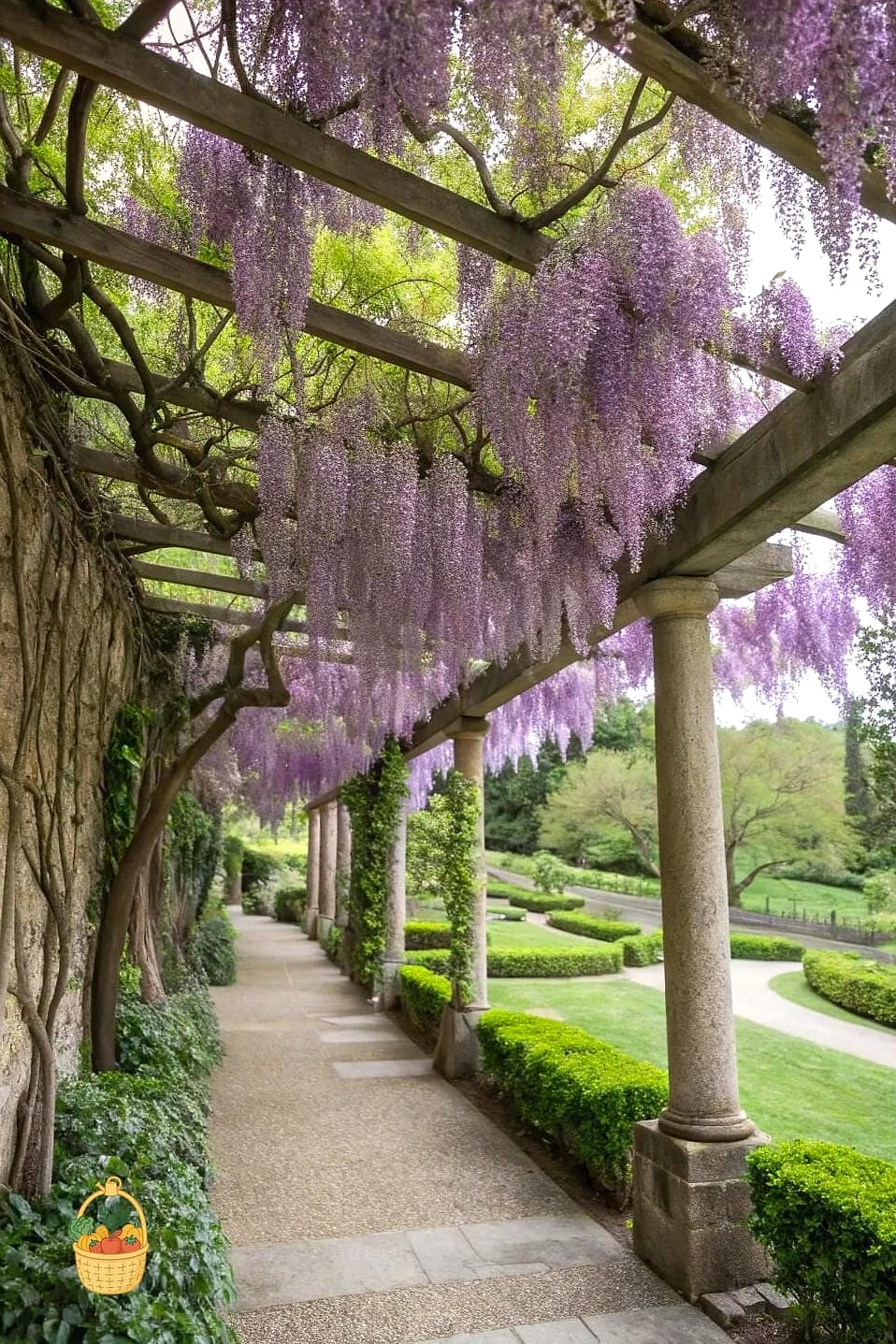
Wisteria is the plant most people picture when they imagine a dream pergola, and for good reason. Those long, cascading clusters of lavender-blue blooms in spring are genuinely showstopping, especially against weathered wood.
It grows best in full sun and well-draining soil, and it’s hardy in USDA zones 5 through 9. Just know going in that wisteria is a vigorous grower with serious woody vines, so your pergola needs to be sturdy, not decorative. Annual pruning is non-negotiable here, or it will take over the structure and everything near it.
Climbing Roses
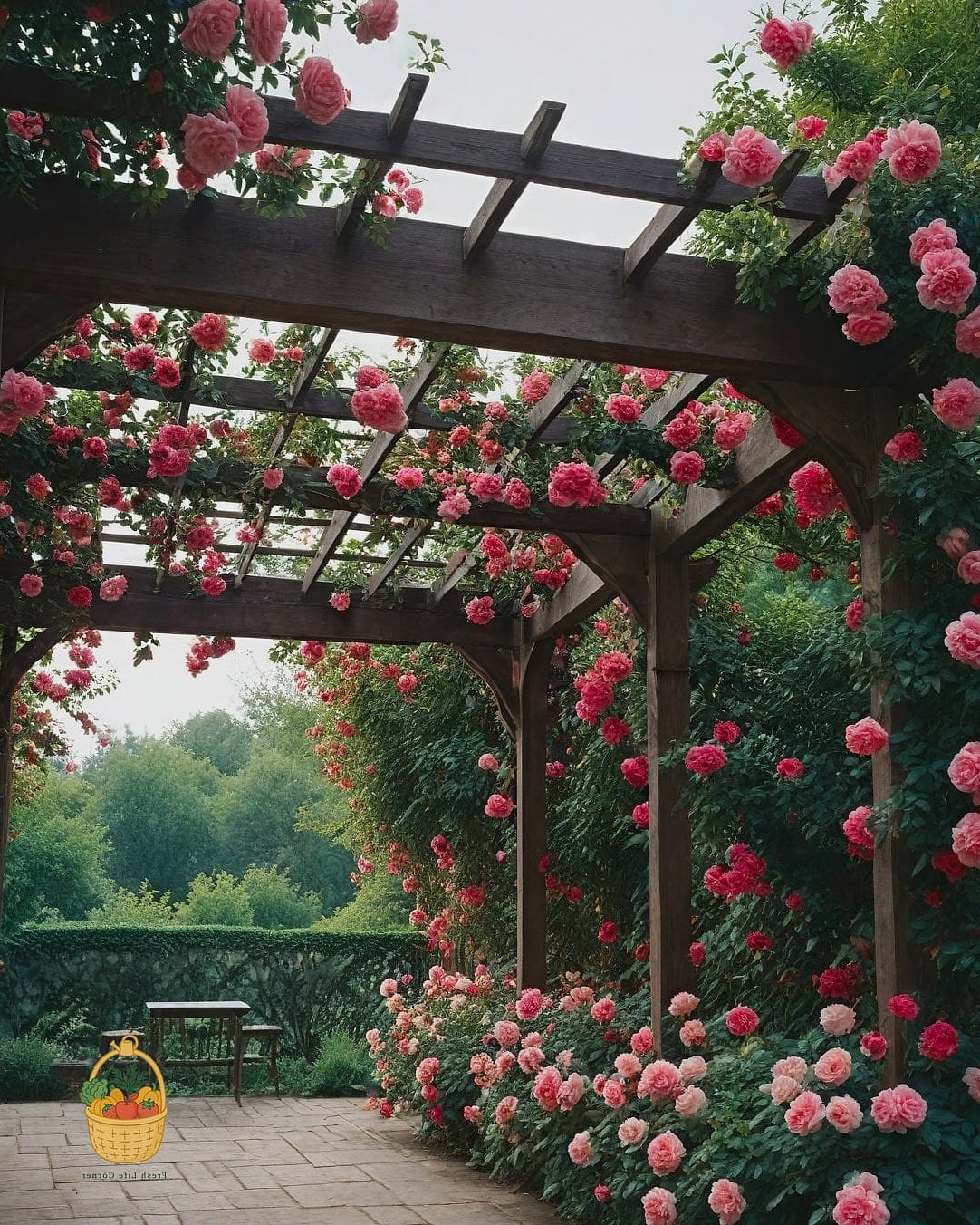
Climbing roses give a pergola that classic, romantic garden look without the aggressive spread of a true vine. Varieties like ‘New Dawn’ or ‘Zephirine Drouhin’ produce repeat blooms through summer.
They want full sun, at least six hours a day, and rich, well-draining soil with regular feeding during the growing season. They’re not self-clinging, so you’ll need to tie the canes to the structure as they grow. Deadheading spent blooms keeps the flowers coming and keeps the plant looking tidy rather than scraggly.
Clematis
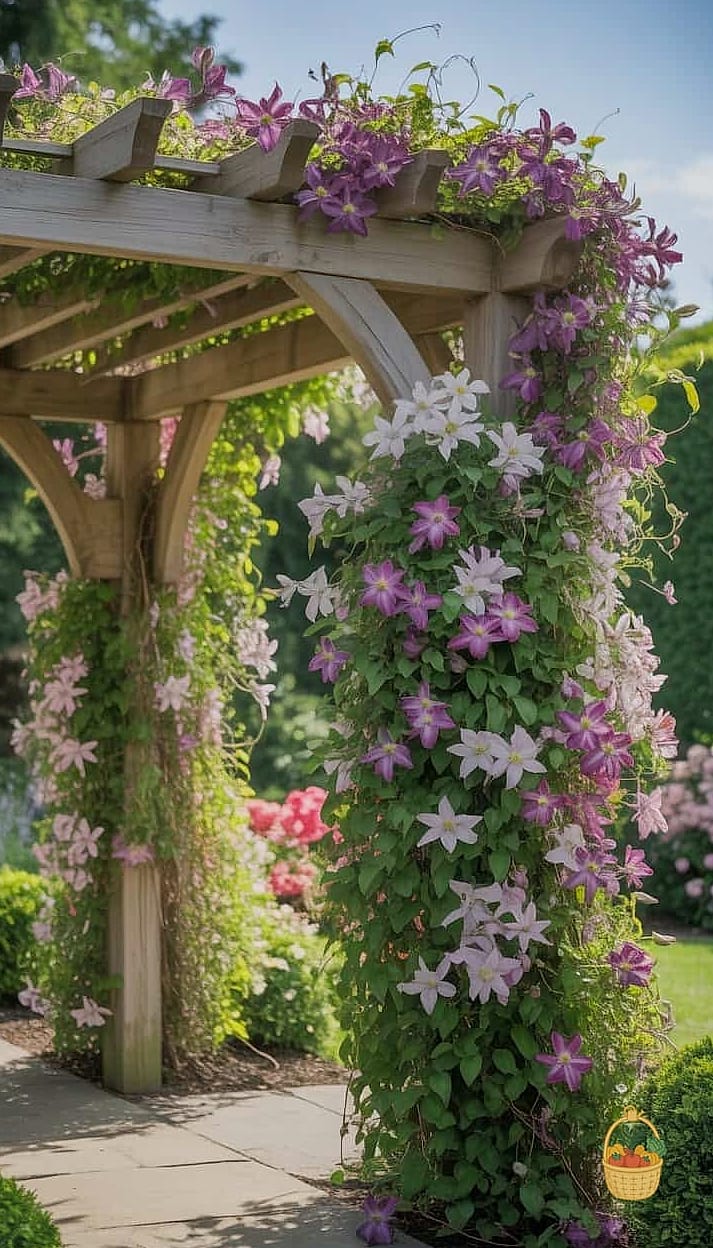
Clematis is one of the best companion plants for a pergola because it pairs beautifully with roses or wisteria, climbing through their branches for a layered, cottage-garden effect. The flowers range from delicate stars to big dinner-plate blooms depending on variety.
It likes full sun on top with cool, shaded roots, which is the classic “head in the sun, feet in the shade” rule gardeners love repeating. Well-draining, slightly alkaline soil suits it well, and it’s hardy in zones 4 through 9. It climbs by wrapping its leaf stems around supports, so thin trellis wire or netting on the pergola helps it get started.
Trumpet Vine
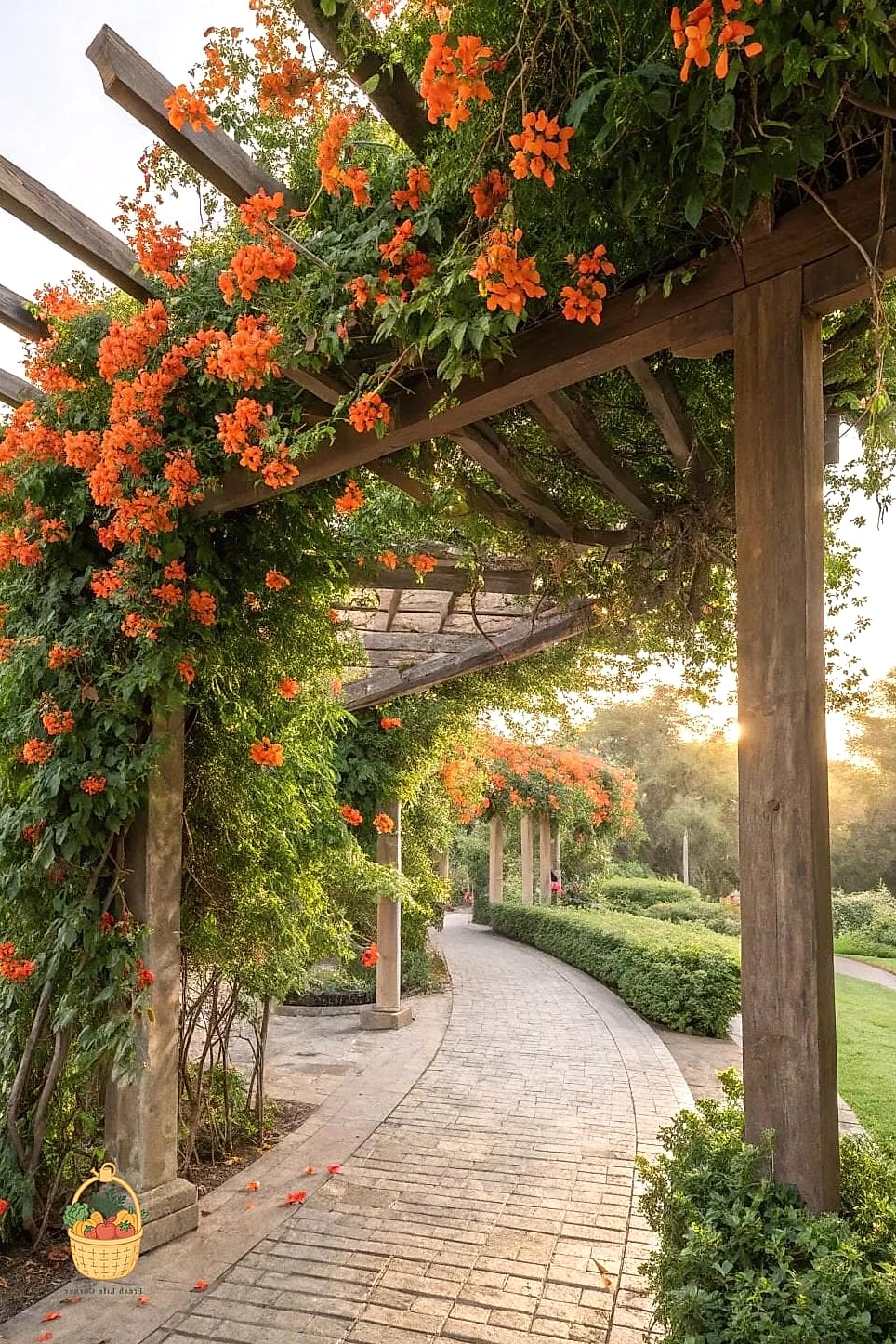
If you want hummingbirds practically moving in, trumpet vine is your plant. The orange-red tubular flowers are a magnet for pollinators all summer long, and this thing grows fast — sometimes alarmingly fast.
It tolerates poor soil and drought once established, thriving in full sun across zones 4 through 9. Fair warning: trumpet vine can become invasive if left unchecked, sending up suckers well beyond where you planted it. This one’s better suited to a solid, freestanding arbor than a pergola attached to your house.
Honeysuckle
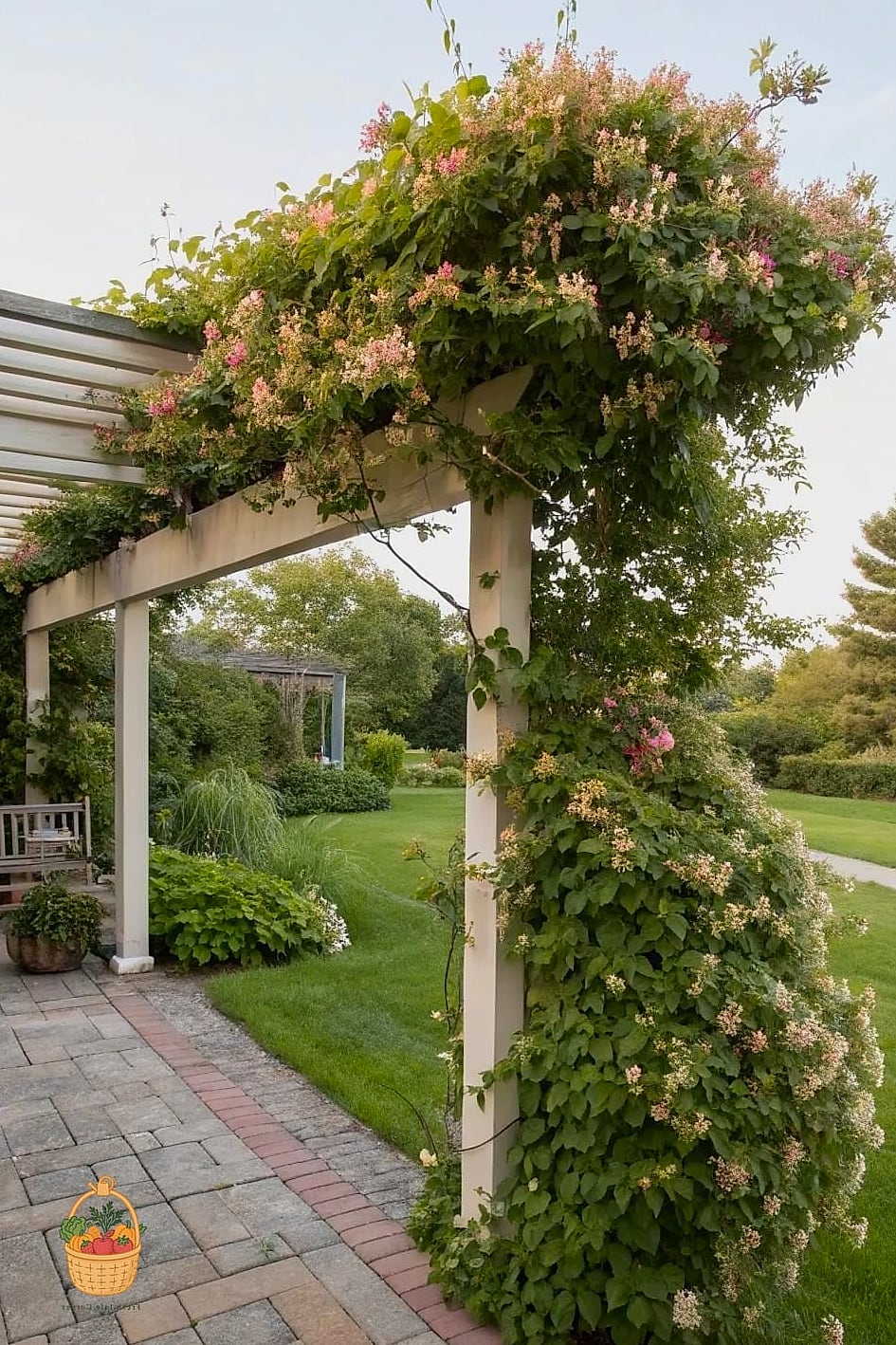
Honeysuckle brings fragrance to the party, and on a warm evening near an arbor, that sweet scent is hard to beat. The tubular flowers in shades of yellow, orange, and pink also draw hummingbirds and butterflies.
Plant it in full sun to partial shade with well-draining soil, and it’ll do well in zones 4 through 9. Stick with native or well-behaved varieties like coral honeysuckle rather than Japanese honeysuckle, which has a reputation for being invasive in a lot of regions.
Star Jasmine
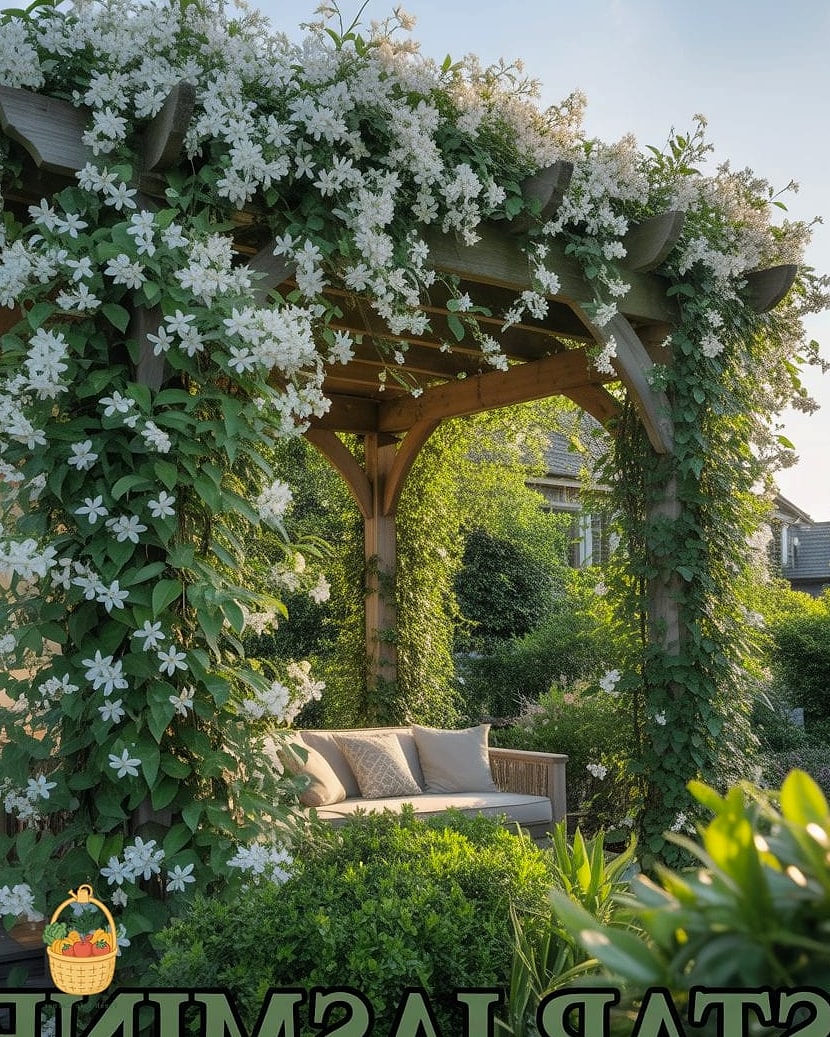
Star jasmine is one of my favorite picks for anyone who wants fragrance without the wild growth habit of trumpet vine or wisteria. The white, pinwheel-shaped flowers smell incredible and the glossy evergreen foliage looks good year-round in warmer climates.
It prefers full sun to partial shade and well-draining, slightly acidic soil, and it’s happiest in zones 8 through 10. It twines naturally around supports, so a slatted pergola gives it plenty to grab onto. It’s also fairly drought tolerant once established, which is a nice bonus.
Climbing Hydrangea
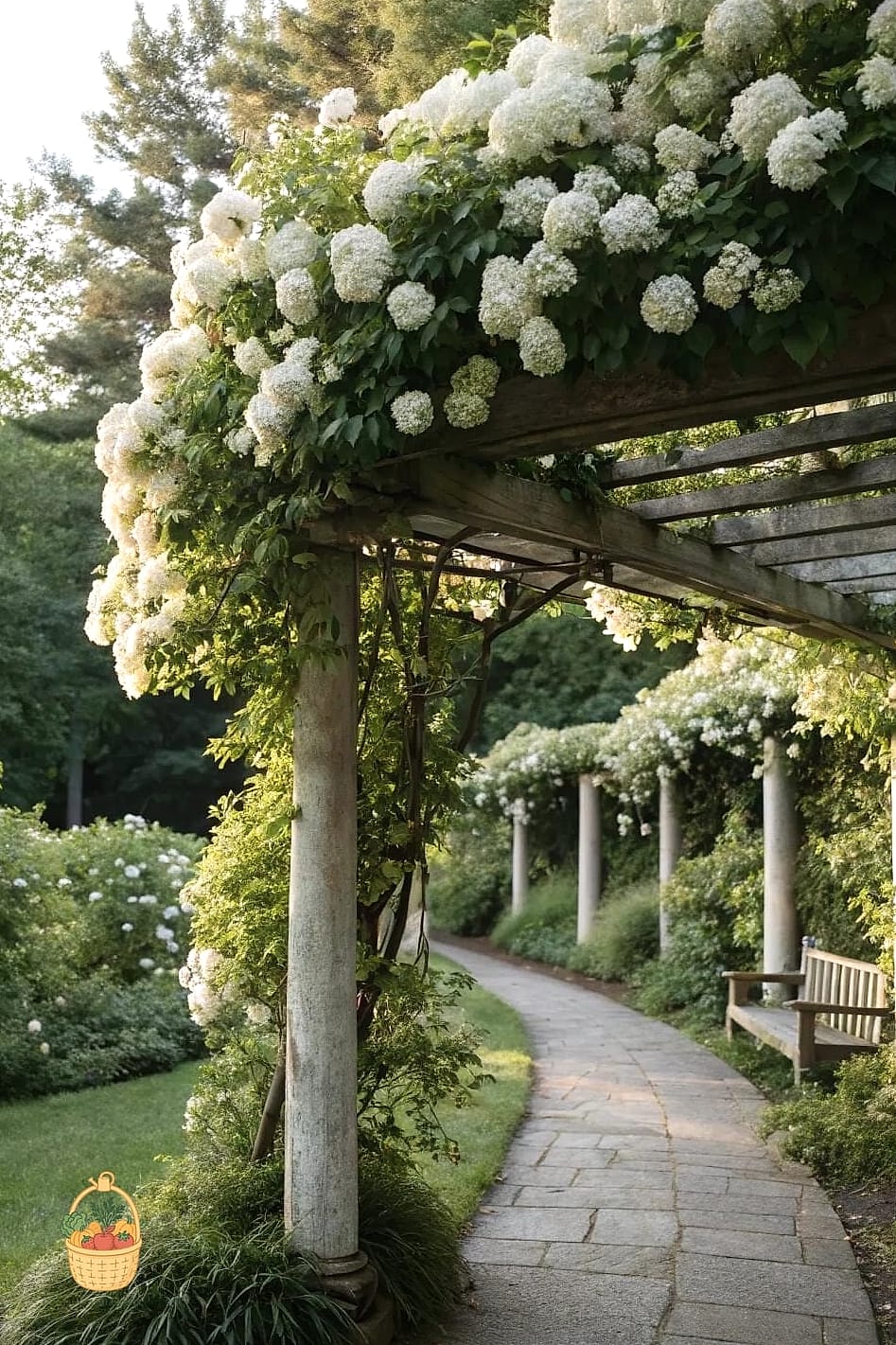
Climbing hydrangea is a slower grower, so it rewards patient gardeners with lacy white flower clusters and attractive peeling bark once it matures. It’s a great choice for an arbor in a shadier corner of the garden where other flowering vines struggle.
It actually prefers partial shade and moist, well-draining soil, thriving in zones 4 through 8. It clings on its own using aerial rootlets, so it doesn’t need much tying or training, just a sturdy structure to climb.
Passionflower
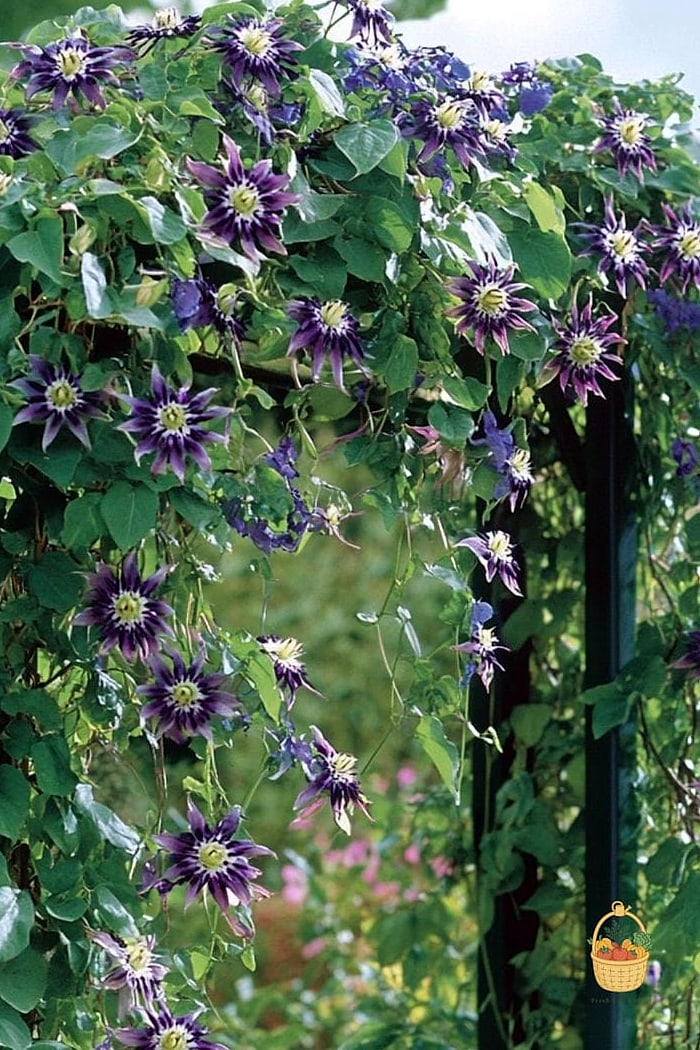
Passionflower produces some of the most unusual, almost alien-looking blooms you’ll find on any climber, and in warmer areas it can also give you edible passion fruit. It’s a fast grower that fills in a pergola quickly.
Full sun and well-draining soil suit it best, and it’s hardy in zones 6 through 10, though it often behaves as an annual further north. It climbs by tendrils, so wire or lattice on your pergola gives it something to grip.
Grapevine
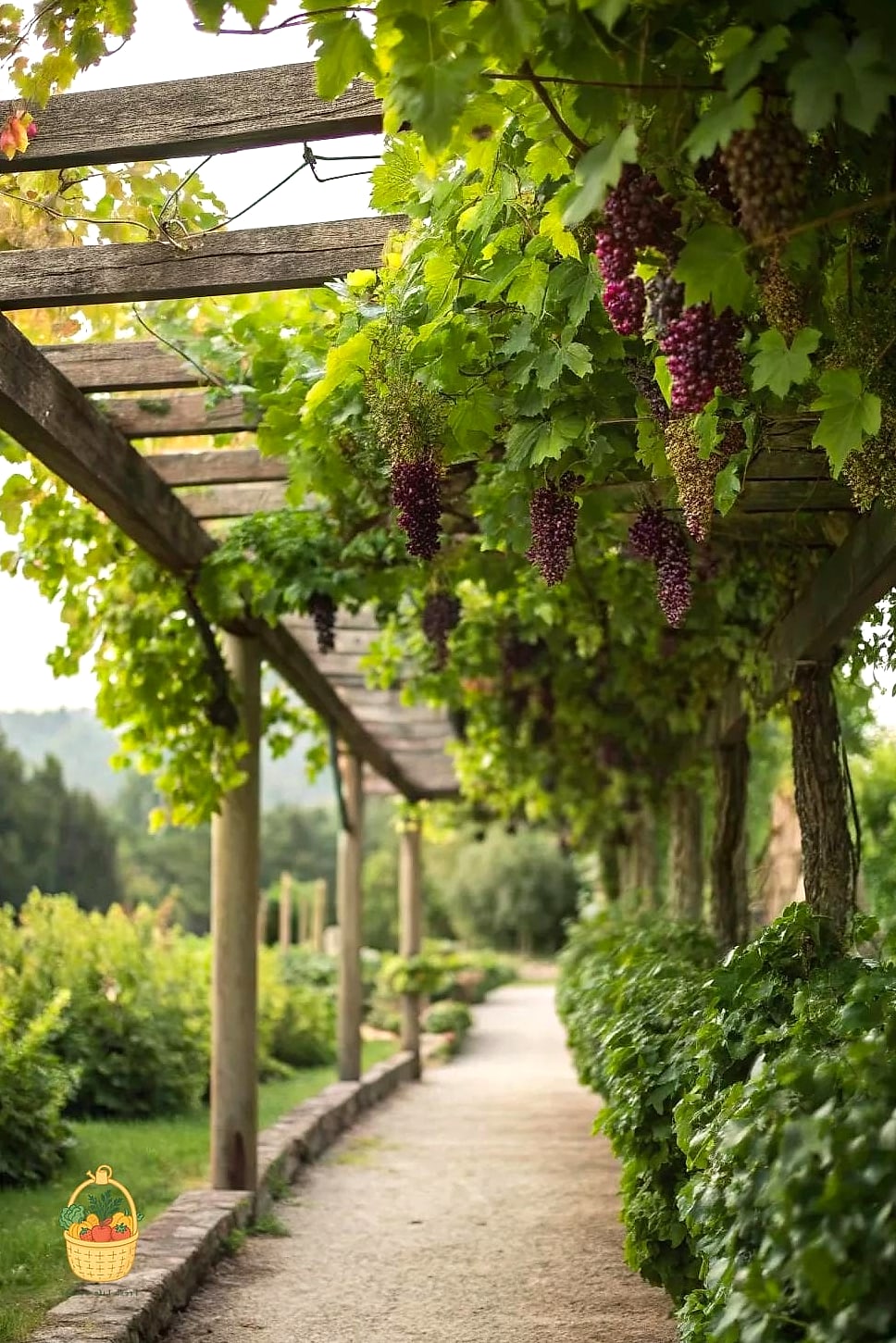
Grapevine on a pergola is a classic for a reason — you get shade, structure, and eventually fruit, plus that Mediterranean courtyard feeling without booking a flight to Tuscany. The broad leaves create dense summer shade that thins out naturally in fall.
Grapes want full sun and well-draining soil, ideally slightly sandy loam, and do well in zones 5 through 9. They’re heavy, so make sure your pergola beams can handle the weight once the vine matures. Annual pruning in late winter keeps fruiting productive rather than just leafy.
Climbing Hydrangea Vine (Schizophragma)
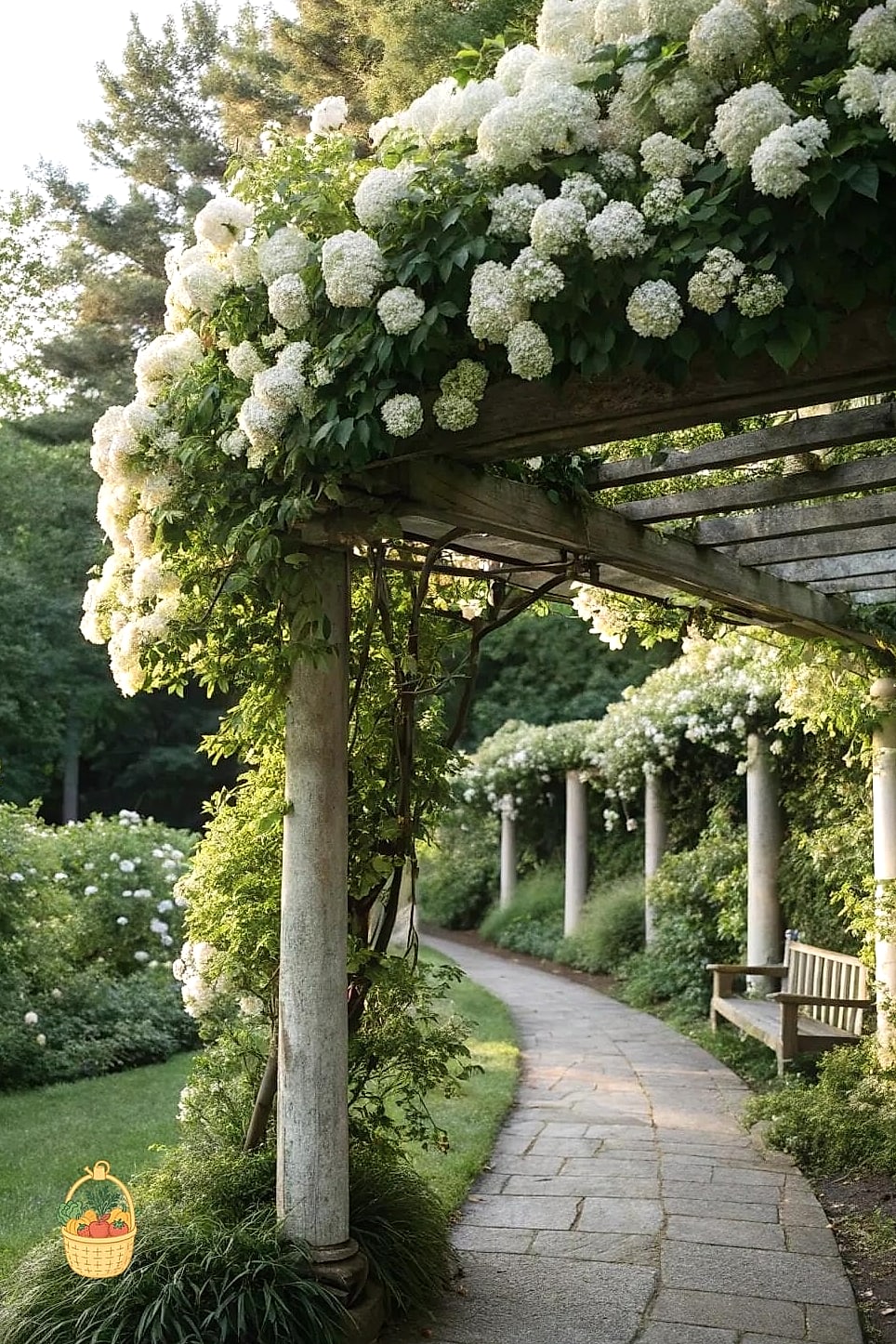
Often confused with true climbing hydrangea, Japanese hydrangea vine has similar lacy white flower clusters but slightly heart-shaped, more textured leaves. It’s a lovely, underused option for gardeners wanting something a bit different.
It grows best in partial shade with rich, moist, well-draining soil in zones 5 through 8. It’s a slow starter, so don’t panic if it seems to sulk for its first year or two before really taking off.
Bougainvillea
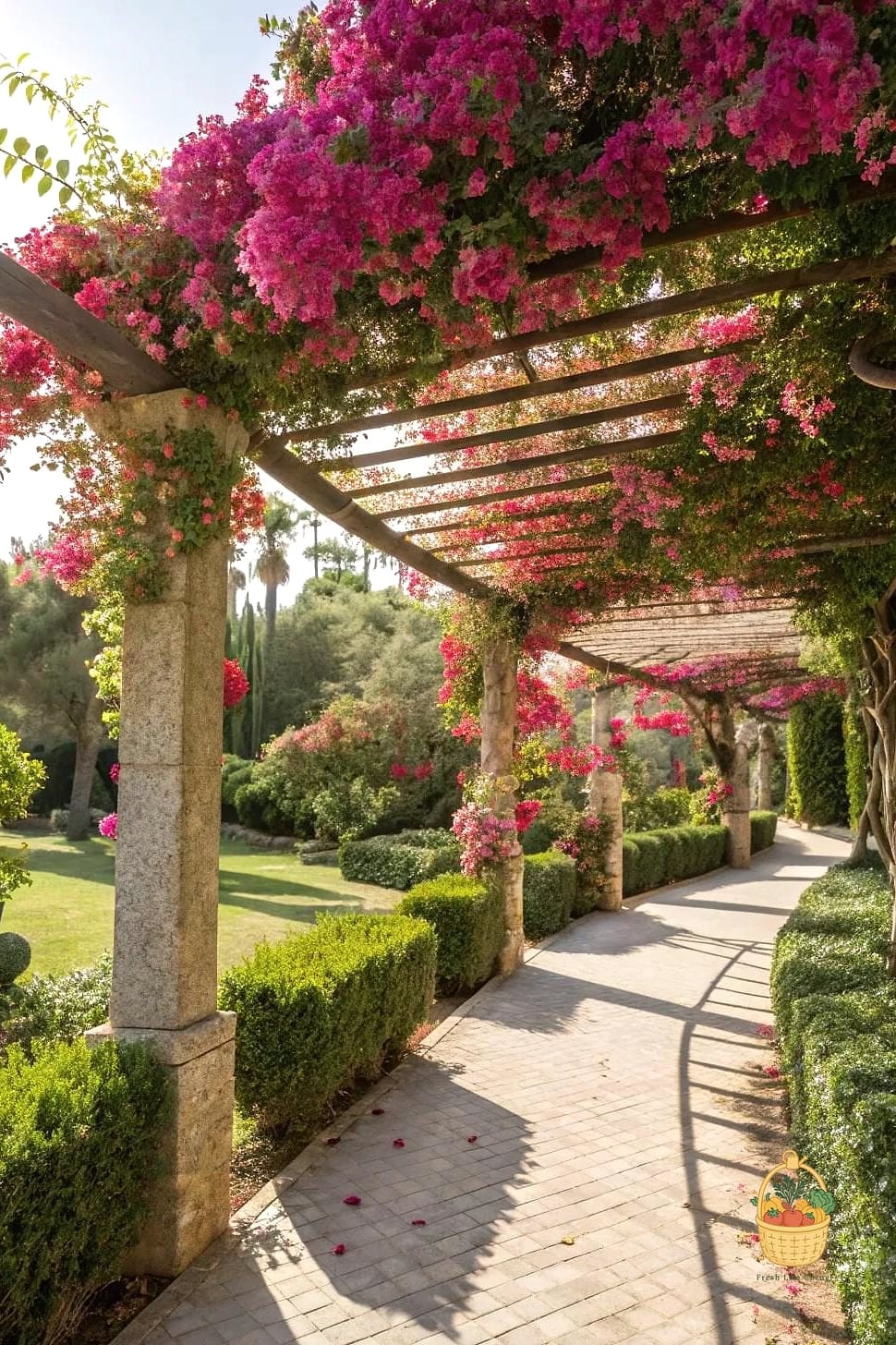
Bougainvillea brings that vibrant, tropical-vacation color to a pergola with papery bracts in magenta, orange, or purple. It thrives in hot climates and honestly looks better the more you neglect it, within reason.
Full sun and well-draining, slightly sandy soil are key, and it does best in zones 9 through 11. It’s drought tolerant once established and actually blooms more when kept a little thirsty. Watch for thorns when training the canes onto your structure.
Black-Eyed Susan Vine
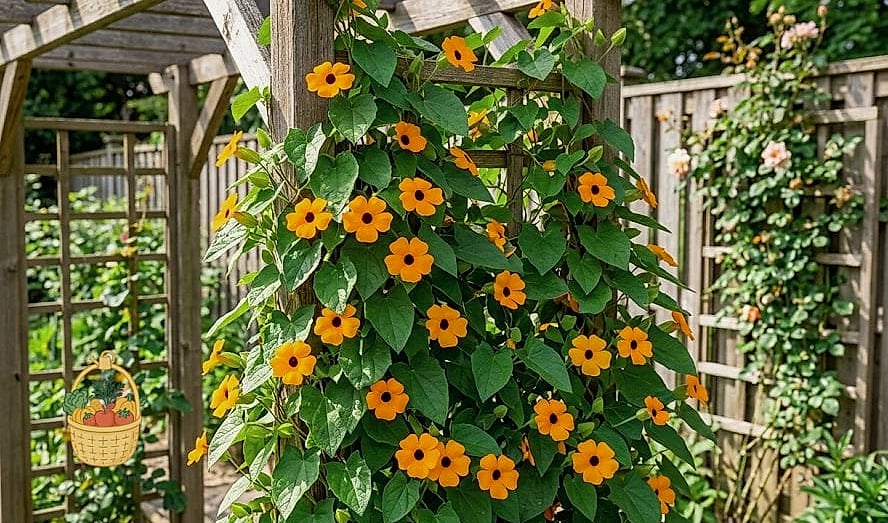
This one’s a bit different from the daisy-like perennial of the same common name — the vine version produces cheerful yellow, orange, or white flowers with dark centers all summer. It’s a fast, easygoing annual in most climates.
It likes full sun to partial shade and average, well-draining soil, and it’s often grown as an annual outside zones 9 through 11. It’s a great beginner-friendly option since it’s forgiving and doesn’t demand much beyond regular watering.
Morning Glory
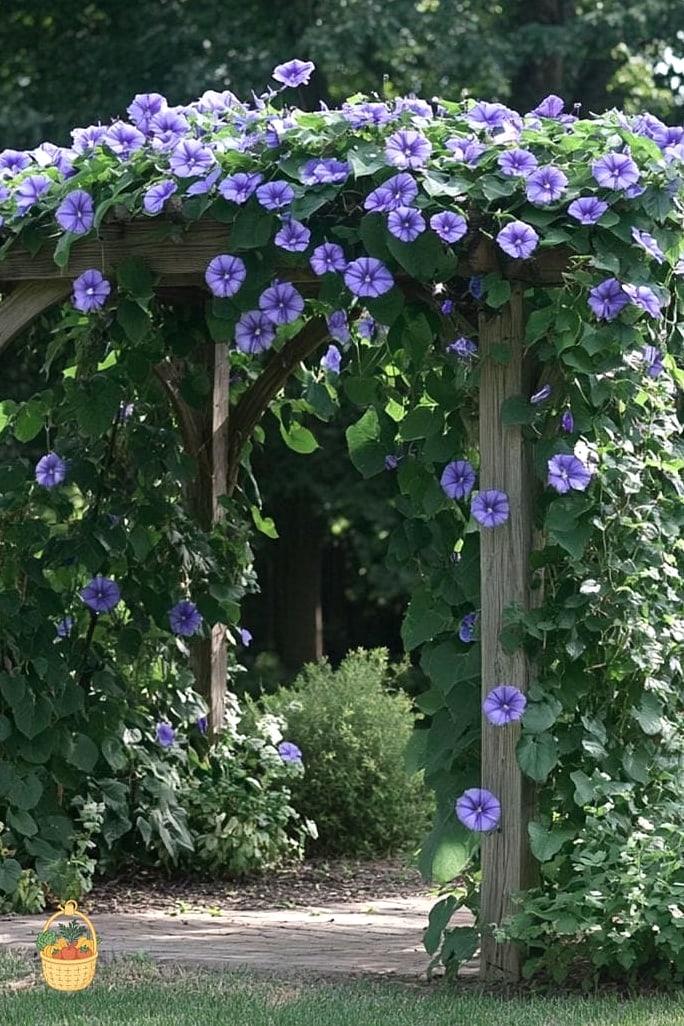
Morning glory is an old-fashioned favorite for arbors, unfurling its funnel-shaped blooms fresh every morning. Blues, purples, and pinks are common, and the flowers close by afternoon, which somehow makes them feel extra special.
It’s easy from seed, preferring full sun and average, well-draining soil, and grows as an annual in most zones. It’s a fast climber by tendril, perfect for filling in a new arbor in a single season, though some varieties can self-seed enthusiastically.
Sweet Pea
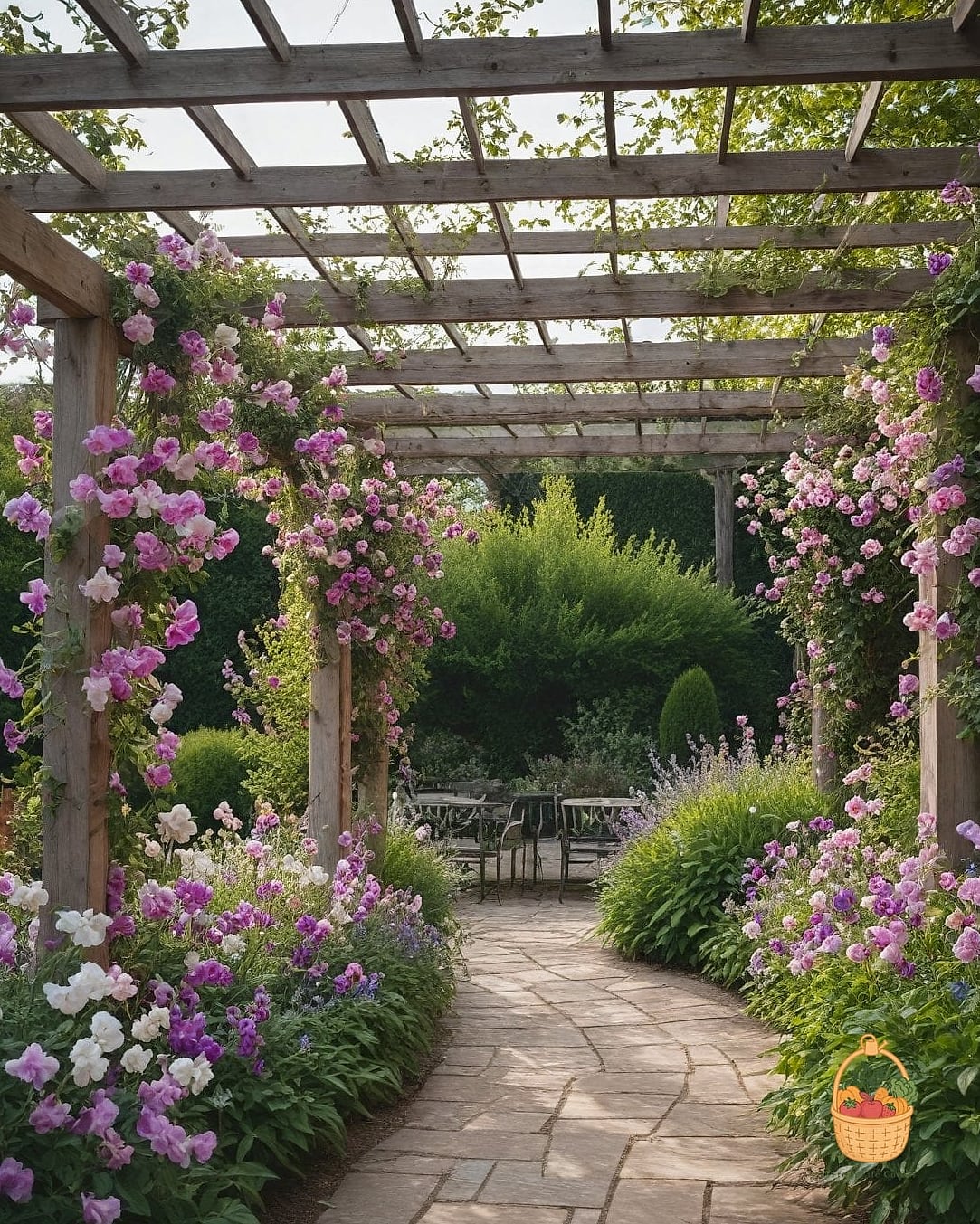
Sweet pea brings old-world charm and genuinely lovely fragrance to a smaller arbor. The ruffled flowers come in nearly every pastel shade imaginable and make excellent cut flowers too.
It prefers full sun to light shade and rich, well-draining soil, growing as a cool-season annual in most areas. Regular picking or deadheading keeps the blooms coming, and it climbs by tendrils, so netting or twine gives it the grip it needs.
Climbing Hydrangea Alternative: Akebia
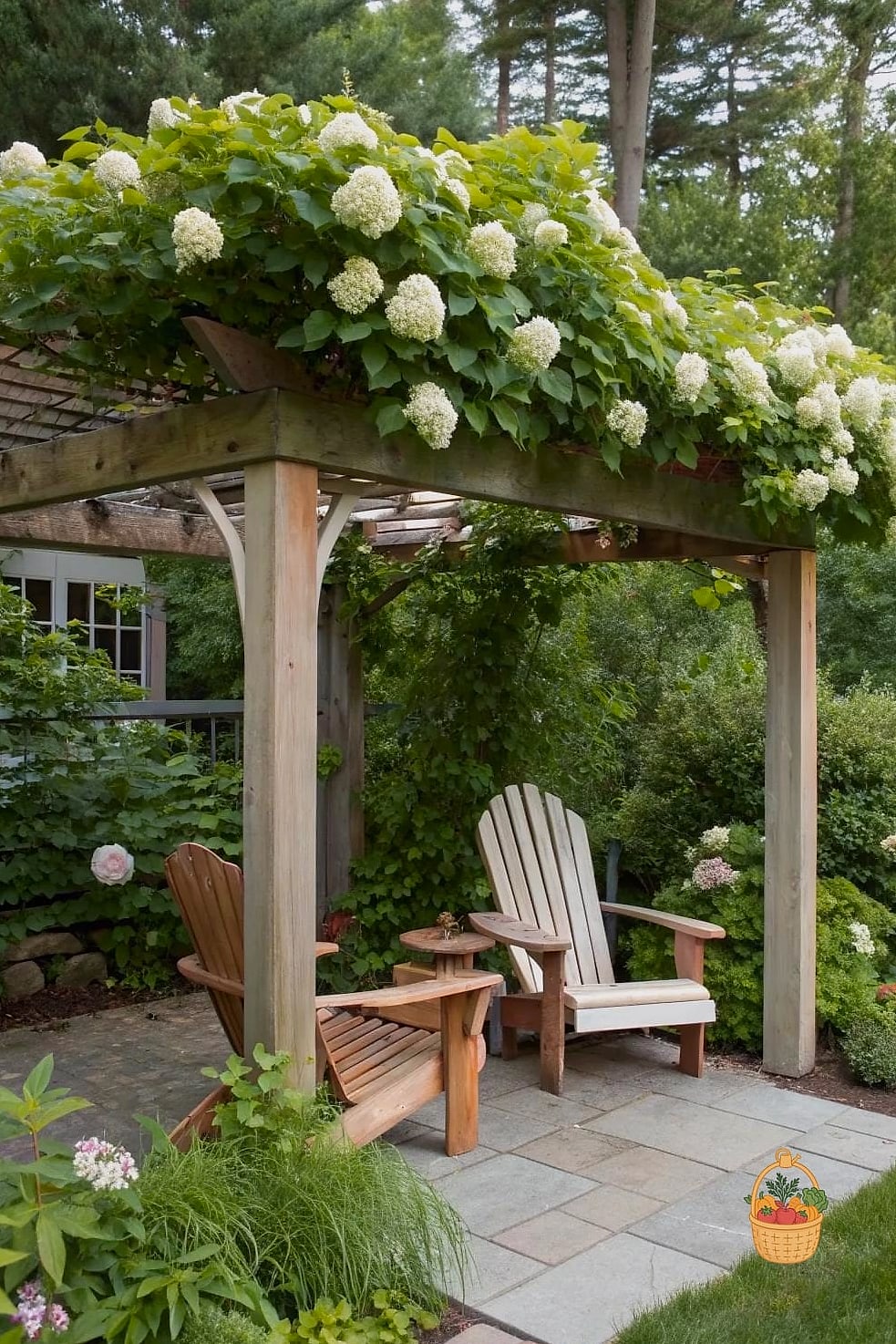
Akebia, or chocolate vine, gets its nickname from the sweet, faintly chocolate-scented purple-brown flowers it produces in spring. It’s a semi-evergreen climber with attractive five-lobed leaves that give year-round interest in milder climates.
It handles full sun to partial shade and adapts to most well-draining soils, thriving in zones 4 through 8. It’s a vigorous twiner, so keep an eye on it — akebia can spread more than expected if left completely untrained.
Climbing Nasturtium
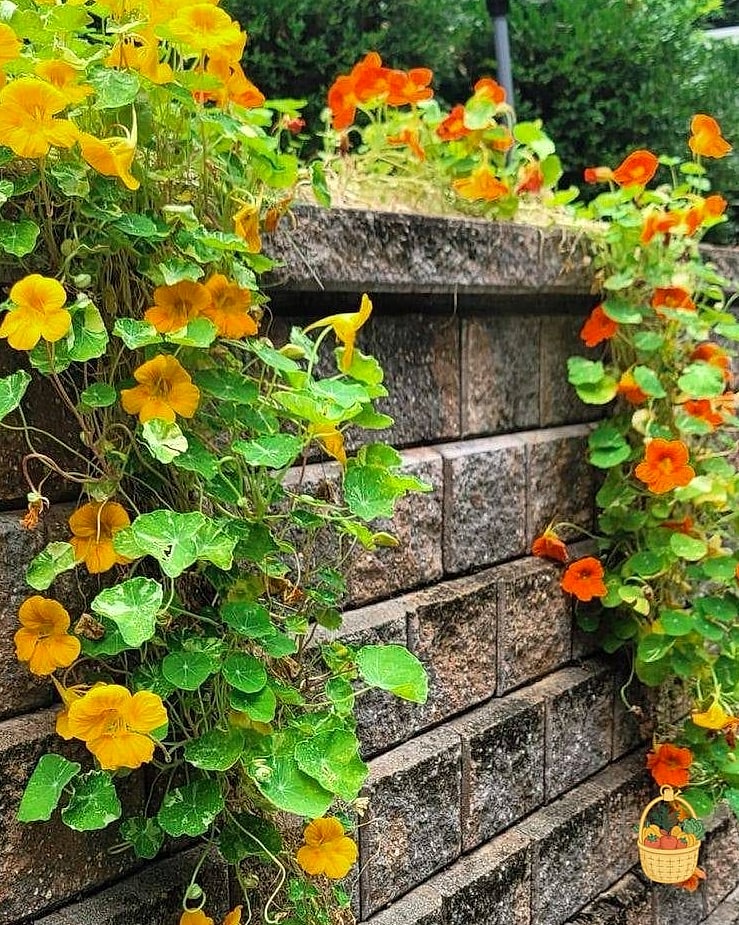
Nasturtium is a cheerful, edible option that’s perfect if you want something low-effort with a bit of a wow factor. The peppery flowers and leaves are genuinely tasty in salads, which always surprises people.
It grows in full sun to partial shade and actually prefers poor to average soil — too much fertilizer gives you lots of leaves and fewer flowers. It’s typically grown as an annual and climbs by twining its leaf stems, so light support like string or wire works well.
Kiwi Vine (Hardy Kiwi)
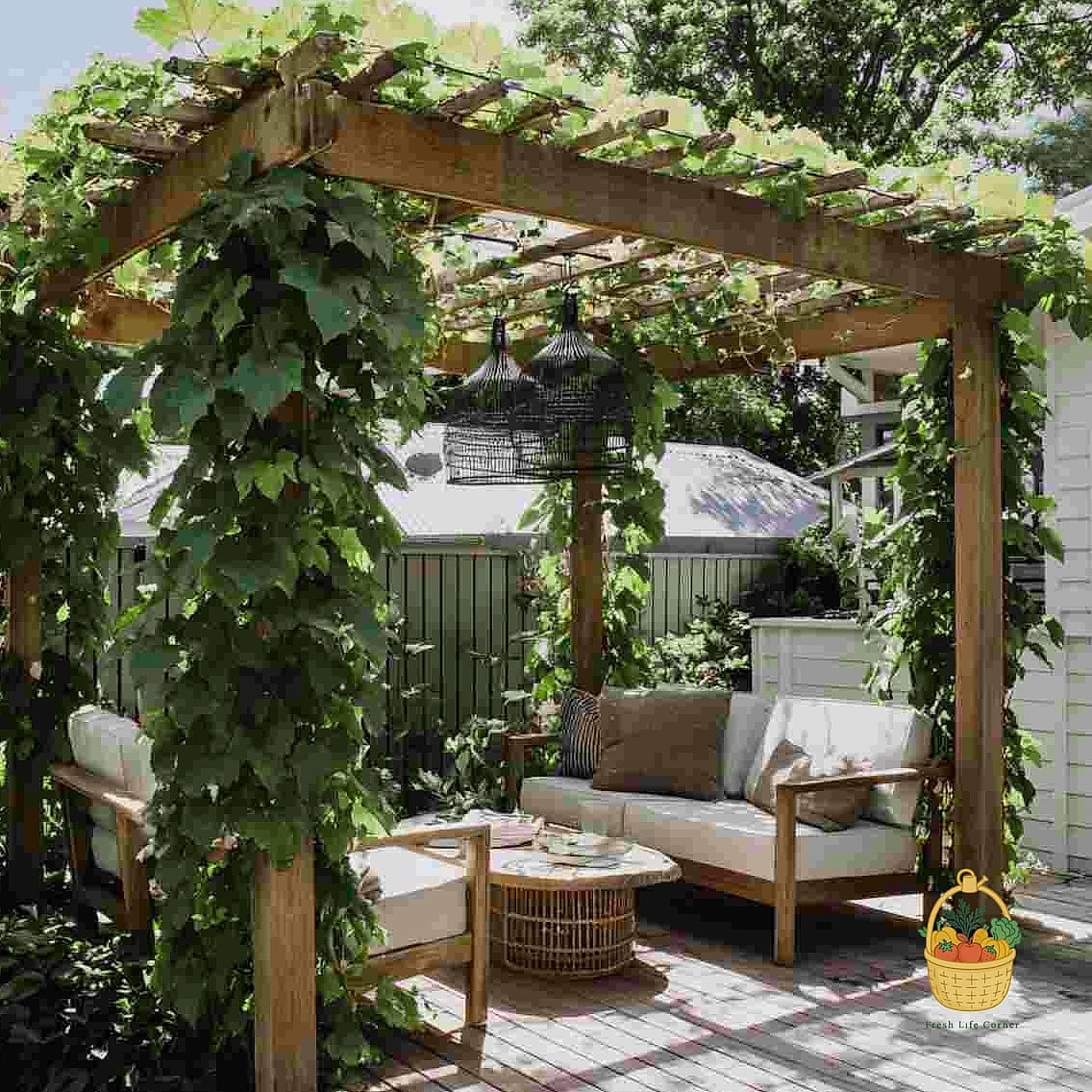
Hardy kiwi is a fun, slightly unexpected choice for a sturdy pergola, offering large tropical-looking leaves and small, smooth-skinned fruit that’s sweeter than the fuzzy grocery store kind. You’ll need a male and female plant for fruit, so plan accordingly.
It wants full sun and rich, well-draining soil, doing well in zones 4 through 8. It’s a vigorous grower that needs a strong structure and consistent pruning to stay manageable, similar in habit to grapevine.
Climbing Fig
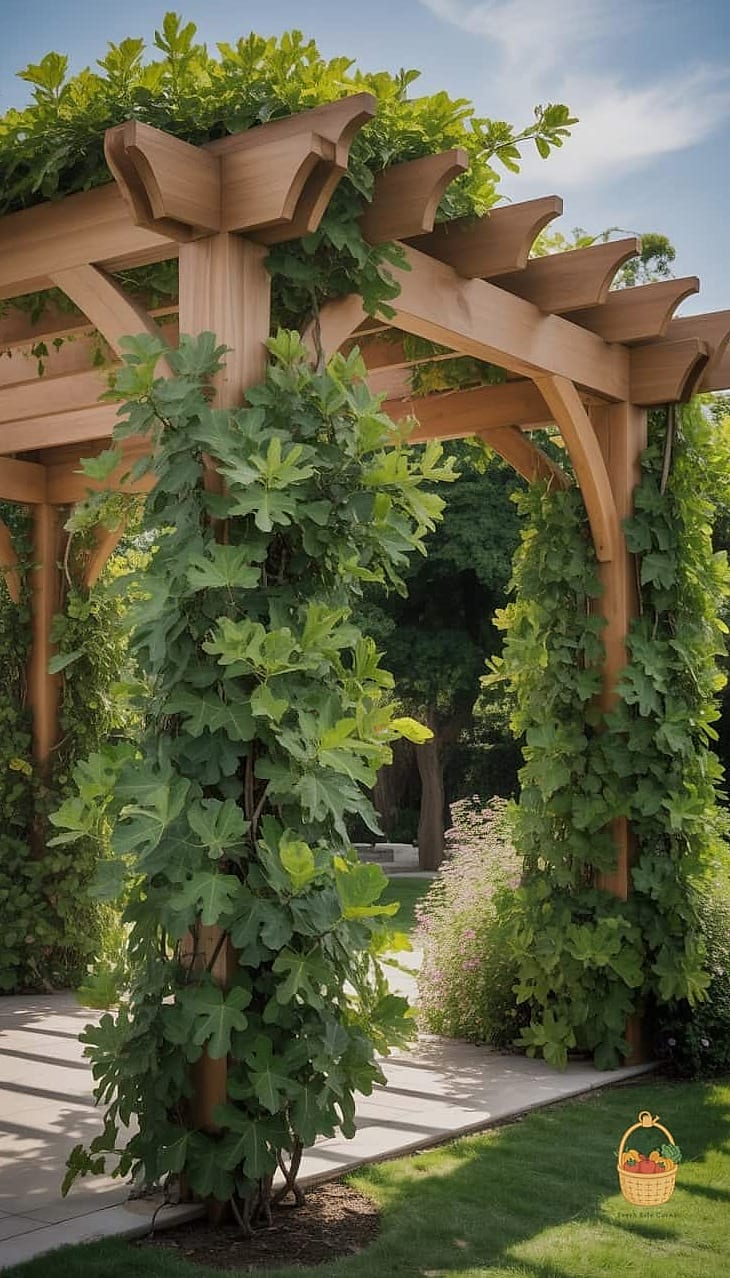
Climbing fig, or creeping fig, is technically more of a clinging groundcover-turned-climber, but on an arbor it creates a dense, tidy green wall of small, glossy leaves. It’s a favorite for a more formal, structured look.
It prefers partial shade to full sun and well-draining soil, thriving outdoors in zones 8 through 11 or as a houseplant elsewhere. It clings with aerial roots, so it needs a solid surface like a wooden arbor rather than open wire.
Dutchman’s Pipe
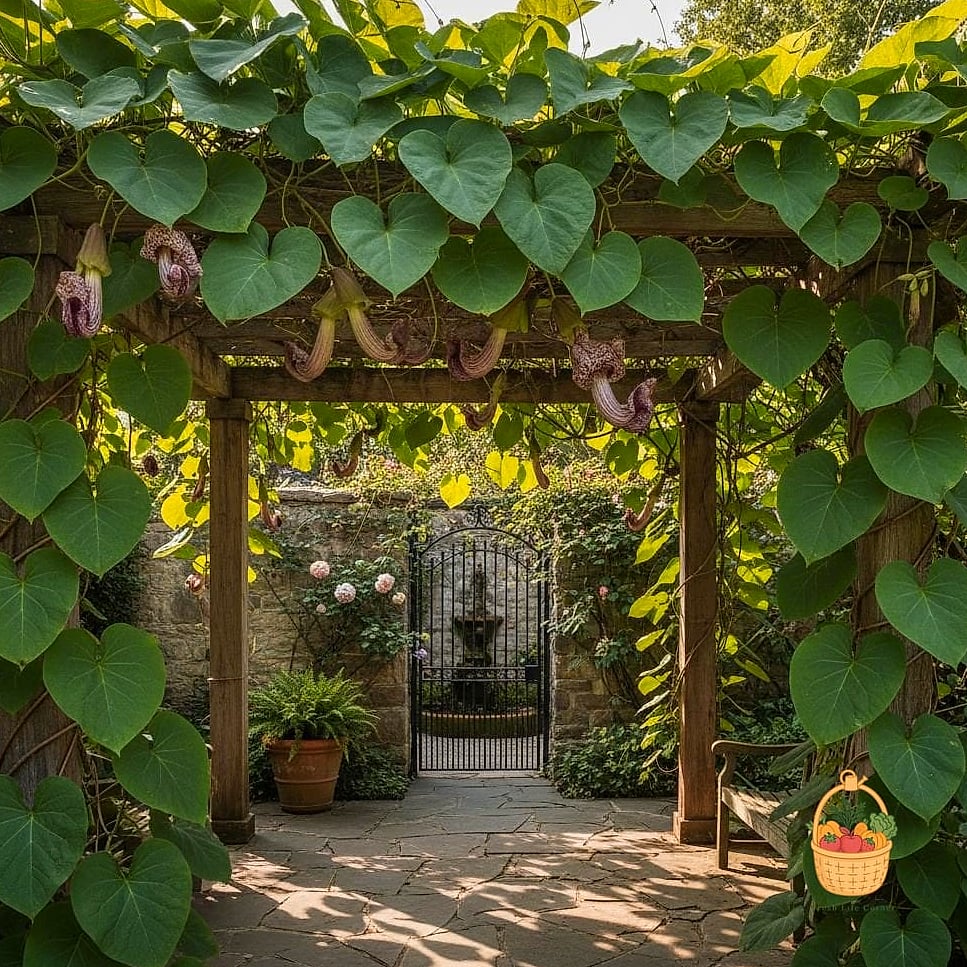
Dutchman’s pipe is grown mostly for its enormous, heart-shaped leaves that create fantastic dense shade, with quirky pipe-shaped flowers as a bonus rather than the main event. It’s a great choice if privacy and shade matter more to you than flowers.
It grows in full sun to partial shade with moist, well-draining soil, and it’s hardy in zones 4 through 8. It’s also the host plant for pipevine swallowtail butterflies, so it’s a nice pick if you’re gardening with pollinators in mind.
Climbing Hops
Hops vine is fast, bold, and a little unexpected on a garden pergola, but the papery cone-like flowers are genuinely attractive, and yes, they’re the same hops used in brewing beer. It’s a fun conversation starter if you have friends who brew.
It likes full sun and rich, well-draining soil, dying back to the ground each winter in zones 3 through 8 before returning vigorously in spring. It’s a twining vine that can grow several feet in a single season, so give it plenty of vertical space to climb.
Whichever of these you choose, the real secret to a great pergola or arbor planting is matching the vine’s personality to your structure’s strength and your own maintenance style. A wisteria needs a sturdy frame and a firm hand with the pruning shears, while something like black-eyed susan vine or nasturtium is happy to ramble along with minimal fuss. Pick two or three that bloom at different times, water consistently while they establish, and give it a season — climbing plants are patient teachers, but the payoff is a garden feature that just keeps getting better every year.