23 Plants For The Front Porches That Are Going Viral on Pinterest
23 Plants For The Front Porches That Are Going Viral on Pinterest
If you’ve spent any time scrolling Pinterest lately, you’ve probably noticed the same thing I have: front porches are having a serious moment. Not the sad, empty-concrete-slab kind of porch — the lush, layered, “how did they get it to look like that” kind. I went down the rabbit hole myself trying to figure out what people are actually planting to get that look, and it turns out there’s a pretty consistent lineup of plants showing up again and again.
Some of these are classic porch staples that never really left. Others are having a genuine comeback. And a few are surprising choices that just happen to photograph beautifully in that soft porch light. Either way, I pulled together 23 plants for the front porches that are going viral on Pinterest right now, with real growing info so you’re not just copying a photo — you’re actually setting these plants up to survive past the first month.
Let’s get into it.
Boston Fern

This one’s basically the poster child of porch planting, and it’s easy to see why. Those cascading, feathery fronds fill out a hanging basket in a way that looks effortless, even though it does take a bit of attention.
Boston ferns love partial to deep shade, which makes them perfect for a covered porch that doesn’t get blasted with afternoon sun. They’re thirsty plants — the soil should stay consistently moist, never bone dry, or you’ll see crispy brown edges fast. Misting helps in dry climates. They’re hardy outdoors in USDA zones 9-11, but most people grow them as seasonal porch plants elsewhere and bring them in before frost.
Boxwood
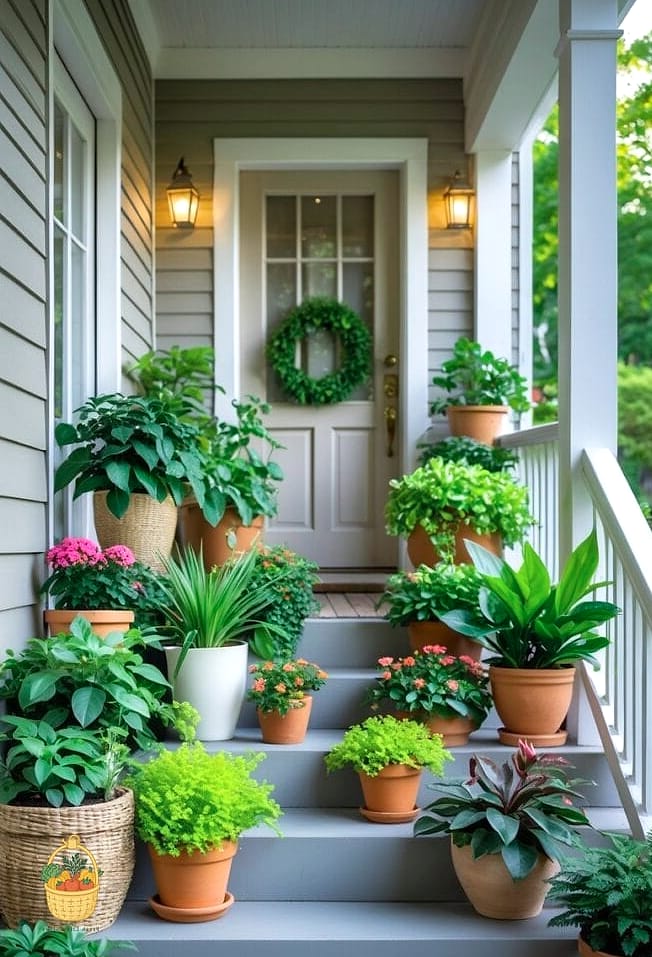
Boxwood is the quiet workhorse of porch design, especially in matching pairs flanking a front door. It’s structured, evergreen, and honestly kind of impossible to mess up once established.
It prefers full sun to partial shade and well-draining soil — soggy roots are its biggest enemy. Boxwood is slow-growing, which is actually a plus if you want something that holds its shape in a container for years without constant repotting. Hardy down to zone 5, it’s a solid choice if you want a porch look that photographs well in every season, not just summer.
Sweet Potato Vine
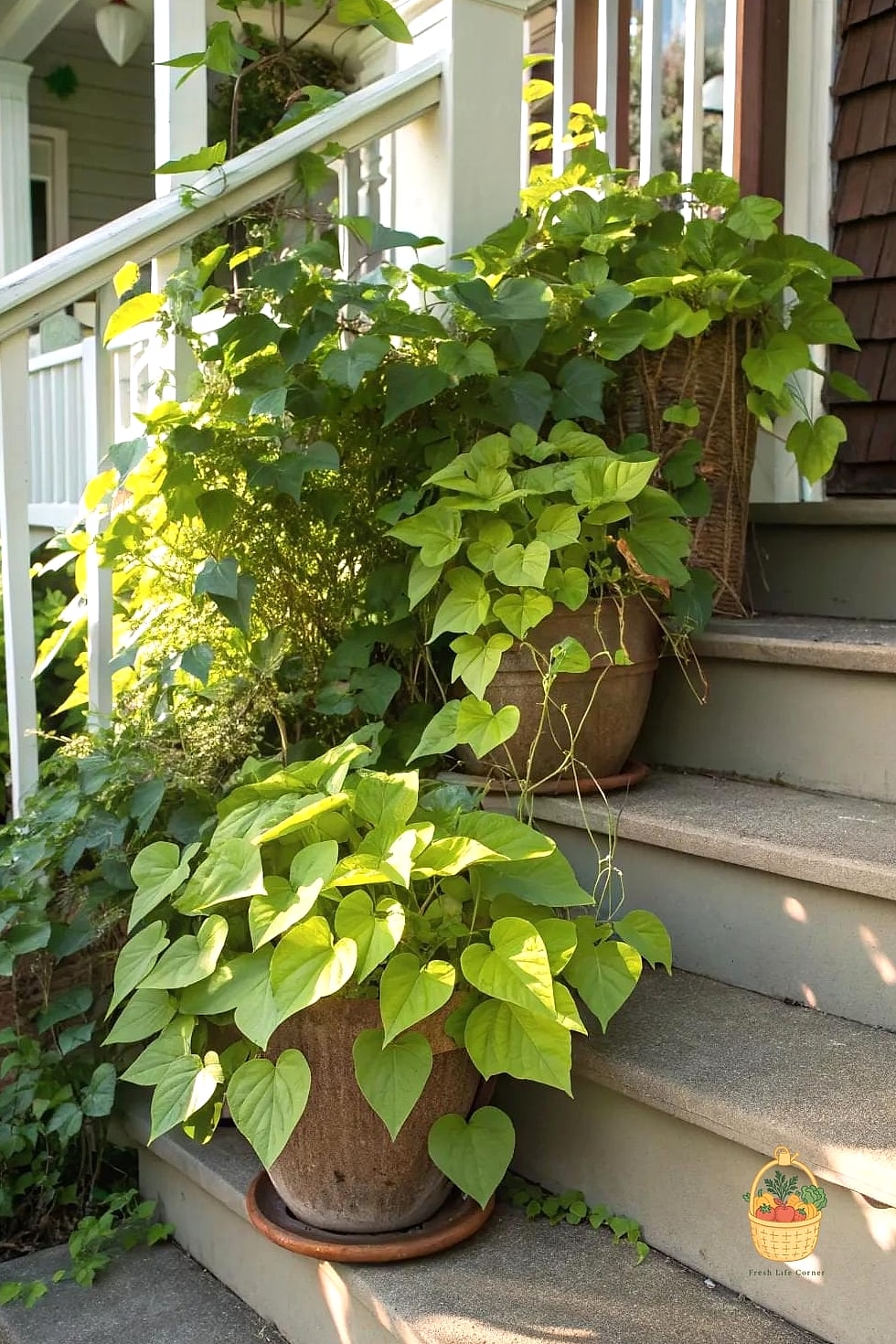
If you’ve seen those porch containers with trailing chartreuse or deep purple foliage spilling over the edges, that’s almost always sweet potato vine. It’s a fast grower, and I mean fast — give it a few weeks and it’ll start creeping over the pot rim like it’s trying to escape.
It wants full sun for the best color and thrives in well-draining potting soil with regular watering. It’s grown as an annual in most zones, though it’s technically perennial in zones 9-11. Pair it with something upright like a coleus and you’ve basically nailed the “thriller, filler, spiller” container formula everyone’s obsessed with.
Hydrangea
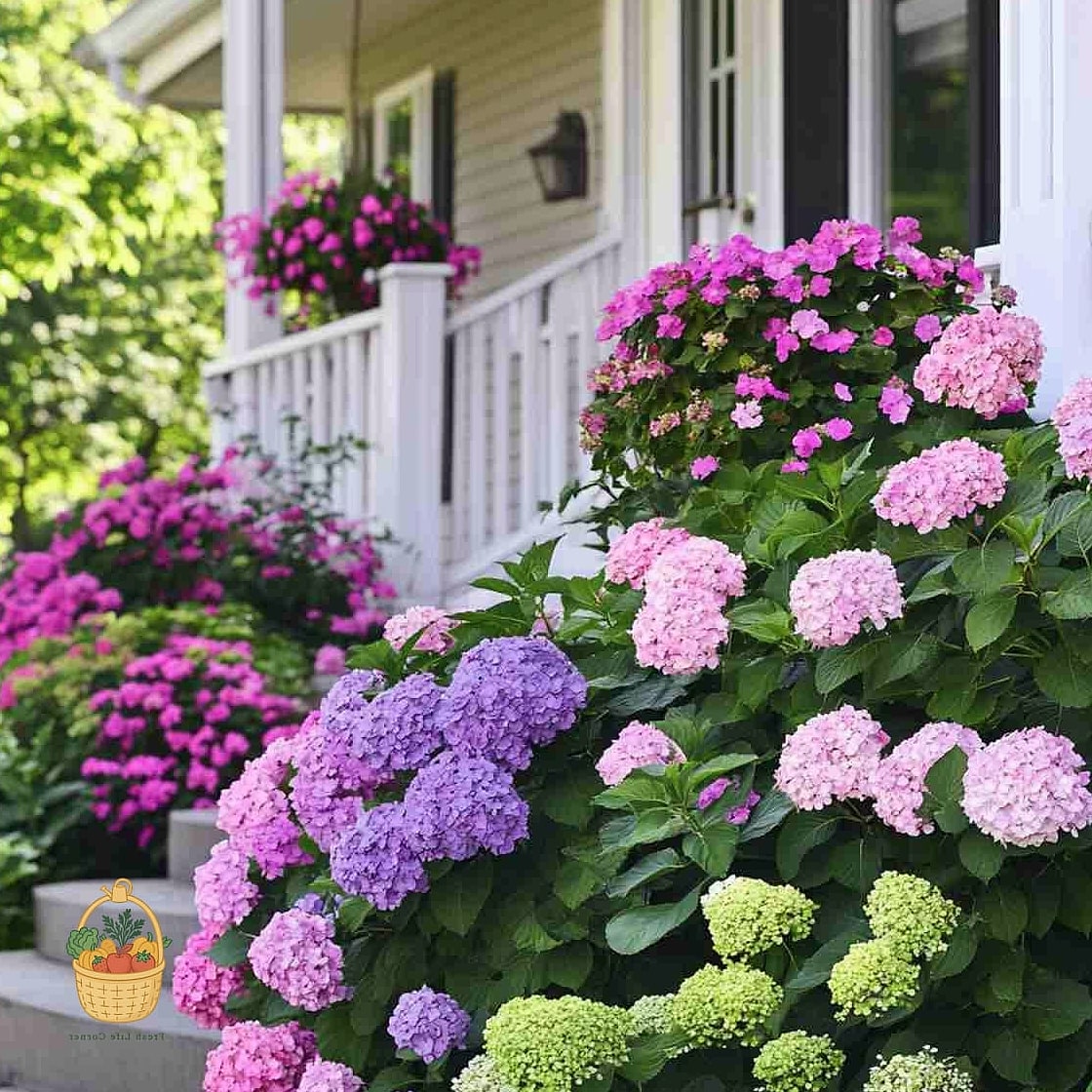
Hydrangeas showing up in oversized porch pots is a trend that isn’t slowing down anytime soon, and I get the appeal — those big, blowsy blooms look like something out of a cottage-garden fantasy.
They do best in partial shade, especially afternoon shade in hotter climates, and need consistently moist, well-draining soil. Hardiness varies by type, but most do well in zones 3-9. If you’re growing one in a container long-term, size up your pot as it matures; hydrangeas get root-bound faster than people expect.
Geranium
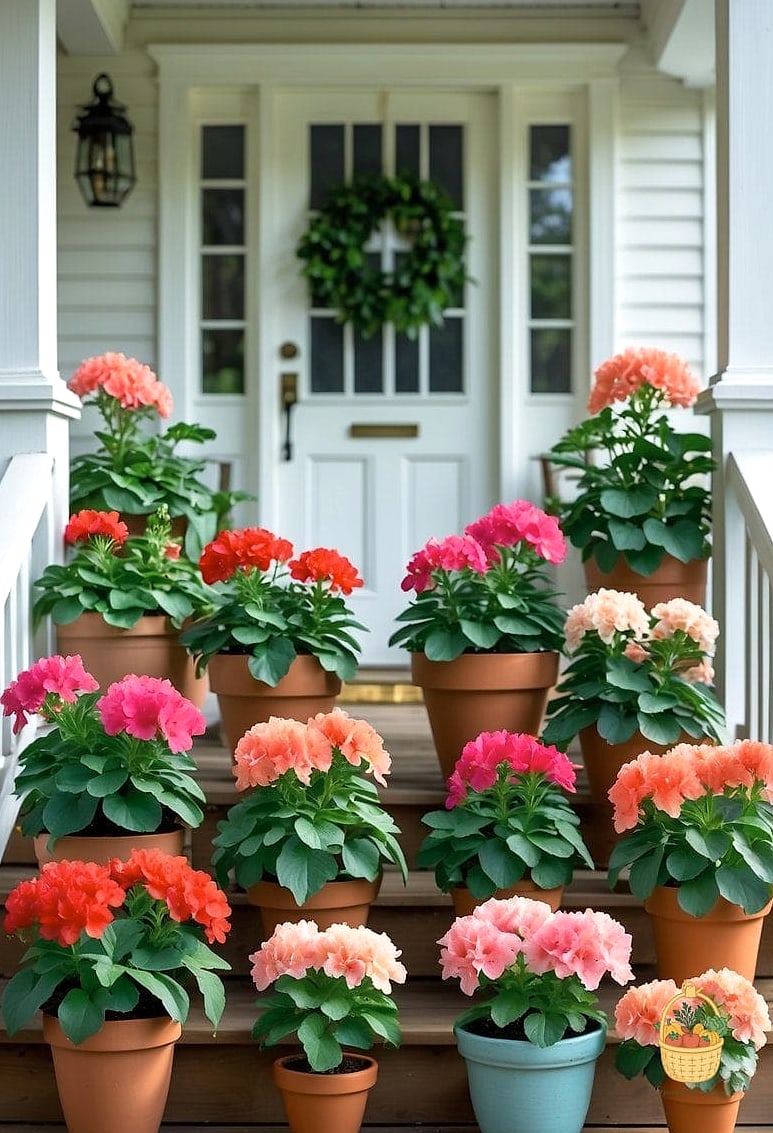
Classic doesn’t mean boring, and geraniums prove it every summer. Their bright, ruffled blooms in reds, pinks, and whites are a Pinterest porch staple for a reason — they bloom prolifically with minimal fuss.
Give them full sun and well-draining soil, and let the top inch of soil dry out between waterings since they’re not fans of wet feet. They’re technically perennial in zones 10-11 but grown as annuals almost everywhere else. Deadheading spent blooms keeps them flowering longer, which is a small chore that pays off big.
Fiddle Leaf Fig

Not just an indoor darling anymore — fiddle leaf figs are showing up on covered porches in big terracotta pots, and the bold, glossy leaves make a real statement next to a front door.
They need bright, indirect light and hate sudden temperature swings, so this is really only a porch plant in mild, sheltered spots or a seasonal summer display. Water when the top two inches of soil are dry, and watch for yellowing leaves, which usually means overwatering rather than underwatering. It’s a plant that rewards patience over perfection.
Petunia
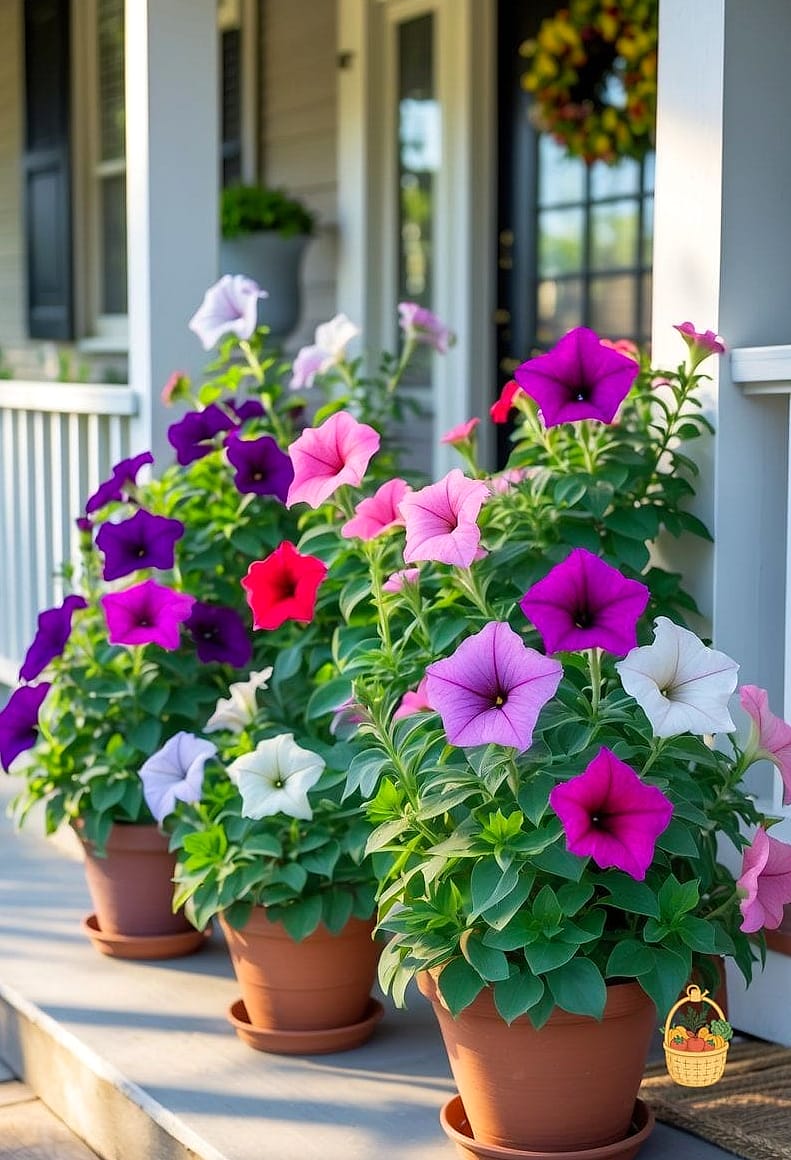
Petunias are the reliable, no-drama friend of the porch container world. Trailing varieties spill beautifully over hanging baskets and window boxes, and they bloom nonstop from late spring through frost if you keep up with basic care.
Full sun brings out the best bloom production, and they like soil that drains well but doesn’t dry out completely. A little liquid fertilizer every couple of weeks keeps the flowers coming. They’re easy enough for a beginner gardener but reward experienced growers too, especially if you deadhead regularly.
Snake Plant
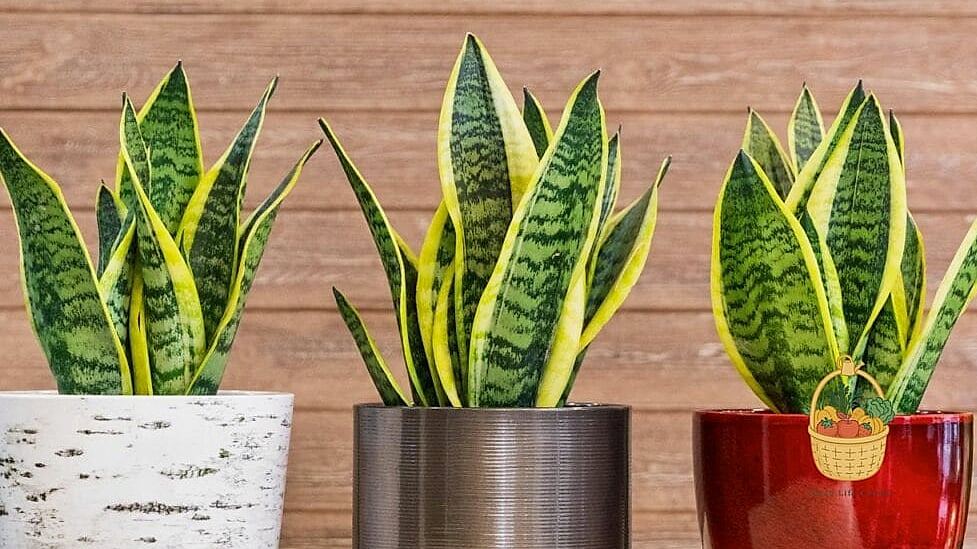
Snake plant on the porch feels a little unexpected, but it’s showing up more and more in minimalist, modern porch setups — usually in a single sculptural pot near the door.
It tolerates a wide range of light, from bright indirect to fairly low light, and it’s genuinely one of the most drought-tolerant plants you can grow. Let the soil dry out completely between waterings; overwatering is really the only way to kill this thing. It’s hardy outdoors in zones 9-11 but works as a container plant almost anywhere during warm months.
Coleus

Coleus has had a real glow-up on Pinterest thanks to newer varieties with wild color combinations — deep burgundy, chartreuse, speckled pink, you name it. It’s foliage doing all the work that flowers usually do.
It grows well in partial shade to filtered sun, though some sun-tolerant varieties handle brighter spots. Keep the soil evenly moist and pinch back growing tips to encourage a fuller, bushier shape. It’s an annual in most climates, but cuttings root easily in water if you want to save your favorite variety.
Boston Ivy
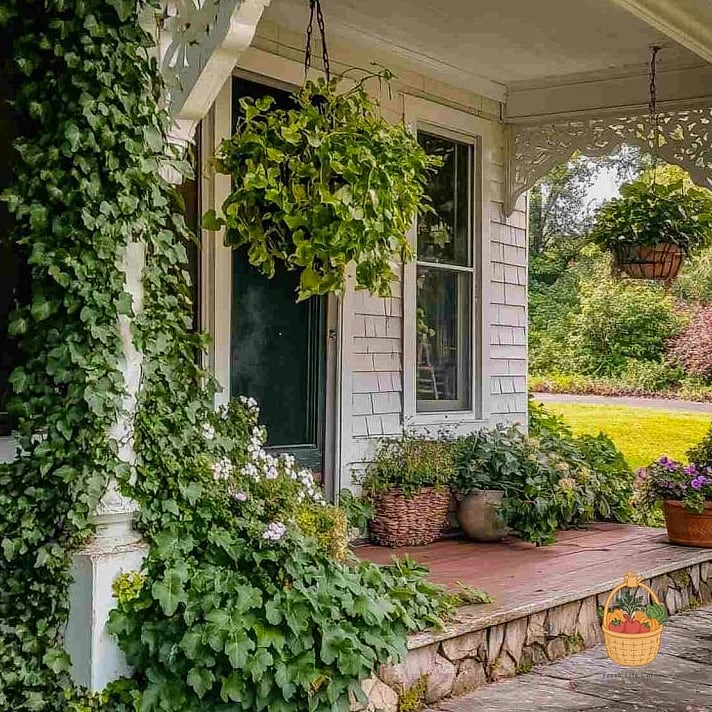
For a porch with a railing or trellis, Boston ivy climbing up the structure gives that romantic, aged-cottage look people are obsessed with right now, especially once it turns red in fall.
It’s remarkably adaptable, tolerating full sun to partial shade and average, well-draining soil. It’s a vigorous grower — vigorous enough that you’ll want to prune it back if you don’t want it taking over the whole porch. Hardy in zones 4-8, it’s also pretty drought tolerant once established.
Marigold
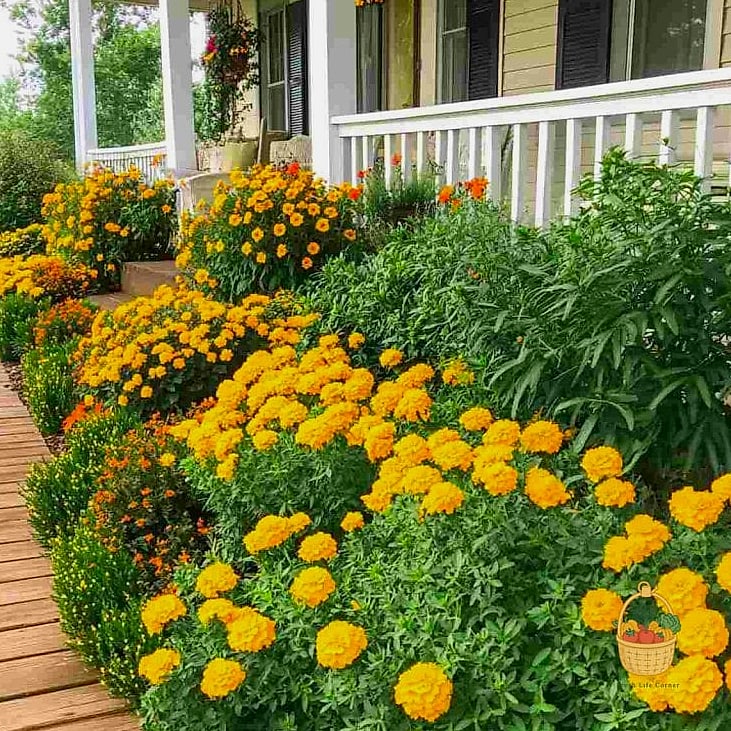
Marigolds bring that cheerful, golden-orange punch that photographs so well against a white or navy front door. They’re also functional, since their scent is known to help deter some garden pests.
They want full sun and average, well-draining soil — actually, overly rich soil can mean fewer blooms, so don’t overdo the fertilizer. They’re easy from seed or starts and bloom steadily through summer into fall. Great companion planting choice near vegetables or other flowering annuals too.
ZZ Plant

ZZ plant has quietly become a favorite for shaded porches where other flowering plants would sulk. Its thick, glossy, almost rubbery leaves give off a structured, architectural look that Pinterest loves for modern entryways.
It handles low to bright indirect light and is famously drought tolerant, storing water in its rhizomes. Let the soil dry out fully between waterings — this is a plant that suffers far more from too much love than too little. It’s hardy in zones 9-11 but makes a great seasonal porch plant elsewhere.
Million Bells (Calibrachoa)
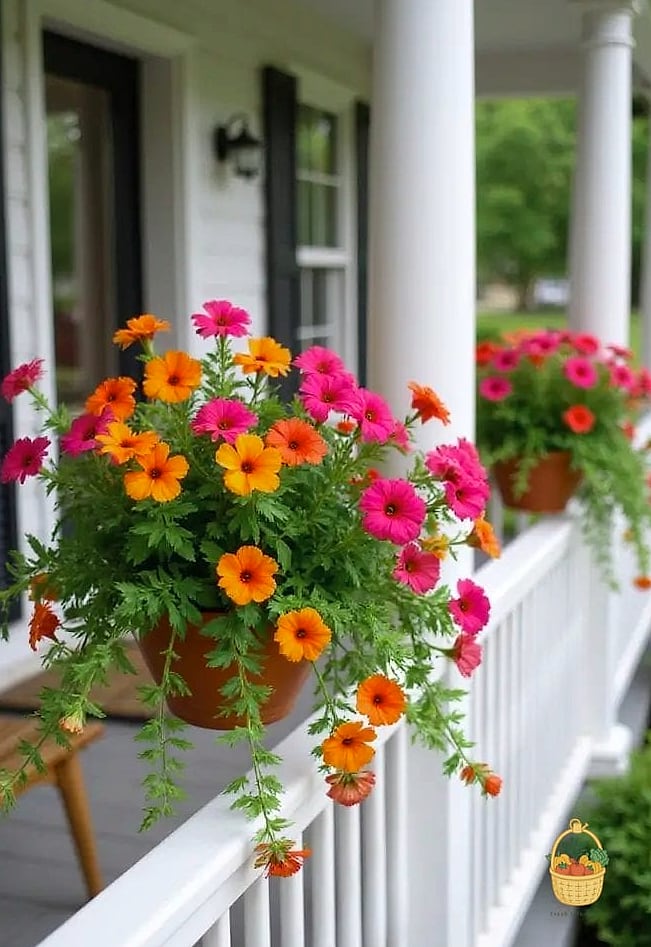
Think of these as petunias’ smaller, more prolific cousin. Million bells produce an almost absurd number of tiny trumpet-shaped blooms, and they cascade beautifully out of hanging baskets and railing planters.
Full sun and well-draining soil are key, along with regular feeding since they bloom so heavily. They’re pretty low-maintenance otherwise and don’t need deadheading the way petunias do. Grown as annuals in most zones, they’re a favorite for that “overflowing” porch look.
English Lavender
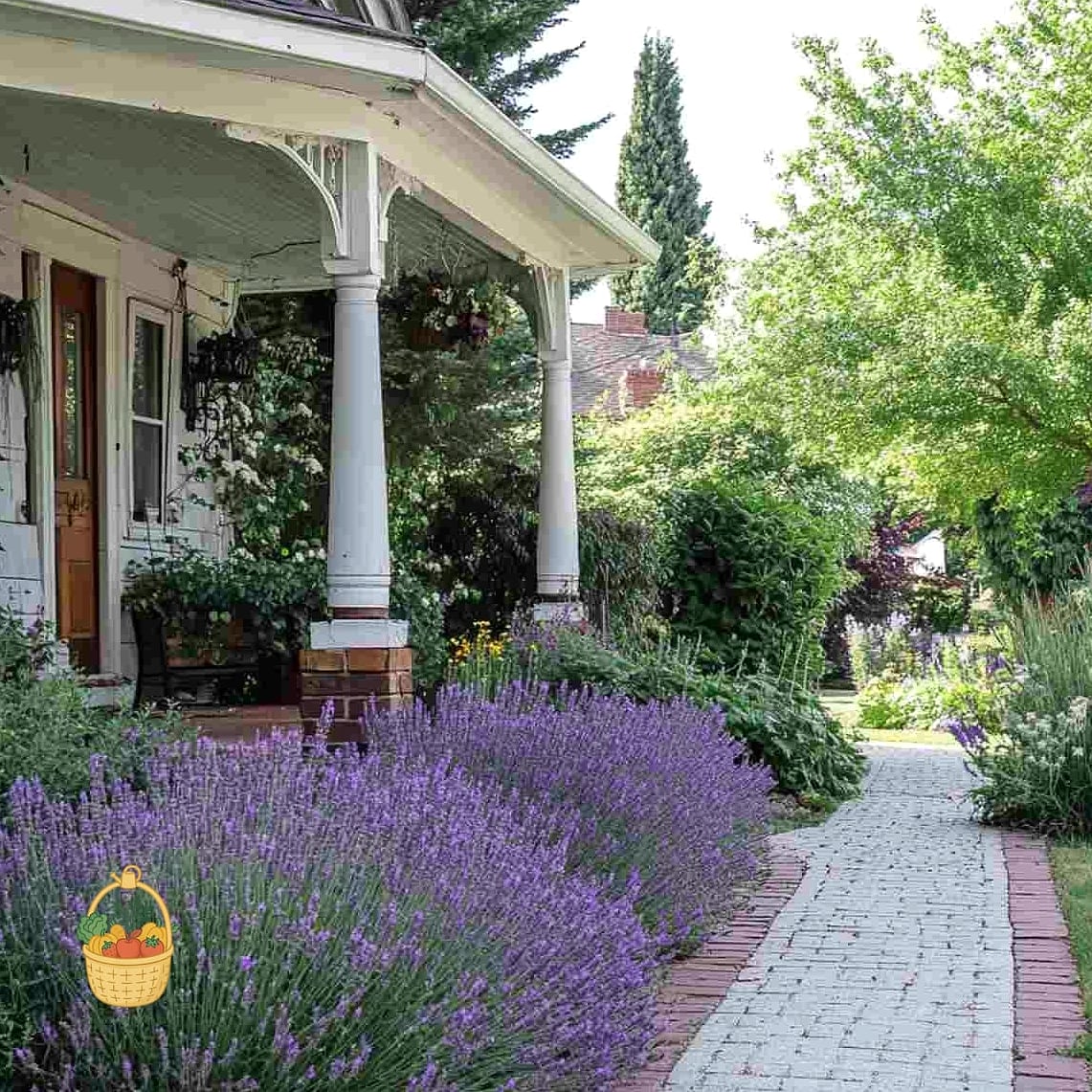
Lavender on the porch steps gives instant cottage-garden charm, plus the bonus of that unmistakable scent every time you walk past. It’s having a real moment in muted, dusty-toned porch palettes.
It needs full sun and, importantly, soil on the sandier or rockier side — lavender genuinely dislikes rich, moist soil and is prone to root rot if it’s kept too wet. Hardy in zones 5-9, it’s drought tolerant once established and pretty deer resistant too, which is a nice bonus if wildlife is an issue.
Rubber Plant
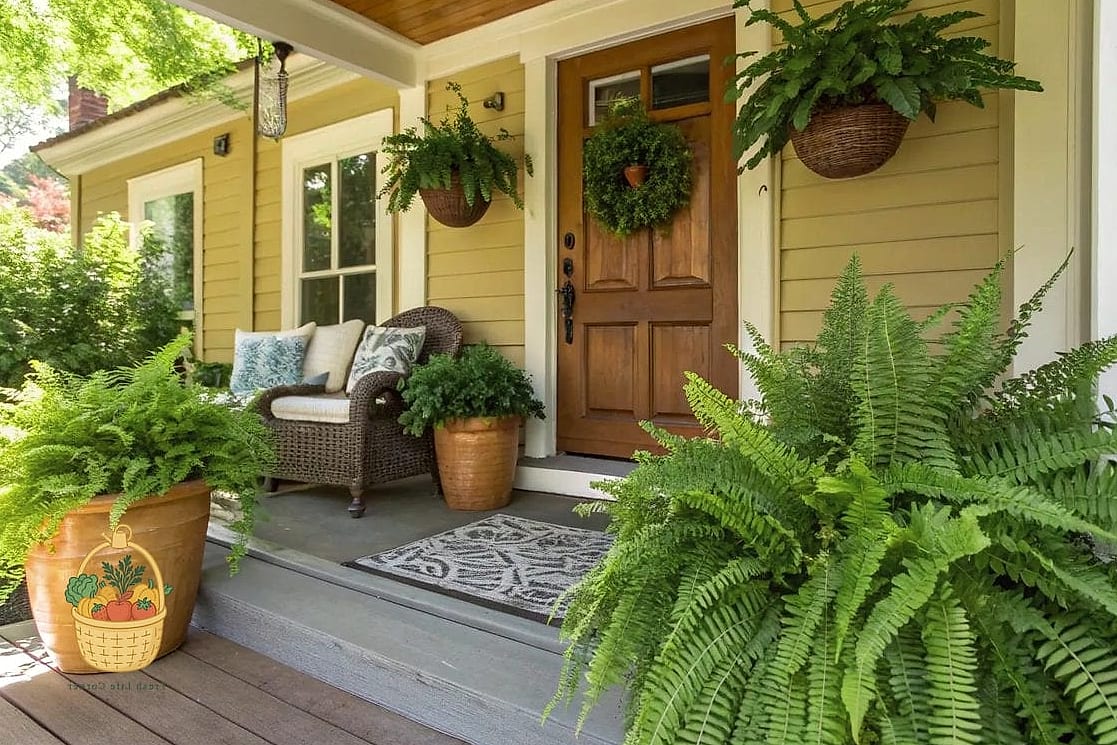
Rubber plant’s big, glossy, dark green leaves add a lush, jungly texture that stands out against a neutral porch color scheme. It’s become a favorite for that “urban plant parent” aesthetic.
Bright indirect light is ideal, and it prefers to dry out somewhat between waterings. Wipe the leaves occasionally to keep that signature shine and help the plant photosynthesize efficiently. It’s a houseplant at heart, so treat porch placement as seasonal unless you’re in a warm, frost-free zone.
Verbena
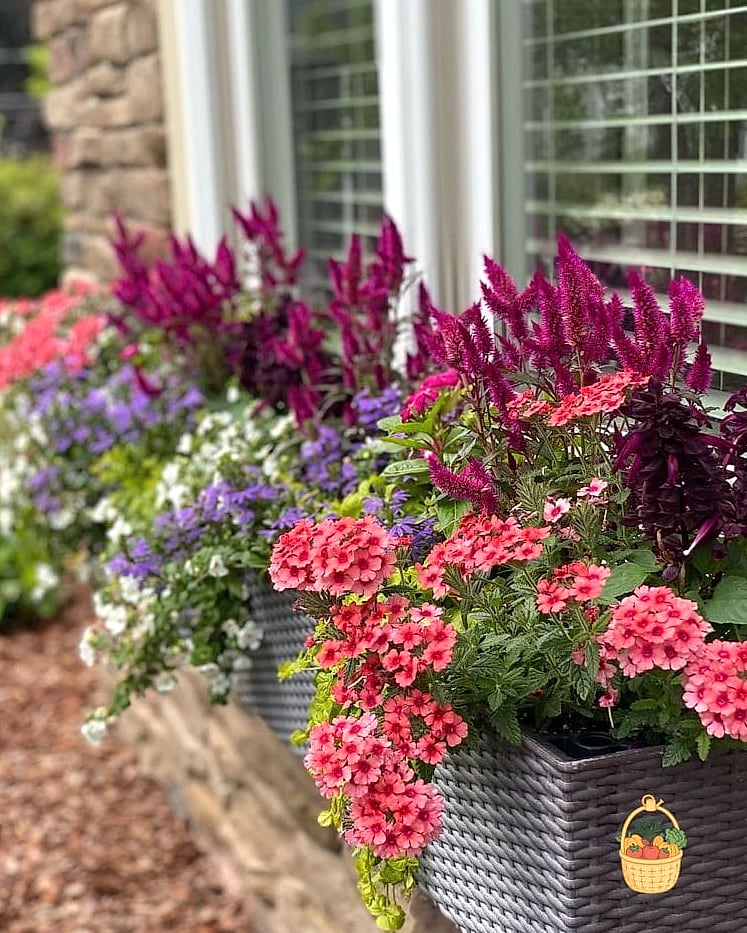
Verbena’s clusters of small, jewel-toned flowers trail nicely over pot edges, and it blooms with real enthusiasm all summer long, which makes it a favorite for filling out container arrangements.
It thrives in full sun and needs well-draining soil, since it’s genuinely prone to root and crown rot in soggy conditions. It’s fairly drought tolerant once it gets going and doesn’t need much fertilizer to keep blooming. A great companion for geraniums or petunias in a mixed planter.
Japanese Maple
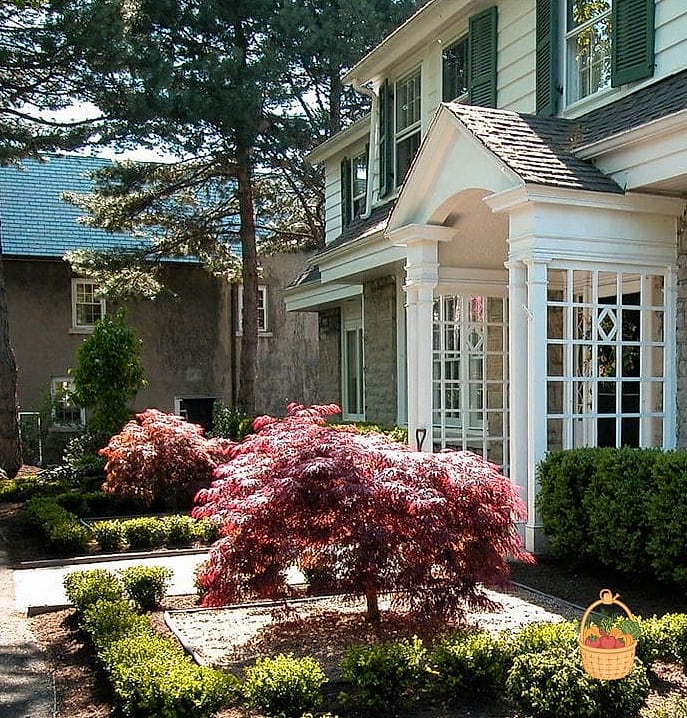
A Japanese maple in a large decorative pot flanking porch steps is one of those looks that instantly reads as high-end, even though the tree itself doesn’t ask for much once it’s settled.
It prefers partial shade, especially protection from harsh afternoon sun, and rich, well-draining soil that stays evenly moist. Growth is slow, which works in its favor for container life. Hardy in zones 5-8 depending on variety, and the fall color alone is worth the Pinterest hype.
Begonia
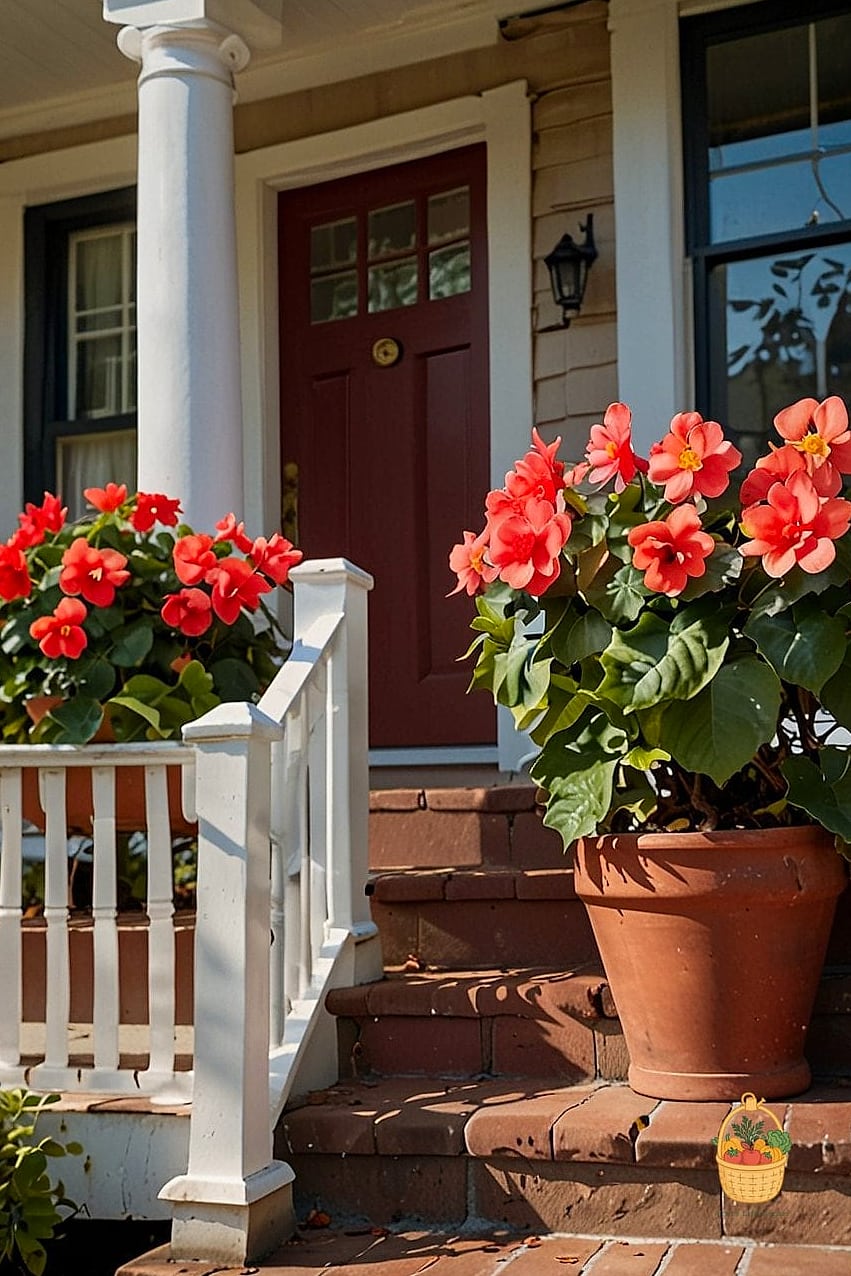
Begonias, especially the trailing and rex varieties, have been popping up everywhere lately for their textured, almost painterly leaves alongside their delicate blooms.
They like partial to full shade and soil that’s kept lightly moist but never waterlogged. They’re a good pick for porches that don’t get much direct sun, which honestly makes them more useful than a lot of trendier options. Watch for powdery mildew in overly humid, still air — a little airflow goes a long way.
Areca Palm
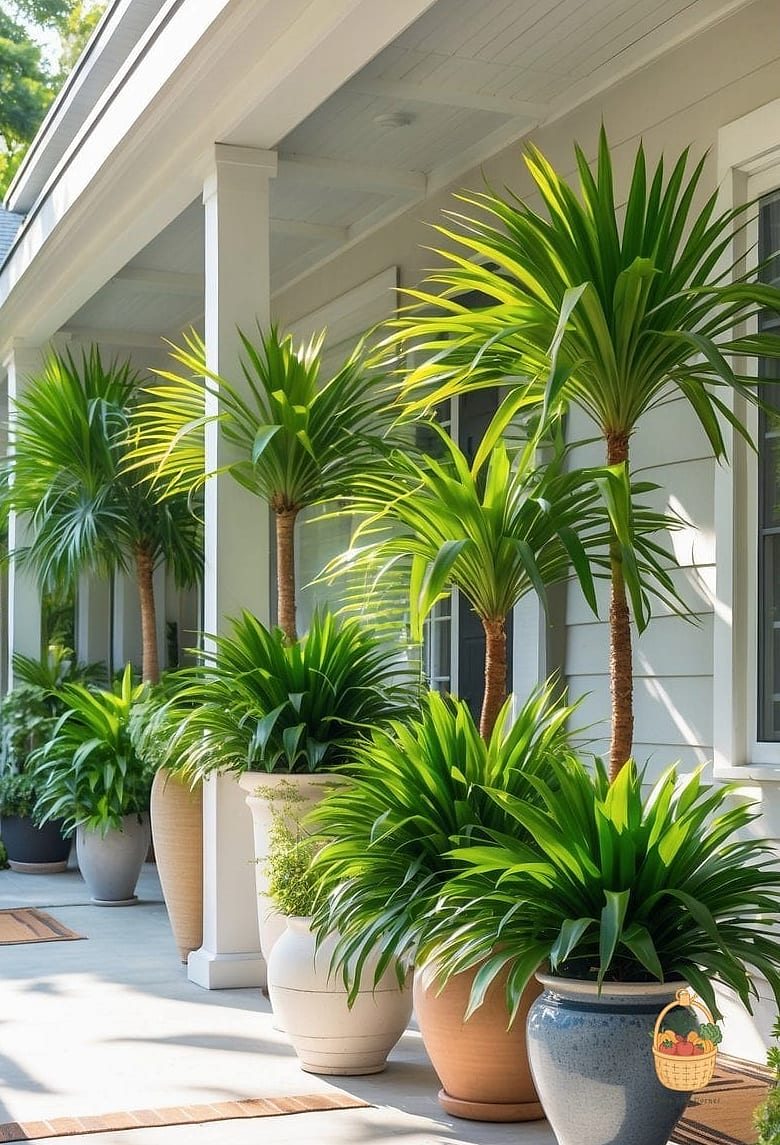
Areca palm brings a breezy, resort-like feel to a porch, with feathery fronds that soften harder architectural lines. It’s a favorite for anyone going for that warm-weather, tropical porch aesthetic.
It wants bright indirect light and consistently moist, well-draining soil, though it doesn’t love sitting in water. It’s hardy outdoors only in zones 10-11, so most people grow it as a container plant they move seasonally. Brown leaf tips usually point to low humidity or mineral buildup from tap water.
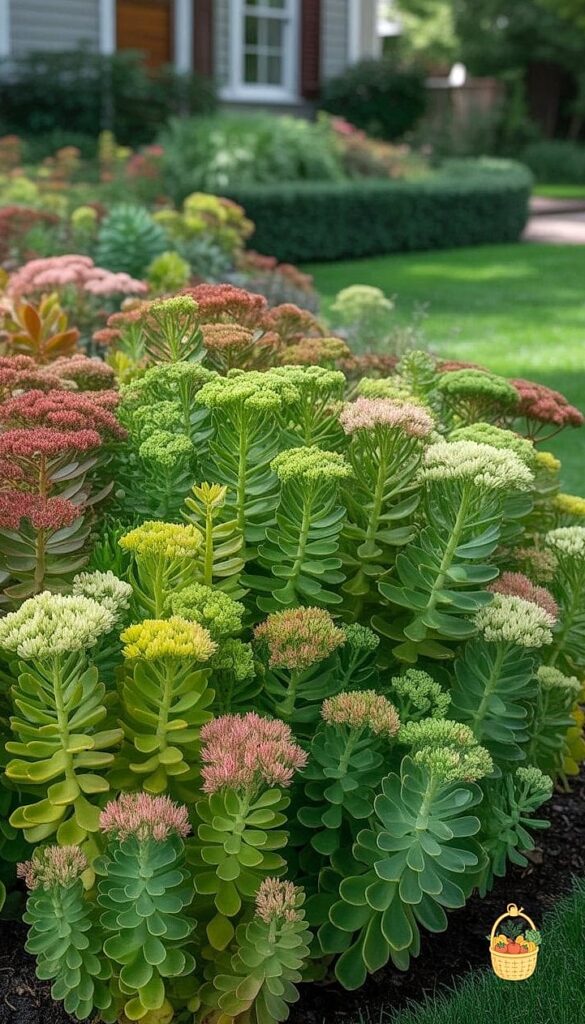
Sedum
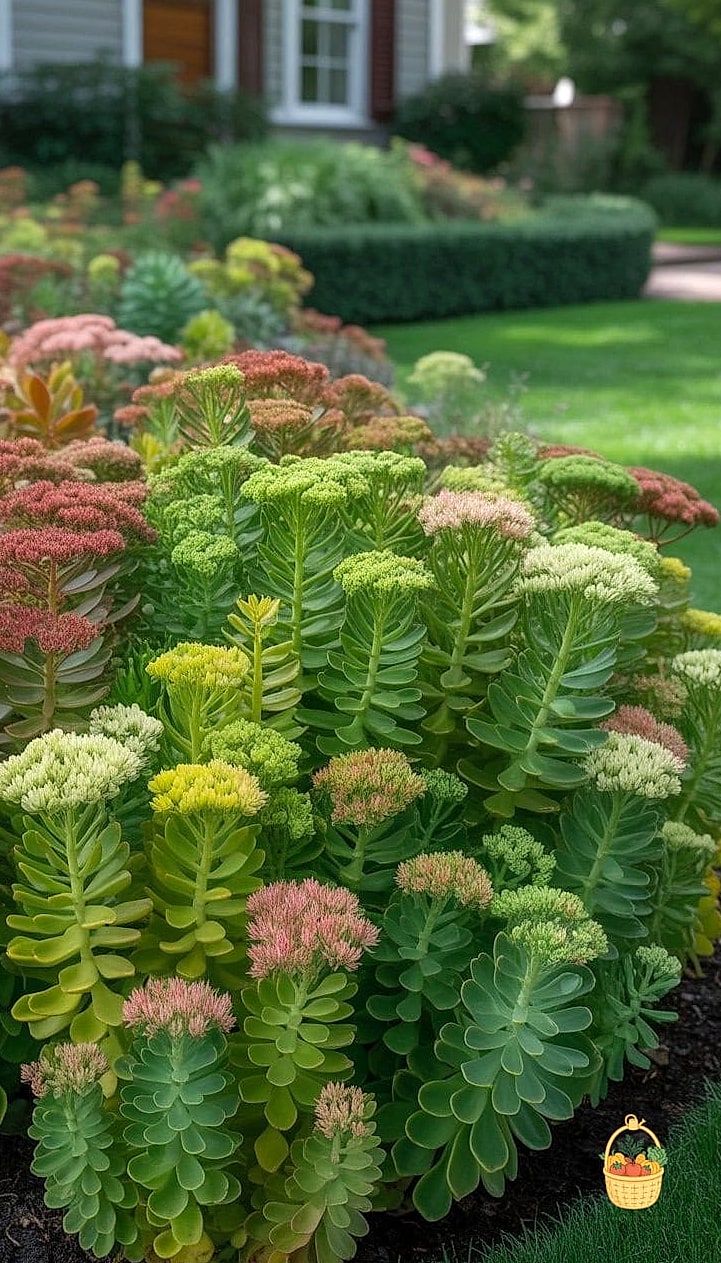
Sedum, especially trailing varieties, has become a go-to for that relaxed, textural porch look, cascading out of pots or tucked into mixed succulent arrangements near the door.
It’s about as drought tolerant as porch plants get, needing full sun and sharp, well-draining soil. Overwatering is really the main risk here. Hardy in zones 3-9 depending on variety, it’s a great low-maintenance option if you travel a lot or just forget to water sometimes — no judgment.
Fuchsia
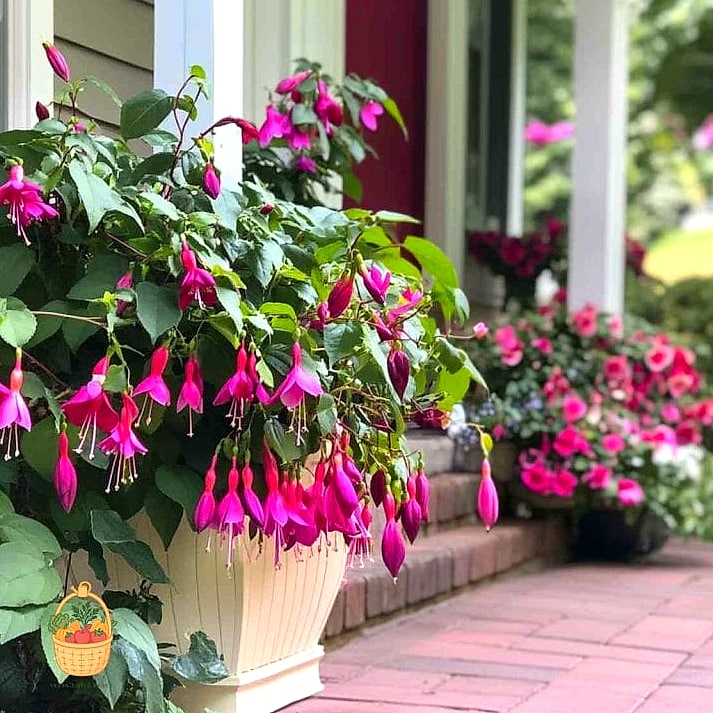
Fuchsia’s dangling, two-toned blooms are having a real resurgence, especially in shaded hanging baskets where a lot of other flowering plants struggle to perform.
It prefers partial shade, particularly protection from hot afternoon sun, and consistently moist, well-draining soil. Regular feeding during the growing season keeps the blooms coming steadily. It’s grown as an annual in most climates, though it’s perennial in the milder zones 8-10.
Golden Pothos
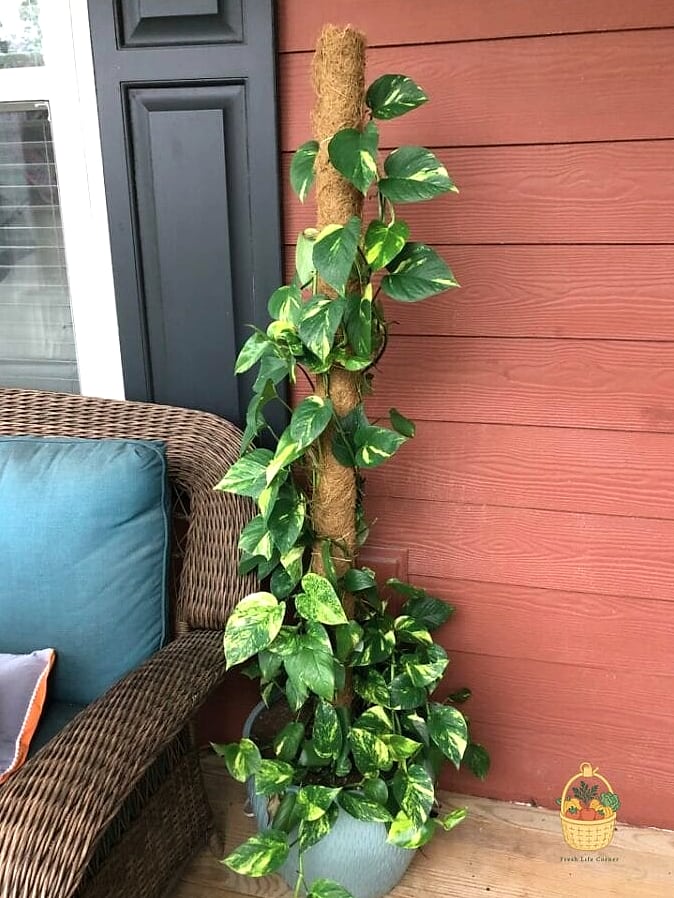
Pothos trailing off a porch shelf or hanging planter gives that easy, jungly texture that fills visual gaps in a porch display without demanding much attention at all.
It tolerates low to bright indirect light and prefers to dry out somewhat between waterings. It’s genuinely one of the most forgiving plants on this list, which is probably why it shows up in so many “beginner-friendly porch” Pinterest boards. Propagation by cuttings in water is almost too easy — snip, drop in a jar, wait.
Dahlia
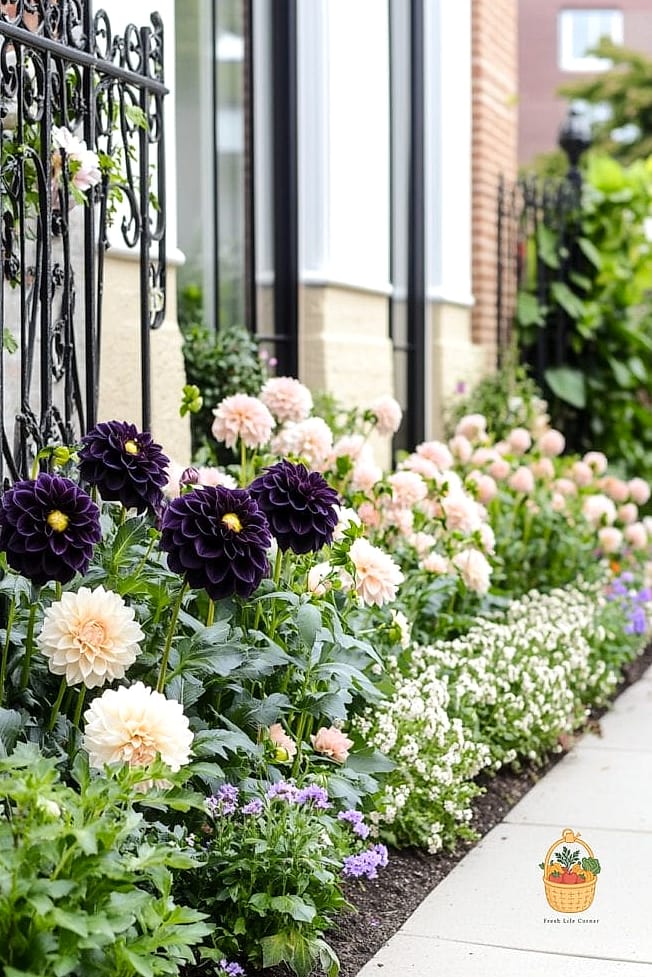
Dahlias in big, dramatic blooms have taken over a lot of porch container photos lately, especially the dinner-plate varieties that practically demand a close-up.
They need full sun and rich, well-draining soil, plus regular watering during active growth. They grow from tubers, and in colder zones (below zone 8), you’ll want to dig those up and store them over winter. It’s a bit more effort than some plants on this list, but the payoff in blooms is hard to beat.