29 Plants Pair Hydrangeas That Actually Work
- Hostas
- Ferns
- Astilbe
- Heuchera (Coral Bells)
- Japanese Forest Grass
- Bleeding Heart
- Hakone Grass and Sedge Combos Aside, Try Carex
- Foxglove
- Japanese Anemone
- Boxwood
- Azaleas
- Rhododendrons
- Camellias
- Boston Ivy or Climbing Hydrangea as a Backdrop
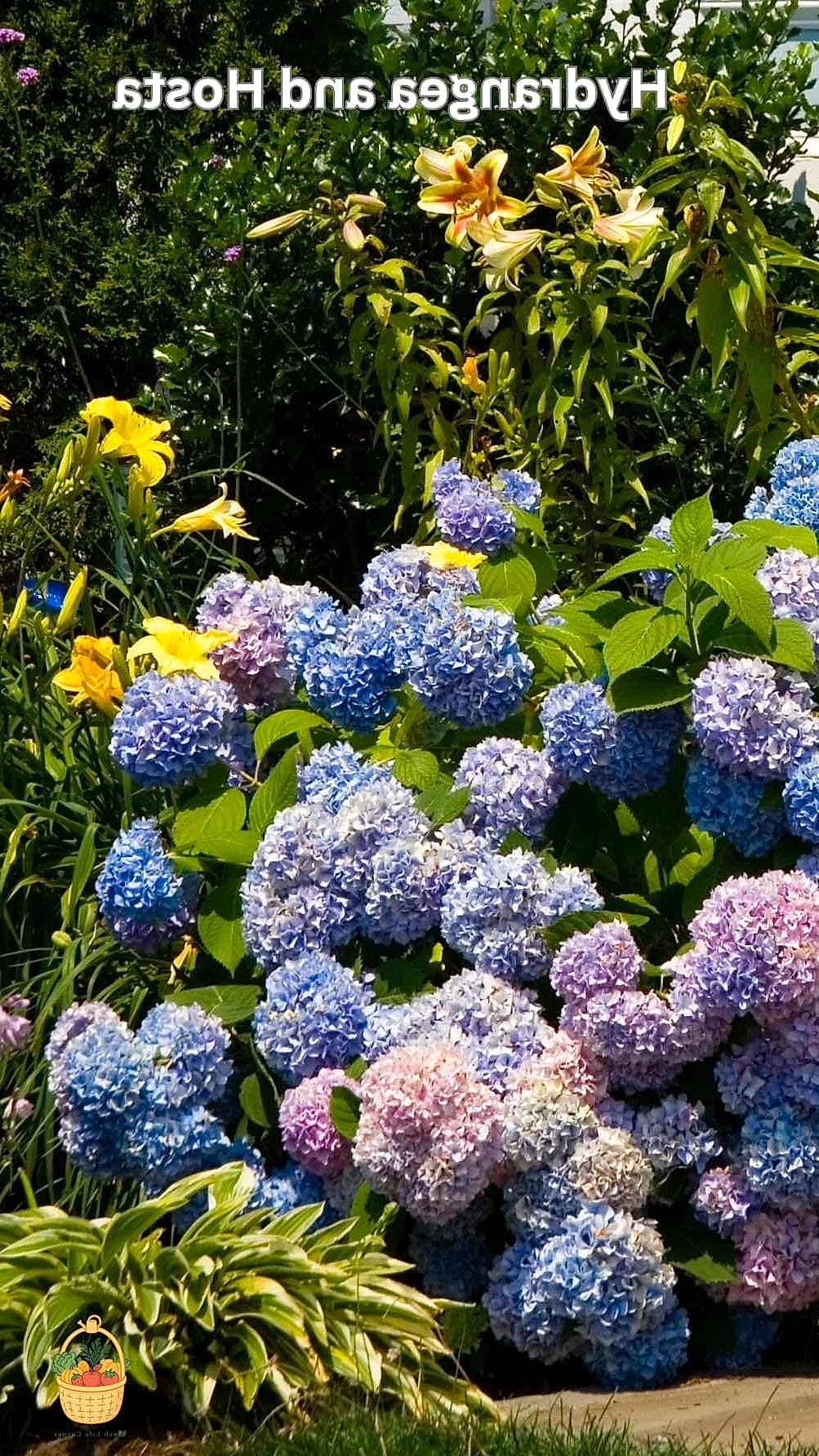
- Daylilies
- Coneflowers (Echinacea)
- Black-Eyed Susan
- Salvia
- Catmint (Nepeta)
- Hydrangea-Friendly Roses (Shrub Types)
- Peonies
- Lavender
- Alliums
- Foamflower (Tiarella)
- Lungwort (Pulmonaria)
- Sweet Woodruff
- Ligularia
- Toad Lily
- Brunnera
- Dogwood (Shrub or Tree Form)
- Ornamental Sedum (Autumn Joy and Similar Varieties)
29 Plants Pair Hydrangeas That Actually Work
Hydrangeas are one of those shrubs that do a lot of heavy lifting in a garden bed, but even the showiest bloomer can look a little lonely standing on its own. Pairing hydrangeas with the right companions fills out your borders, extends your bloom season, and gives those big mophead or lacecap blooms something interesting to play off of. Below are 29 plants that actually pair well with hydrangeas, based on shared growing needs, color contrast, and texture. Whether you’re working with a shady corner or a sunnier mixed border, there’s something here for your setup.
Hostas
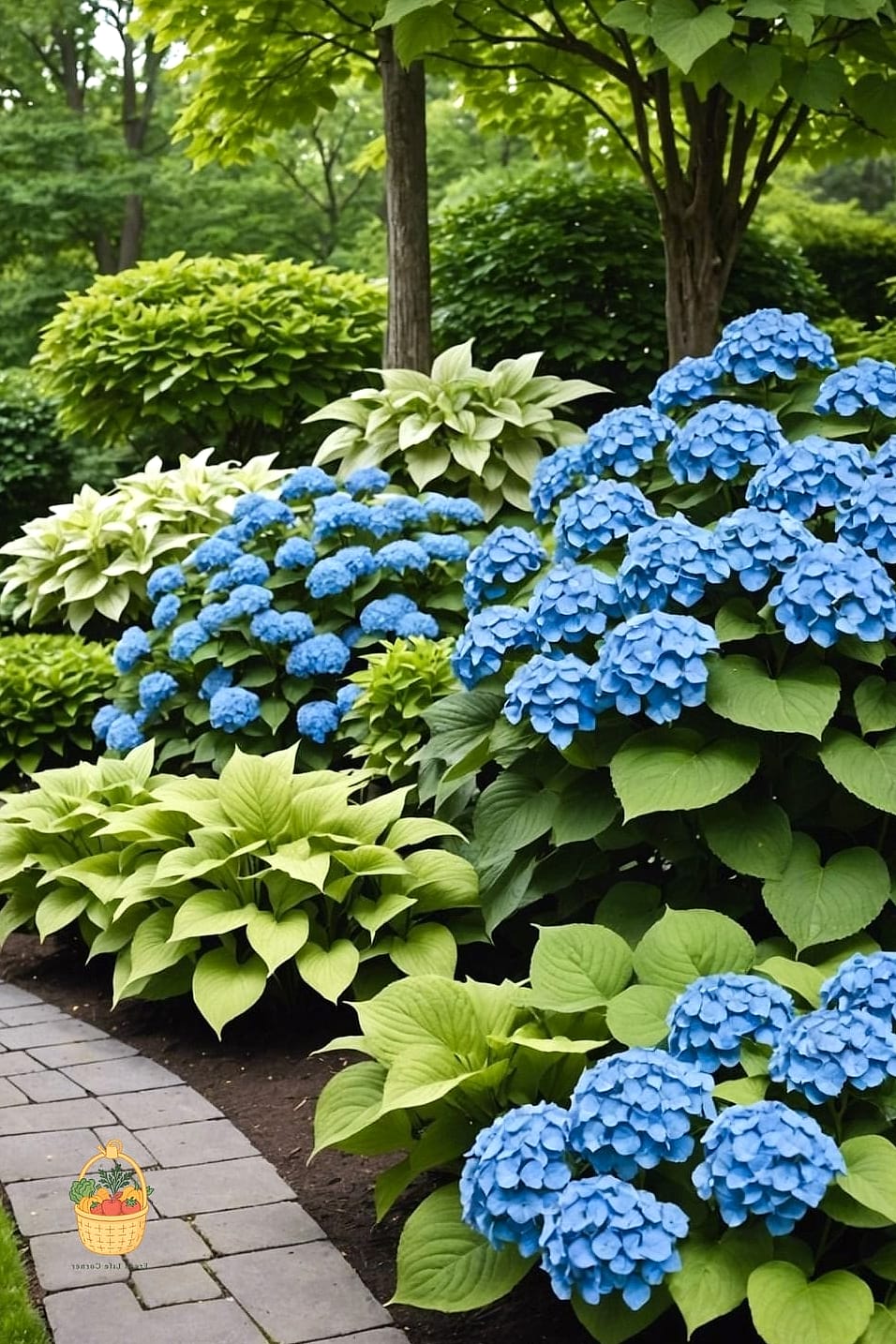
Hostas are the classic hydrangea companion for a reason. Their broad, textured leaves in shades of blue-green, chartreuse, or variegated cream contrast beautifully with hydrangea’s rounder blooms and foliage. They thrive in partial to full shade, prefer rich, well-draining soil, and stay fairly slow-growing, which means low maintenance once established. Both plants like consistent moisture, so they share a watering schedule easily. Slugs can be an issue, so keep an eye out and use natural pest control like diatomaceous earth if needed. This pairing works in USDA zones 3 through 9.
Ferns
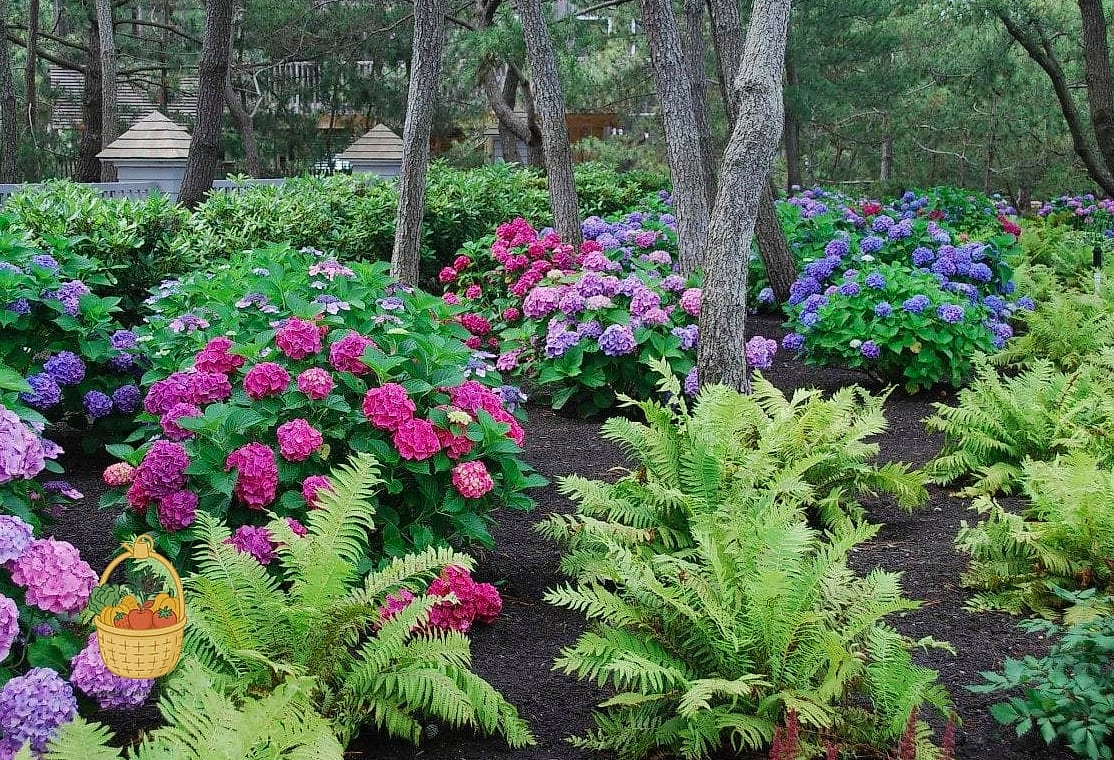
Ferns bring soft, feathery texture that softens the visual weight of hydrangea blooms. Japanese painted fern and ostrich fern both do well in the same partial to deep shade conditions hydrangeas enjoy. They like consistently moist, humus-rich soil and benefit from a layer of mulch to retain moisture. Ferns are slow to moderate growers and rarely bothered by deer or rabbits, which is a nice bonus. This combo feels like a woodland garden without much effort.
Astilbe
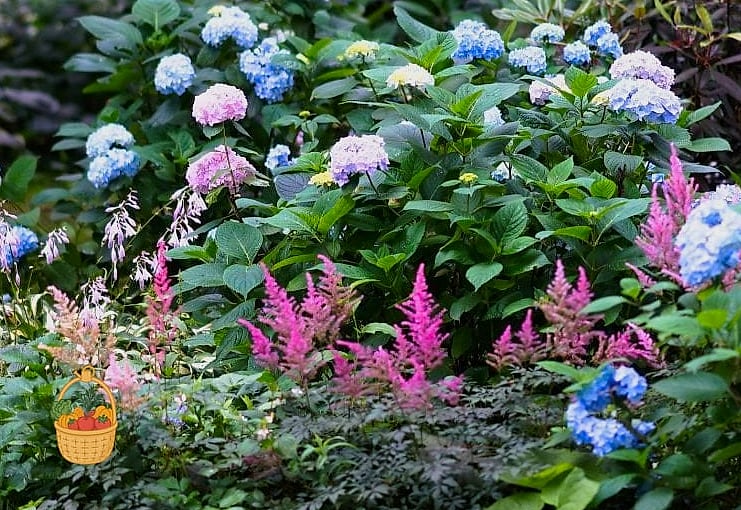
Astilbe’s plume-like flower spikes add vertical interest that hydrangeas, with their rounder shape, don’t provide on their own. It likes partial shade and consistently moist, slightly acidic soil, which lines up nicely with most hydrangea varieties. Astilbe is deer resistant and pollinator-friendly, drawing in bees during its summer bloom window. Divide it every few years to keep it vigorous. Pink, white, and deep red astilbe varieties all play well against blue or pink hydrangea blooms.
Heuchera (Coral Bells)
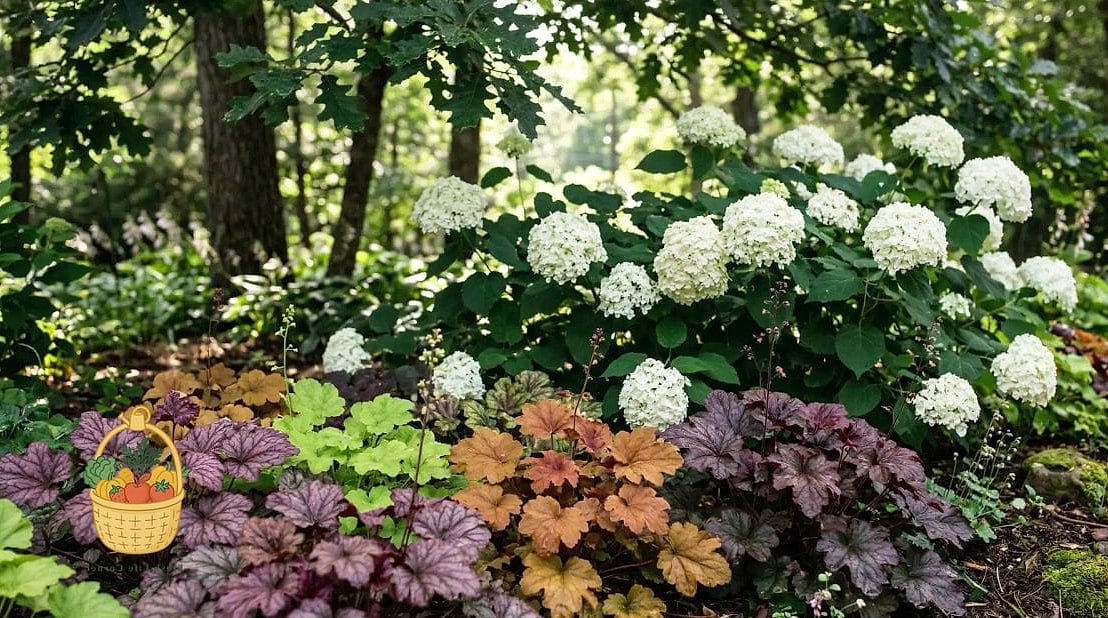
Heuchera, often called coral bells, offers some of the most varied foliage color in the shade garden — think deep purple, amber, or lime green. It’s a smaller, mounding plant that works nicely at the front edge of a hydrangea bed. Heuchera prefers well-draining soil and partial shade, and it’s fairly drought tolerant once established, unlike hydrangeas, so keep that in mind when placing it. It’s a great low-maintenance option for beginner gardeners.
Japanese Forest Grass
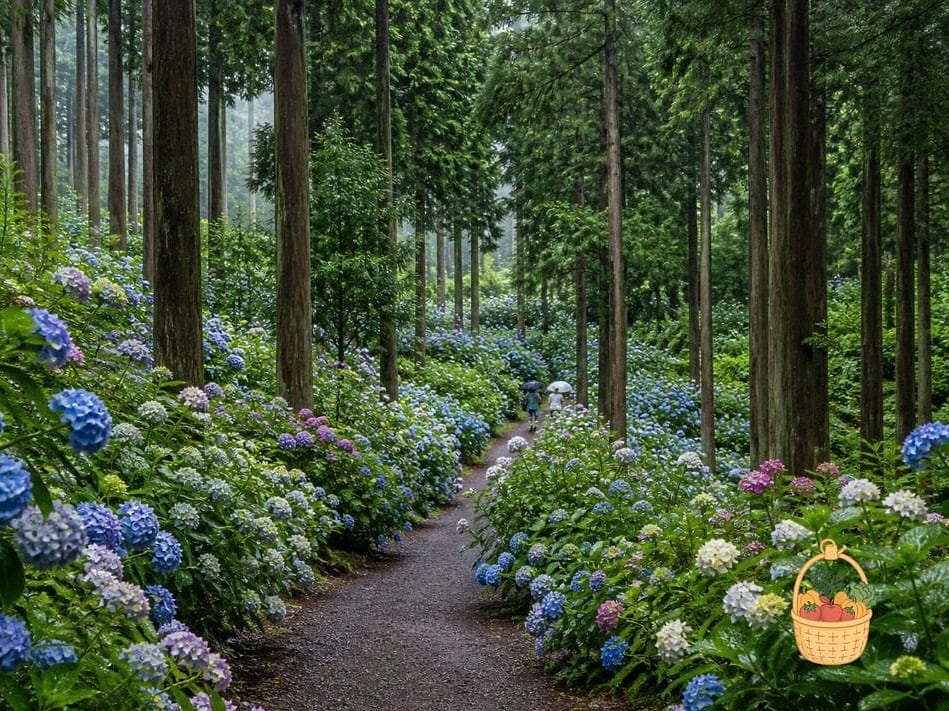
This ornamental grass has a graceful, cascading habit that adds movement next to a stiffer hydrangea shrub. It grows well in partial shade with moist, well-draining soil, and the golden variegated variety in particular lights up a shady corner. It’s slow-growing and rarely invasive, so you won’t have to worry about it taking over. Pair it near the base of panicle or bigleaf hydrangeas for a layered look.
Bleeding Heart
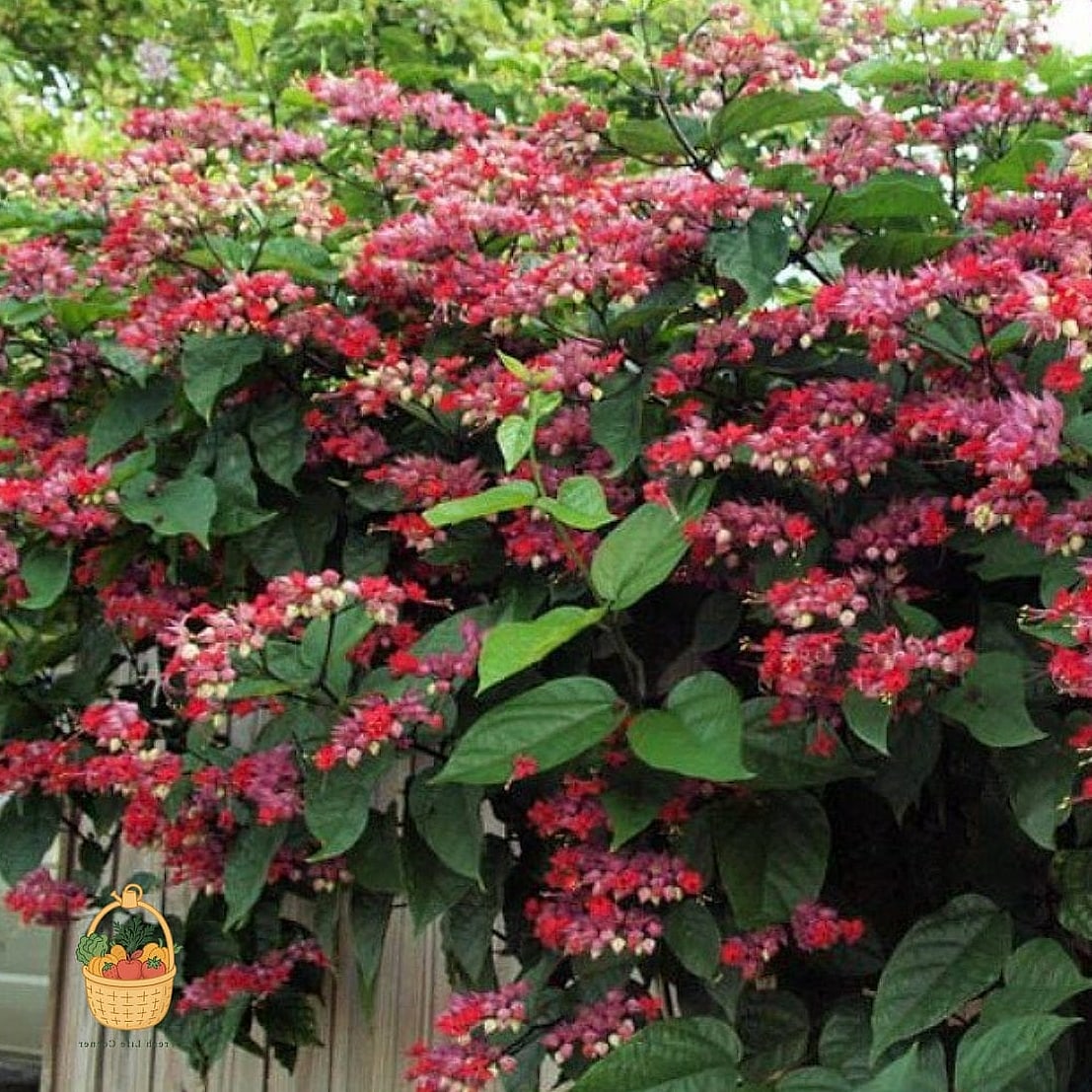
Bleeding heart’s arching stems of heart-shaped pink or white flowers bloom in spring, right before many hydrangeas start their show, which helps stretch your bloom season. It likes partial shade and rich, moist soil, matching hydrangea’s preferences closely. After flowering, the foliage dies back in summer heat, so plan for something to fill that gap. It’s a lovely, slightly old-fashioned plant that a lot of gardeners have genuine nostalgia for.
Hakone Grass and Sedge Combos Aside, Try Carex
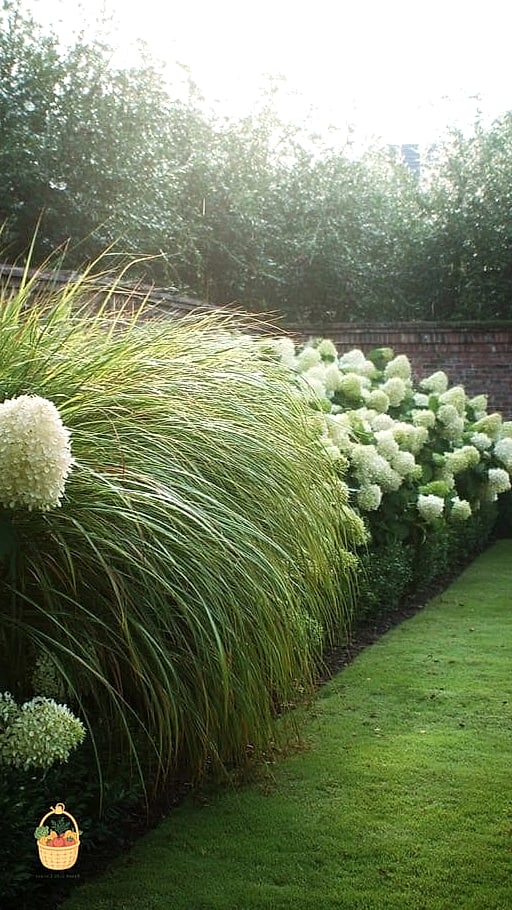
Carex, or sedge, is an underrated shade grass that forms neat, arching clumps. It tolerates a wide range of moisture levels, from damp soil to average garden conditions, which makes it flexible near hydrangeas that like consistent water. Varieties like ‘Ice Dance’ offer variegated foliage that brightens dark corners. It’s low-maintenance, deer resistant, and works well in both borders and containers.
Foxglove
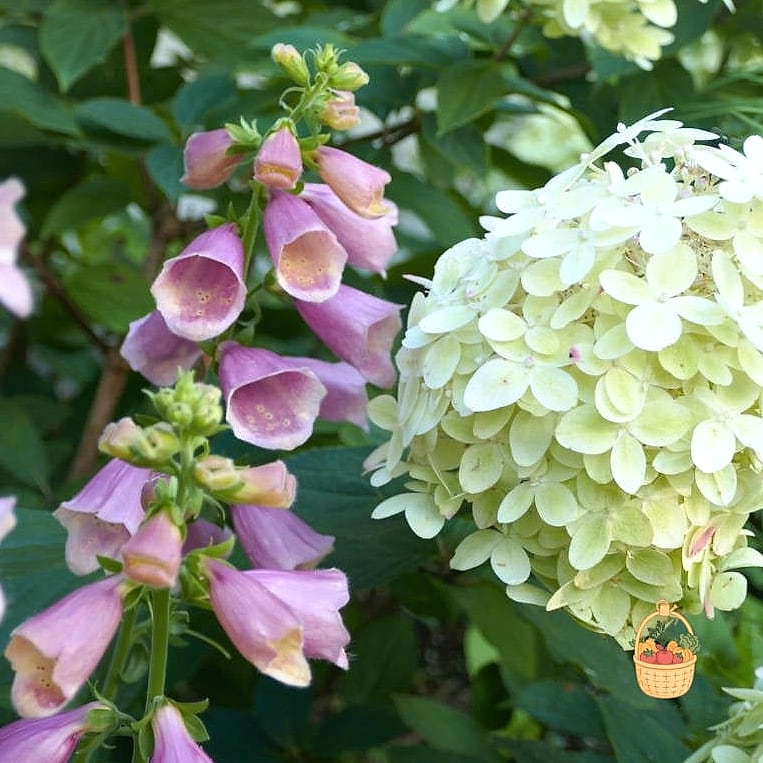
Foxglove’s tall, spiky flower stalks are a great vertical counterpoint to hydrangea’s rounded form. It prefers partial shade to filtered sun and rich, well-draining soil. Foxglove is technically a biennial or short-lived perennial, so it self-seeds readily if you let the spent flowers go to seed. It’s toxic if ingested, so keep that in mind around pets or small children. Bees absolutely love it.
Japanese Anemone
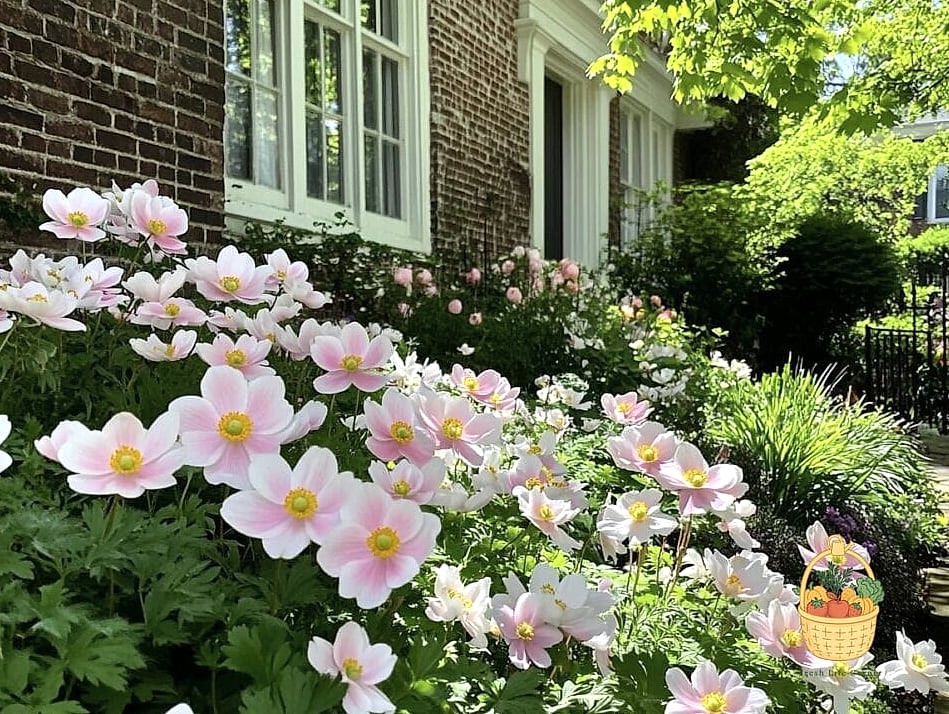
Japanese anemone blooms in late summer into fall, right when many hydrangeas are winding down or shifting color, which keeps the bed interesting longer. It likes partial shade and moist, well-draining soil, and it spreads by rhizomes over time, so give it a little room. The simple, saucer-shaped flowers in white or pink feel effortlessly elegant next to hydrangea’s fuller blooms. It’s a great pick for extending fall interest.
Boxwood
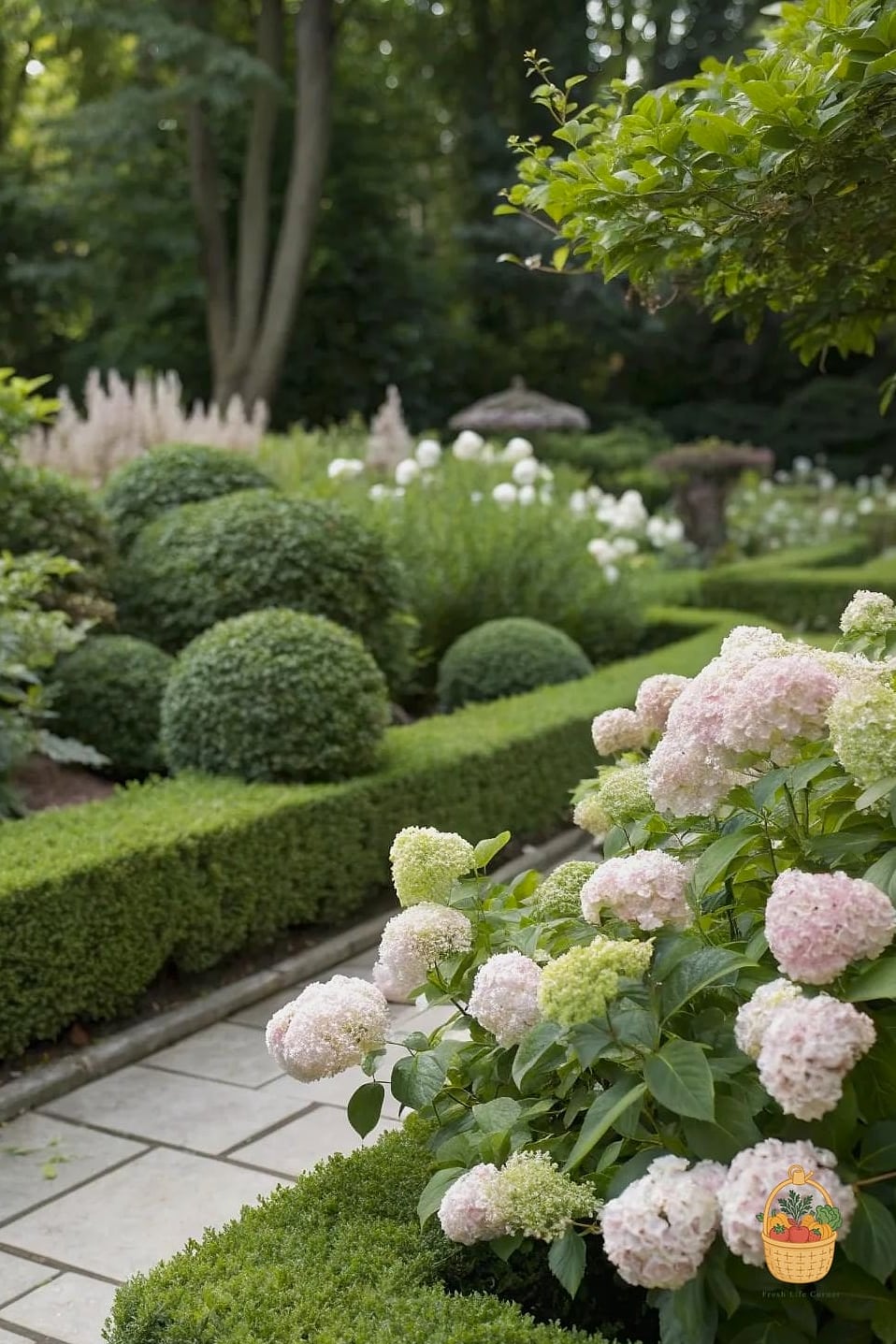
Boxwood brings structure and year-round green to a bed that might otherwise go bare in winter after hydrangeas drop their leaves. It tolerates full sun to partial shade and prefers well-draining soil, and it’s fairly slow-growing, so a little patience goes a long way. Clipped into low hedges, boxwood frames hydrangea plantings beautifully in more formal garden designs. It’s also deer resistant, which matters a lot in some neighborhoods.
Azaleas
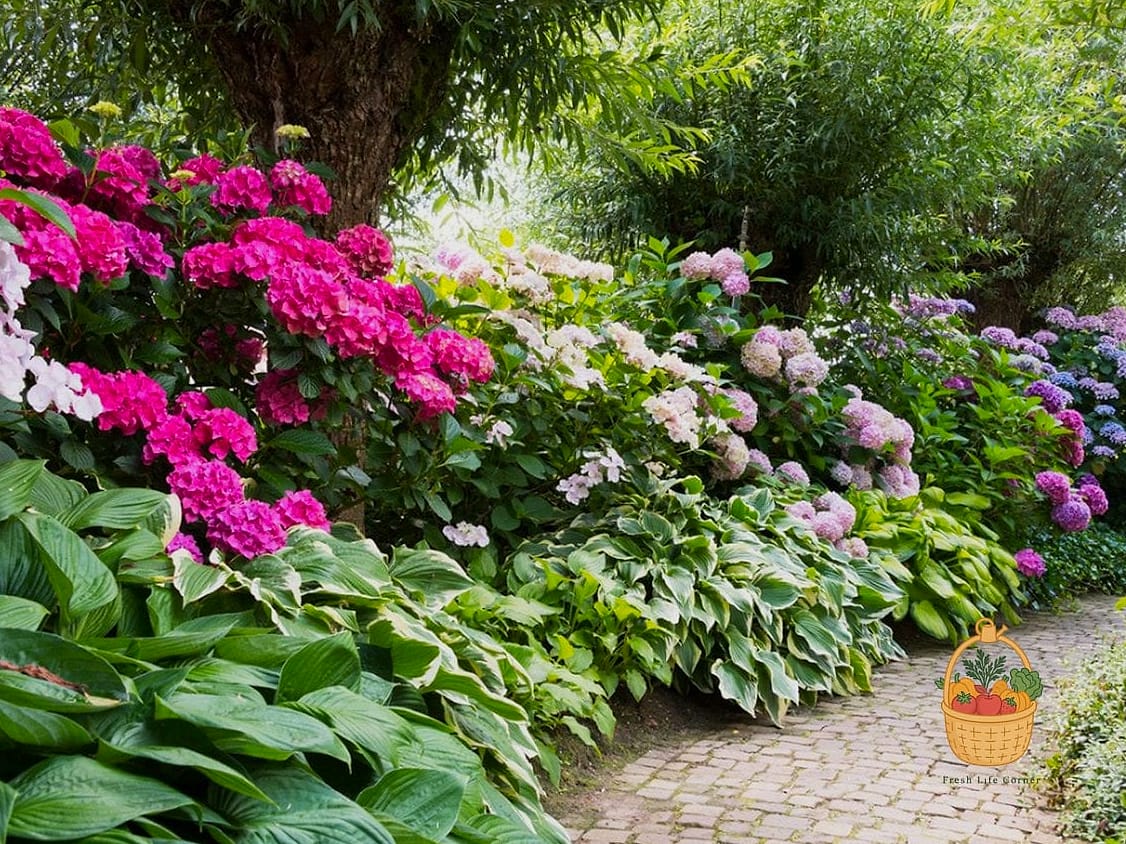
Azaleas and hydrangeas share a love of acidic, well-draining soil, which makes them natural companions. Both bloom on a similar spring-to-summer timeline, though azaleas typically flower earlier, giving you a nice succession of color. They like partial shade, similar to many hydrangea varieties, and benefit from an acidic fertilizer formulated for rhododendrons. This pairing is especially popular in woodland-style gardens across zones 6 through 9.
Rhododendrons
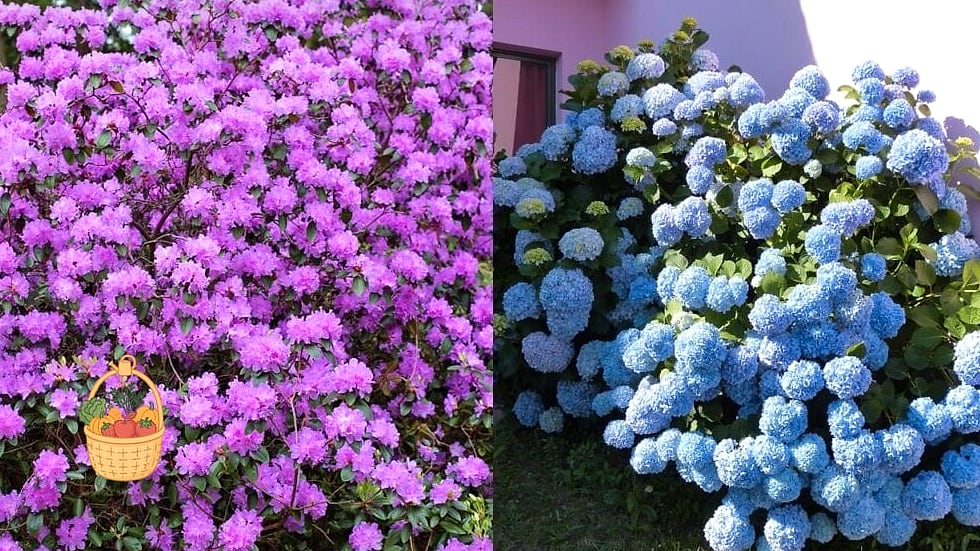
Rhododendrons are close cousins to azaleas and share the same acidic soil and partial shade preferences as hydrangeas. Their large, dramatic blooms in spring provide an early color show before hydrangeas take over for summer. Both plants appreciate a good layer of mulch to keep roots cool and moist. Just give rhododendrons enough space, since some varieties get quite large over time.
Camellias
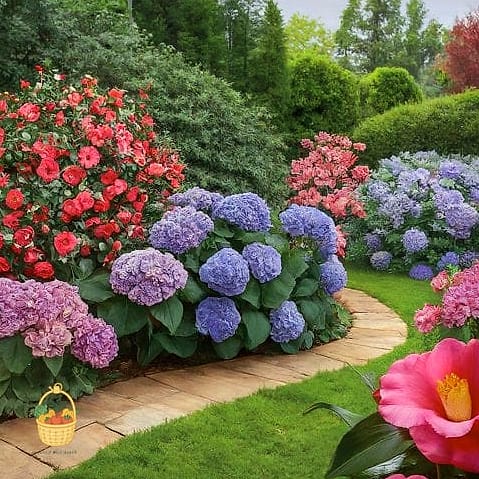
Camellias offer glossy, evergreen foliage and elegant blooms that show up in fall or winter depending on the variety, which fills the gap when hydrangeas are dormant. They prefer partial shade and slightly acidic, well-draining soil, much like hydrangeas do. Camellias are a bit more particular about drainage, so avoid heavy clay soil without amendment. This pairing works especially well in mild, humid climates.
Boston Ivy or Climbing Hydrangea as a Backdrop
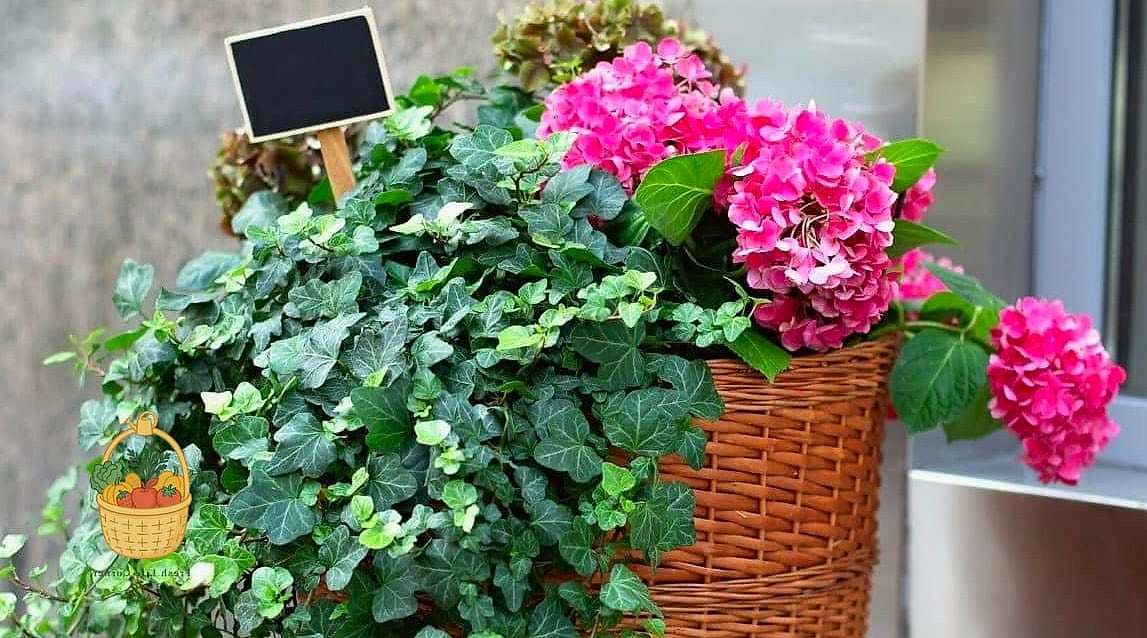
Using a climbing vine like Boston ivy or true climbing hydrangea against a wall or fence behind a hydrangea shrub adds vertical layering without competing for the same ground space. These vines tolerate partial shade and average soil, and climbing hydrangea in particular shares nearly identical care needs with its shrub relatives. It’s a slower establishing plant, so be patient the first couple of years. Once it takes off, it’s genuinely one of the most dramatic vertical features you can grow.
Daylilies
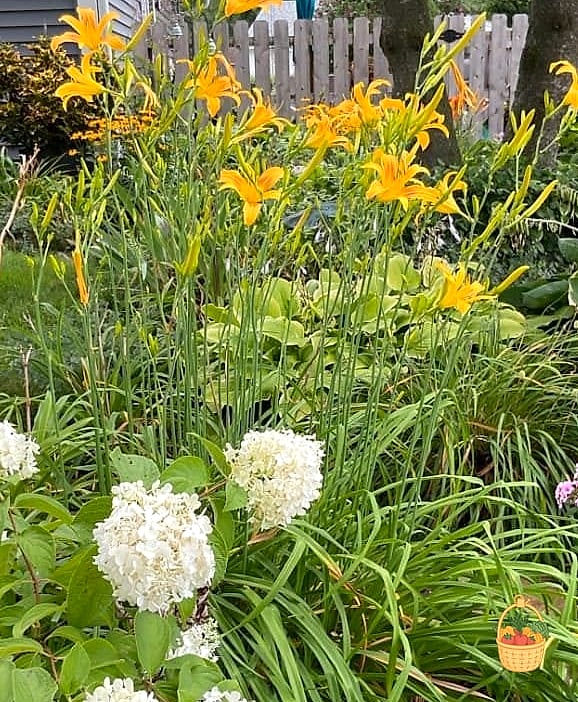
Daylilies are tough, adaptable, and bloom prolifically through summer, overlapping nicely with hydrangea’s flowering window. They tolerate full sun to partial shade and aren’t picky about soil, though well-draining soil helps prevent rot. Daylilies are drought tolerant once established, which makes them a forgiving companion if you sometimes forget to water the back corner of the bed. They come in nearly every color, so matching them to your hydrangea’s hue is easy.
Coneflowers (Echinacea)
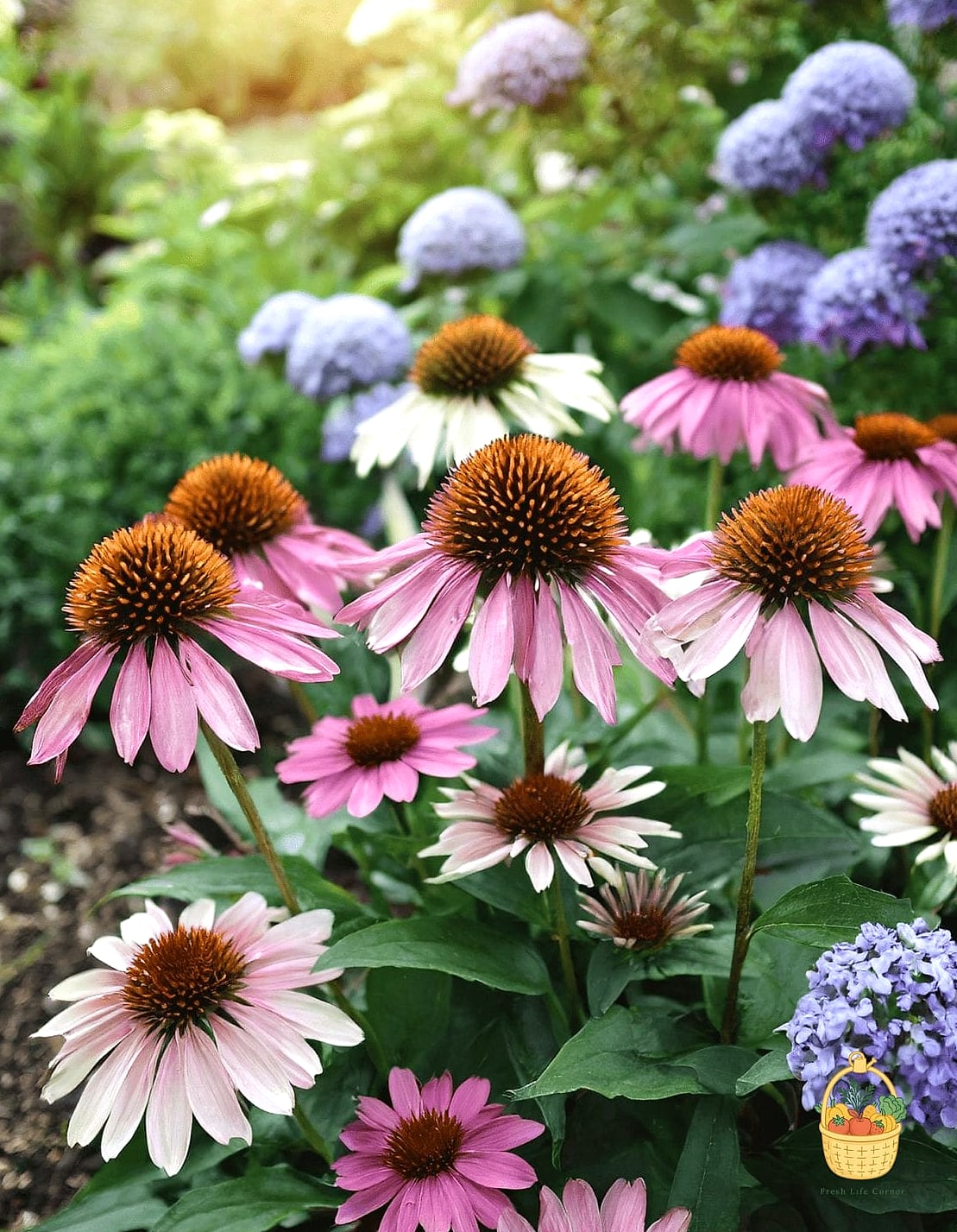
Coneflowers bring a wilder, prairie feel that contrasts nicely with hydrangea’s more manicured look. They prefer full sun to light shade and well-draining soil, and they’re quite drought tolerant, so place them where the soil dries out a bit faster than the hydrangea bed itself. Pollinators, especially bees and butterflies, flock to coneflowers all summer long. They’re also deer resistant, which is always a relief.
Black-Eyed Susan
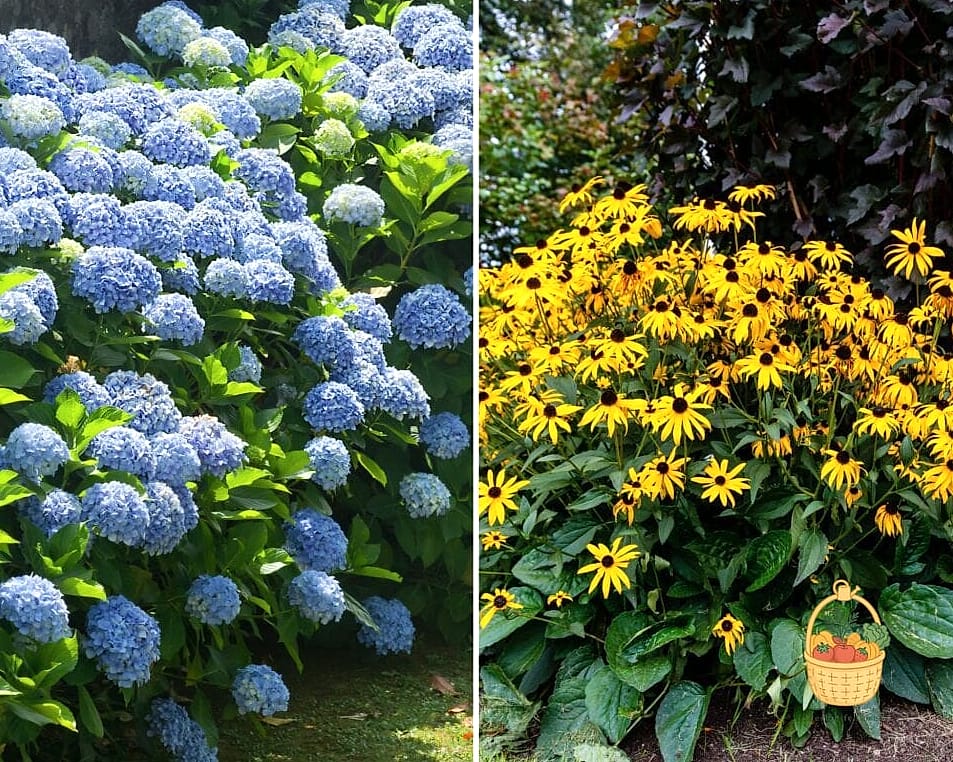
Black-eyed Susan’s cheerful yellow petals and dark centers add a pop of warm color against blue or purple hydrangea blooms. It grows well in full sun to partial shade and tolerates average, well-draining soil without much fuss. This plant is fast-growing and often self-seeds, filling in gaps in a border over a season or two. It’s a reliable, low-maintenance choice for gardeners who want color without much hand-holding.
Salvia
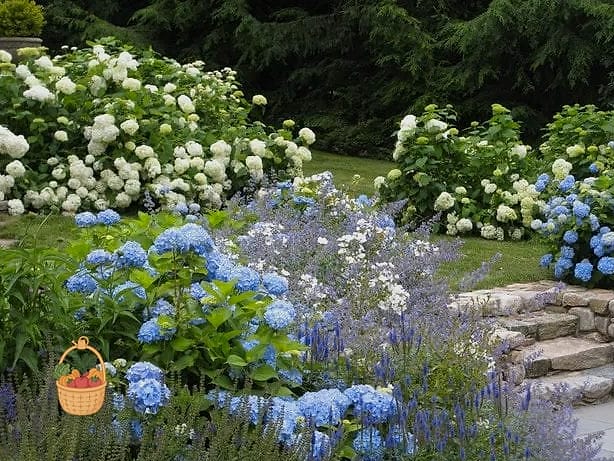
Salvia’s spiky purple or blue flower stalks add vertical texture and draw in pollinators throughout the growing season. It prefers full sun to partial shade and well-draining soil, and it’s notably drought tolerant, so it pairs best with hydrangeas that get consistent but not soggy moisture. Deadheading spent blooms encourages more flowers through summer. It’s also considered deer and rabbit resistant, a nice practical bonus.
Catmint (Nepeta)
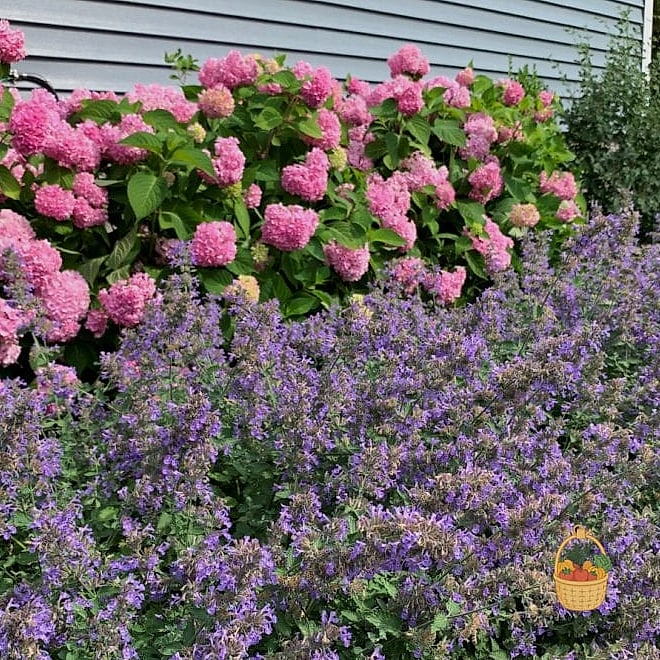
Catmint forms soft, silvery mounds covered in small purple-blue flowers most of the summer, and it looks lovely spilling over the edge of a border in front of hydrangeas. It tolerates full sun to partial shade and prefers well-draining, even slightly poor soil, so it needs less fuss than the hydrangea it’s paired with. It’s quite drought tolerant and deer resistant. Bees adore it, and trimming it back after the first flush encourages a second bloom.
Hydrangea-Friendly Roses (Shrub Types)
Shrub roses, especially disease-resistant modern varieties, can work well near hydrangeas in a mixed border with full sun to partial shade. Both like rich, well-draining soil and benefit from regular feeding with a slow-release fertilizer through the growing season. Give roses enough air circulation since they’re more prone to fungal issues than hydrangeas are. The combination of rose blooms and hydrangea’s fuller form makes for a classic cottage garden look.
Peonies
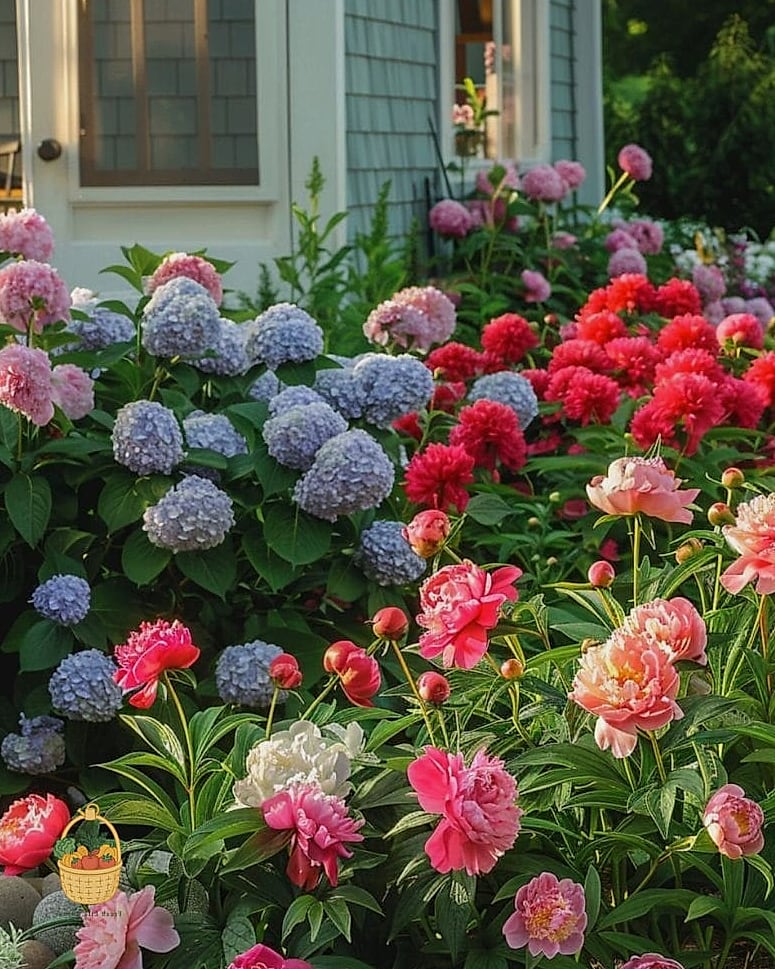
Peonies bloom in late spring, just ahead of most hydrangeas, offering an early season of color before the hydrangeas take their turn. They like full sun to partial shade and rich, well-draining soil, and they’re notably long-lived once established, sometimes outliving the gardener who planted them. Avoid planting too deep, since peonies are picky about crown depth. Their lush, ruffled blooms pair beautifully with hydrangea foliage even after the peony flowers fade.
Lavender
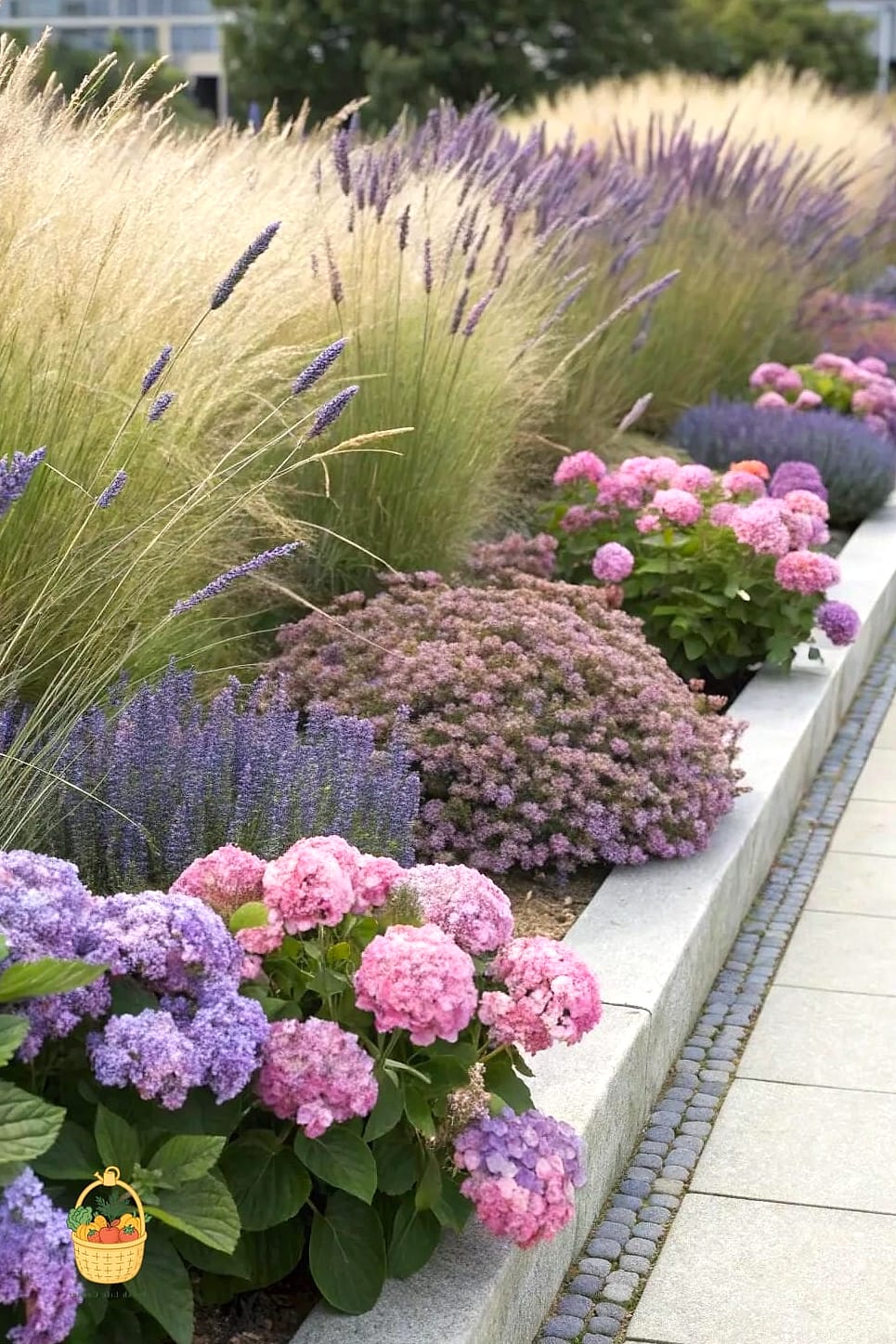
Lavender likes it drier and sunnier than hydrangeas typically prefer, so this pairing works best at the sunnier, better-drained edge of a hydrangea bed rather than right up against it. It thrives in full sun and sandy, well-draining soil, and it’s quite drought tolerant. The silvery foliage and purple spikes add a nice textural and color contrast. Just be careful not to overwater it if it’s near irrigation meant for hydrangeas.
Alliums
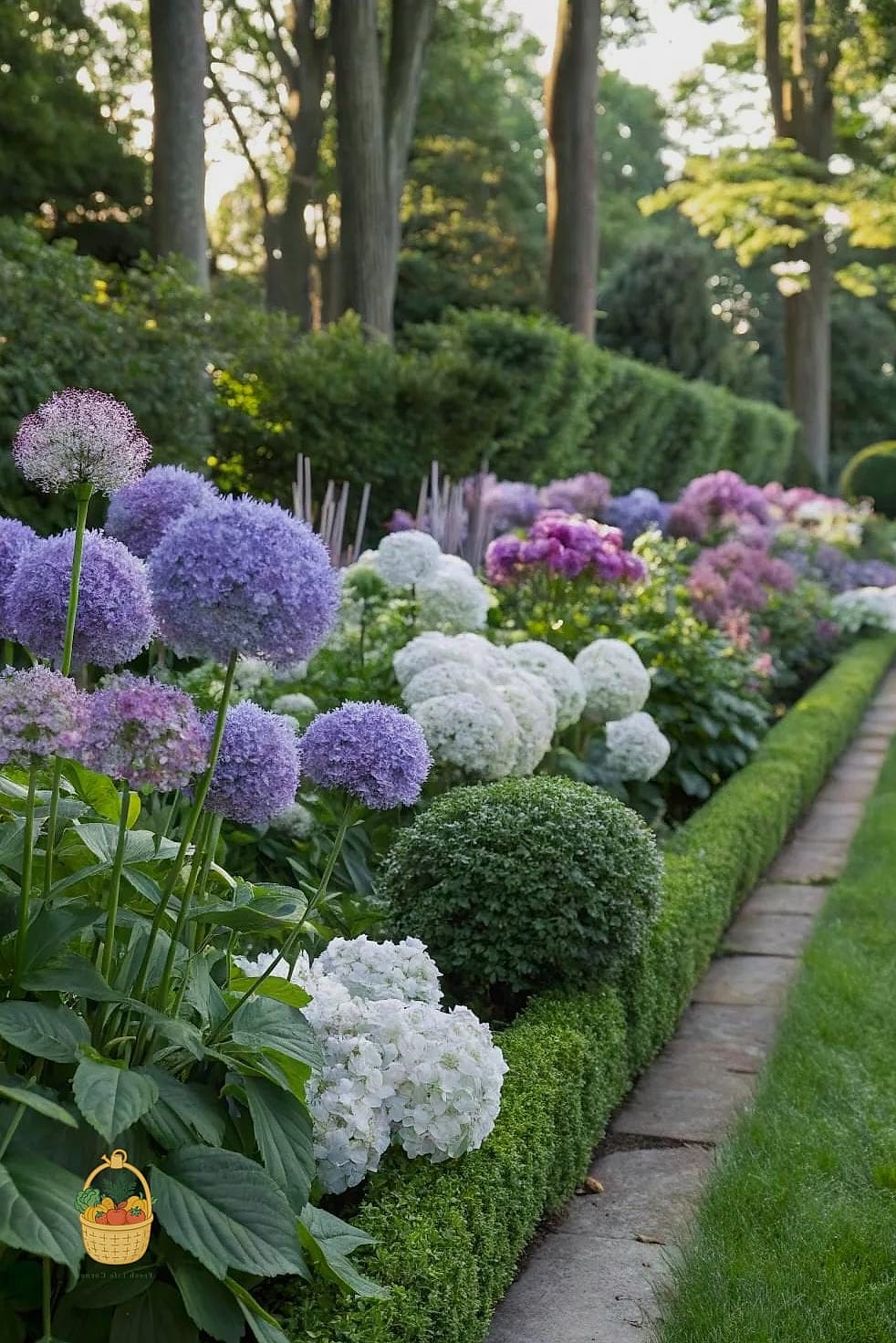
Alliums bring a fun, architectural element with their round flower heads perched on tall, slender stems. They prefer full sun to partial shade and well-draining soil, and they’re grown from bulbs, so plant them in fall for spring or early summer blooms. Their globe shape is a playful contrast to hydrangea’s fuller clusters. Deer and rabbits tend to leave alliums alone, which is a nice perk for less pest pressure overall.
Foamflower (Tiarella)
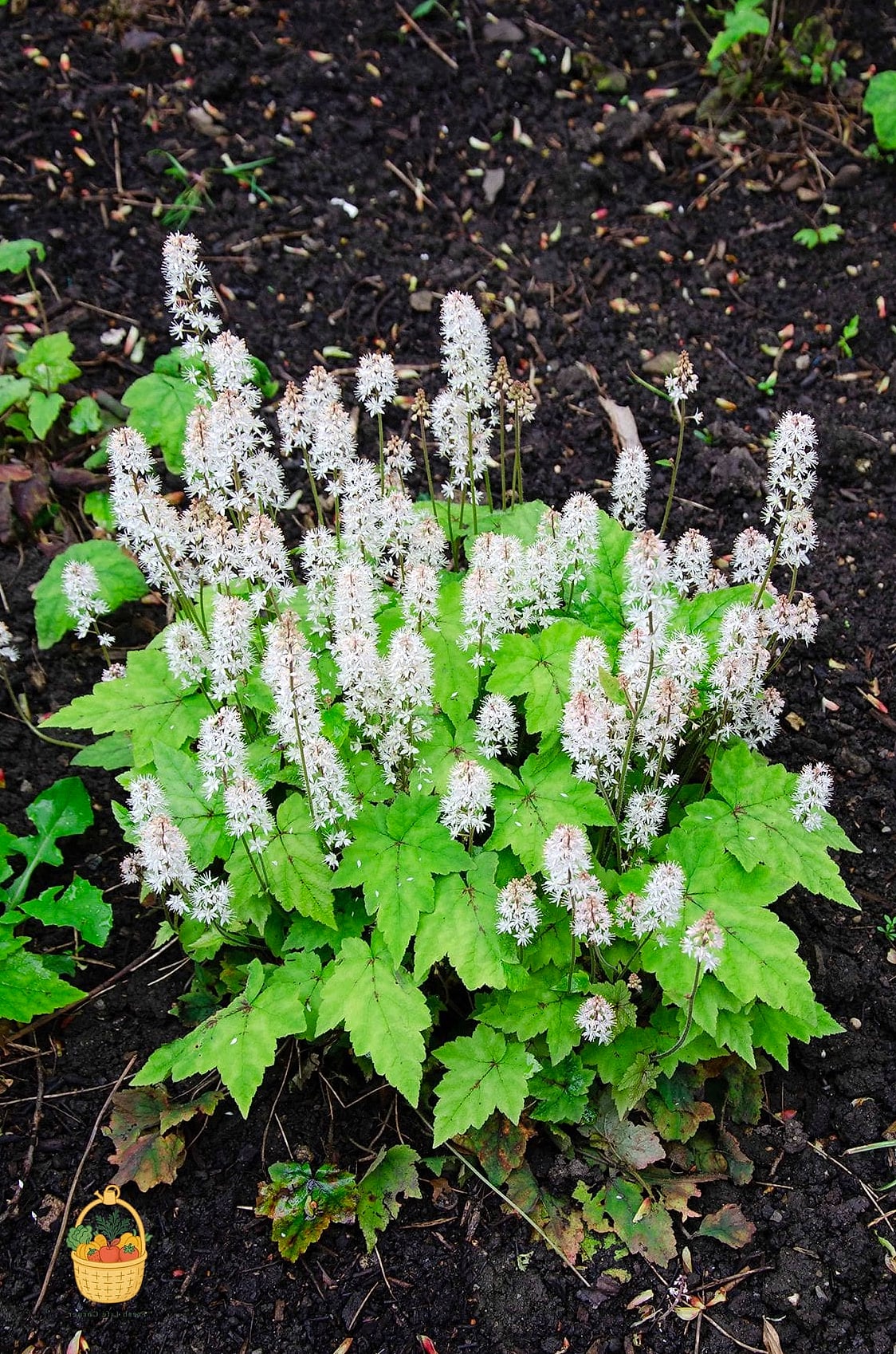
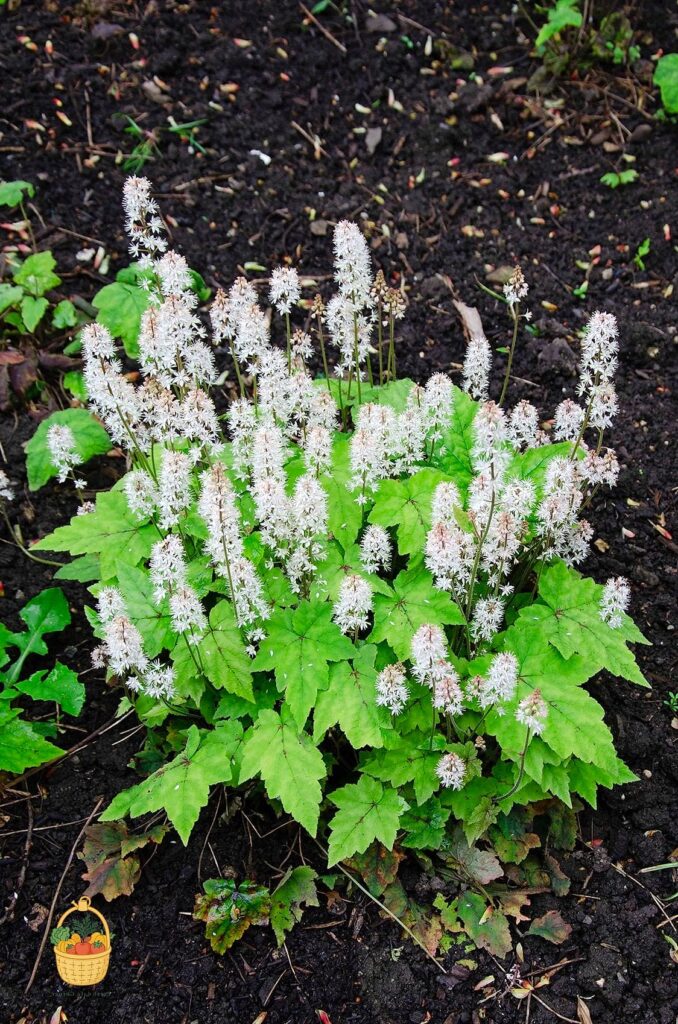
Foamflower is a low, spreading groundcover with delicate white or pink flower spikes in spring, perfect for filling in bare soil at the base of hydrangeas. It likes partial to full shade and moist, well-draining soil rich in organic matter. It spreads by runners, so it fills a bed as ground cover fairly quickly without becoming invasive. This is a great pick if you want to suppress weeds around your hydrangea’s root zone.
Lungwort (Pulmonaria)
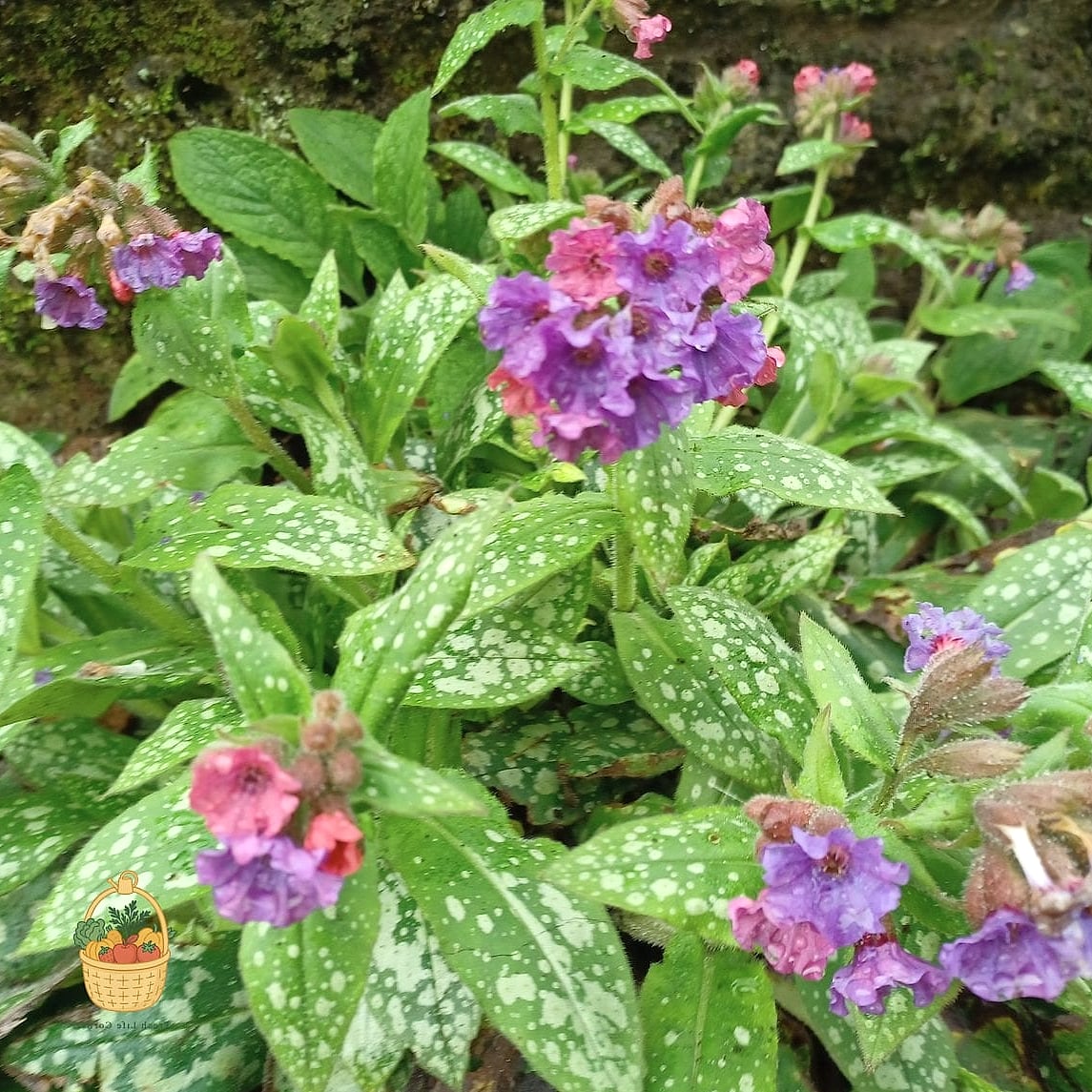
Lungwort’s spotted, silvery-green leaves offer year-round textural interest, even when it’s not in bloom. It prefers partial to full shade and consistently moist, well-draining soil, aligning closely with hydrangea’s needs. Its small blue or pink flowers appear in early spring, giving pollinators an early food source. It’s a good pick for shady, woodland-style plantings alongside hydrangeas.
Sweet Woodruff
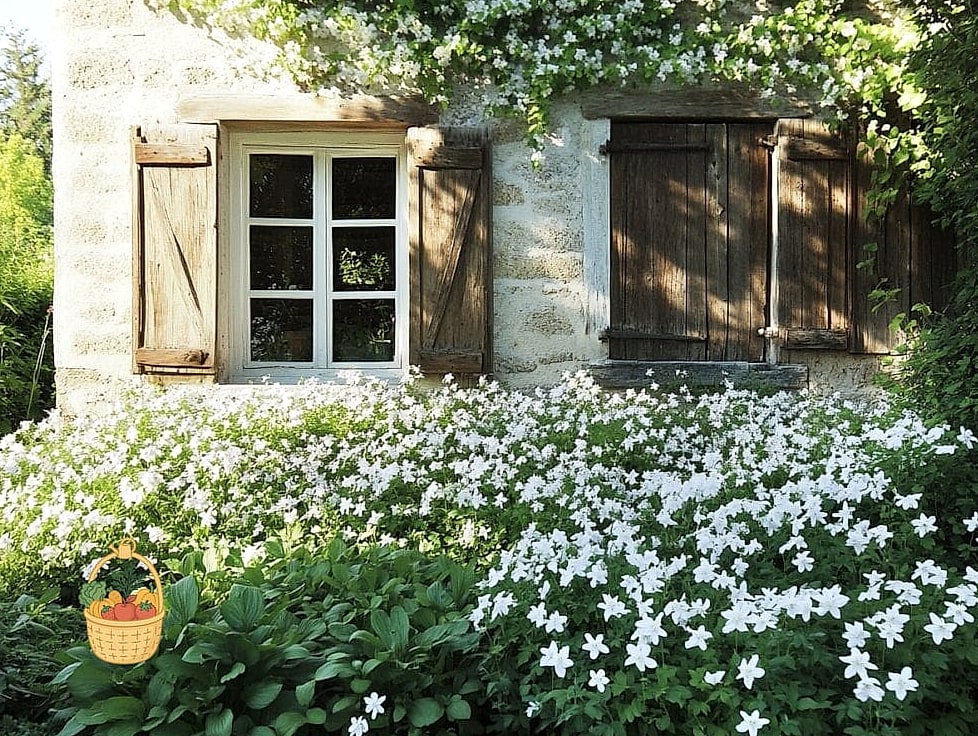
Sweet woodruff is a low, spreading groundcover with tiny white star-shaped flowers and a light, fresh fragrance. It grows well in partial to full shade and moist, well-draining soil, making it an easy match for hydrangea beds. It spreads readily, which is great for weed suppression but worth monitoring if you want to keep it contained. This plant has a gentle, cottage-garden charm that works in almost any shaded border.
Ligularia
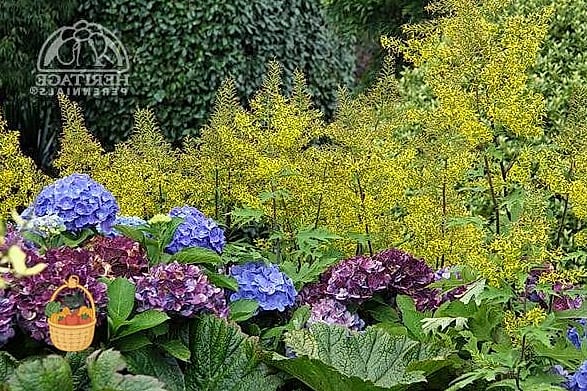
Ligularia has bold, dark foliage and tall spikes of yellow-orange flowers that create striking contrast against hydrangea’s typically cooler tones. It likes partial shade and consistently moist, even boggy, soil, so it’s a great pick if your hydrangea bed tends to stay damp. Slugs can be an issue here too, so plan accordingly. This is a dramatic, less common choice that instantly makes a shade garden feel more designed.
Toad Lily
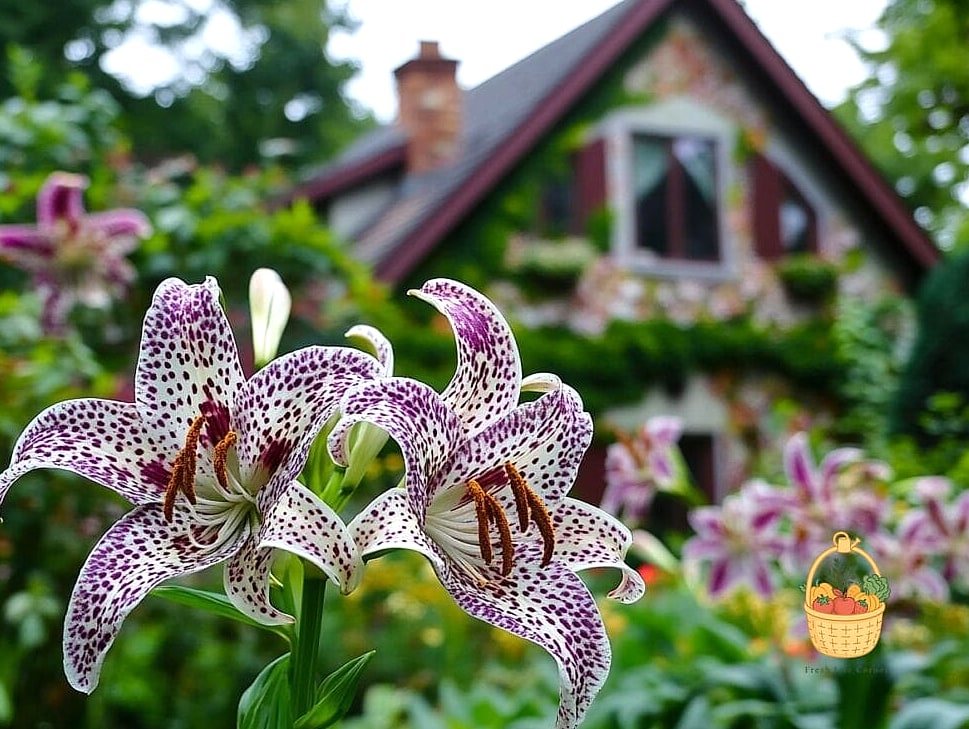
Toad lily blooms in late summer into fall with small, orchid-like speckled flowers, extending color into a season when hydrangeas may be fading. It prefers partial to full shade and rich, moist, well-draining soil. It’s a slower-growing perennial, so give it a couple of seasons to really fill out. This is a great pick for gardeners who want something a little unusual and conversation-starting.
Brunnera
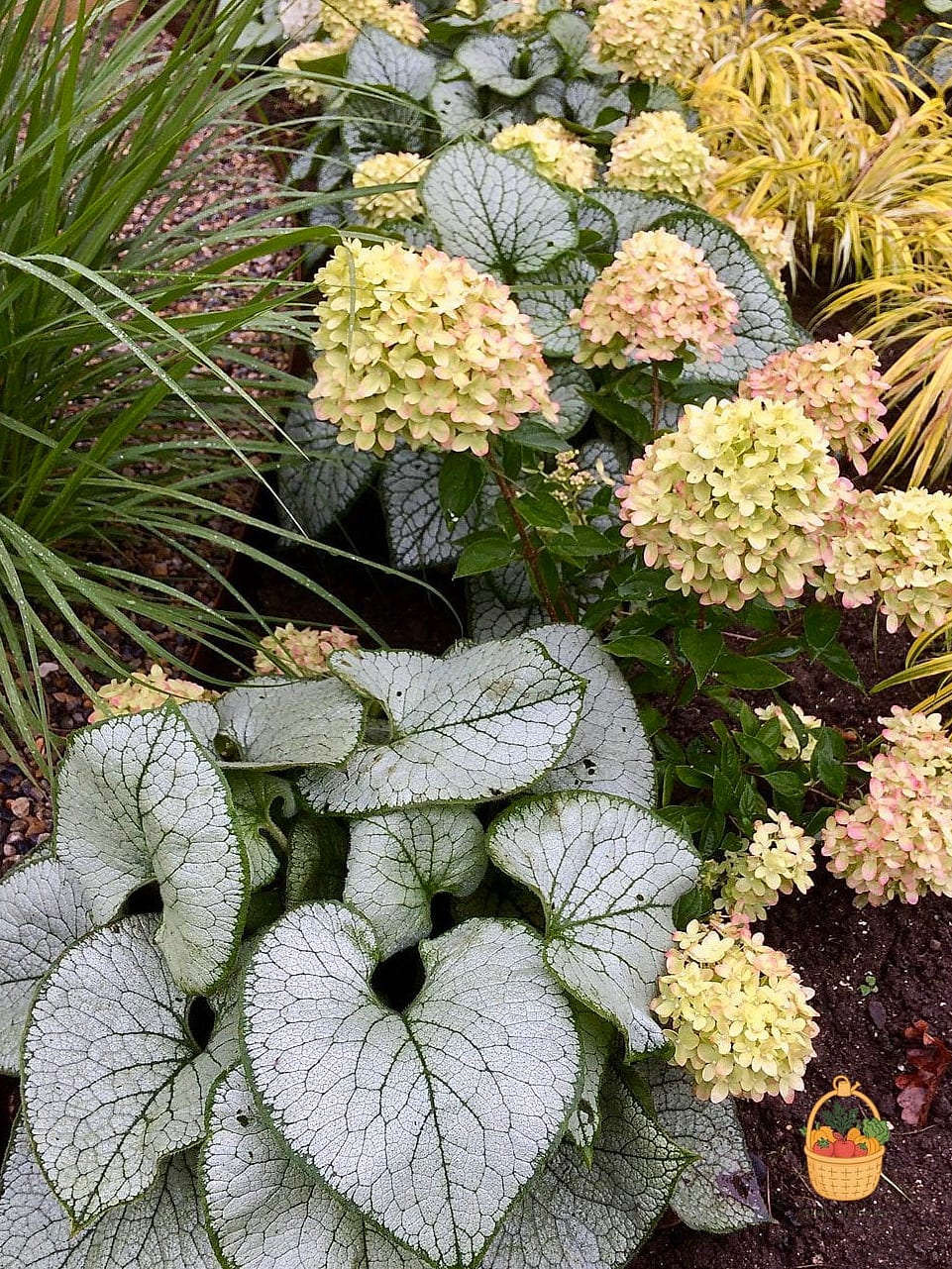
Brunnera, sometimes called false forget-me-not, has heart-shaped foliage, often silvery variegated, topped with small blue flowers in spring. It thrives in partial to full shade and moist, well-draining soil, matching hydrangea’s watering needs closely. It’s fairly slow to establish but very low-maintenance once settled in. The variegated varieties in particular brighten up darker corners of a hydrangea border.
Dogwood (Shrub or Tree Form)
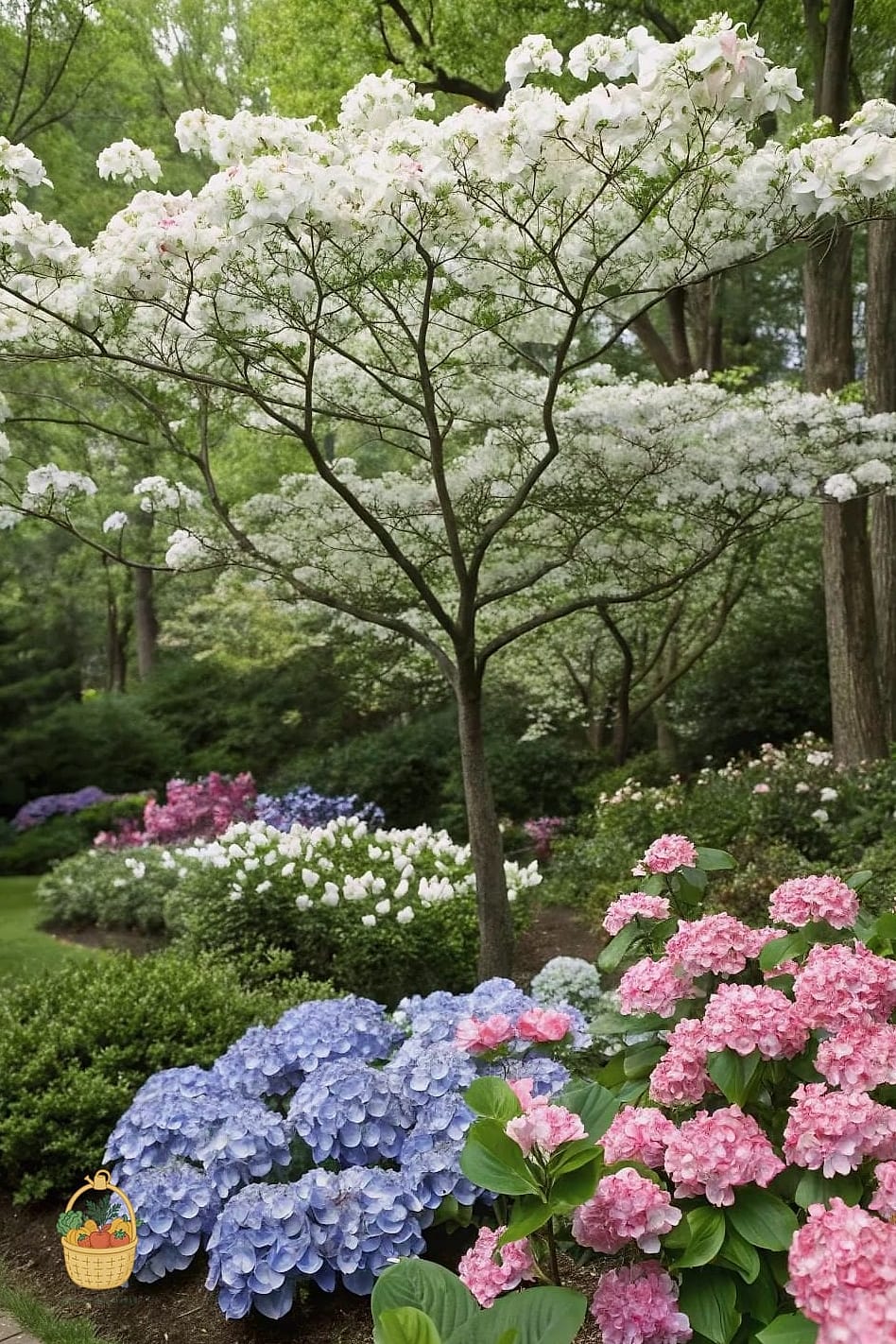
A dogwood, whether the tree form or a shrub type like red-twig dogwood, gives structural height and seasonal interest that complements a hydrangea planting well. It tolerates partial shade to full sun and prefers moist, well-draining soil, similar to hydrangea preferences. Red-twig dogwood in particular offers striking winter stem color once the leaves drop. This pairing works especially well as a backdrop in a layered shrub border.
Ornamental Sedum (Autumn Joy and Similar Varieties)
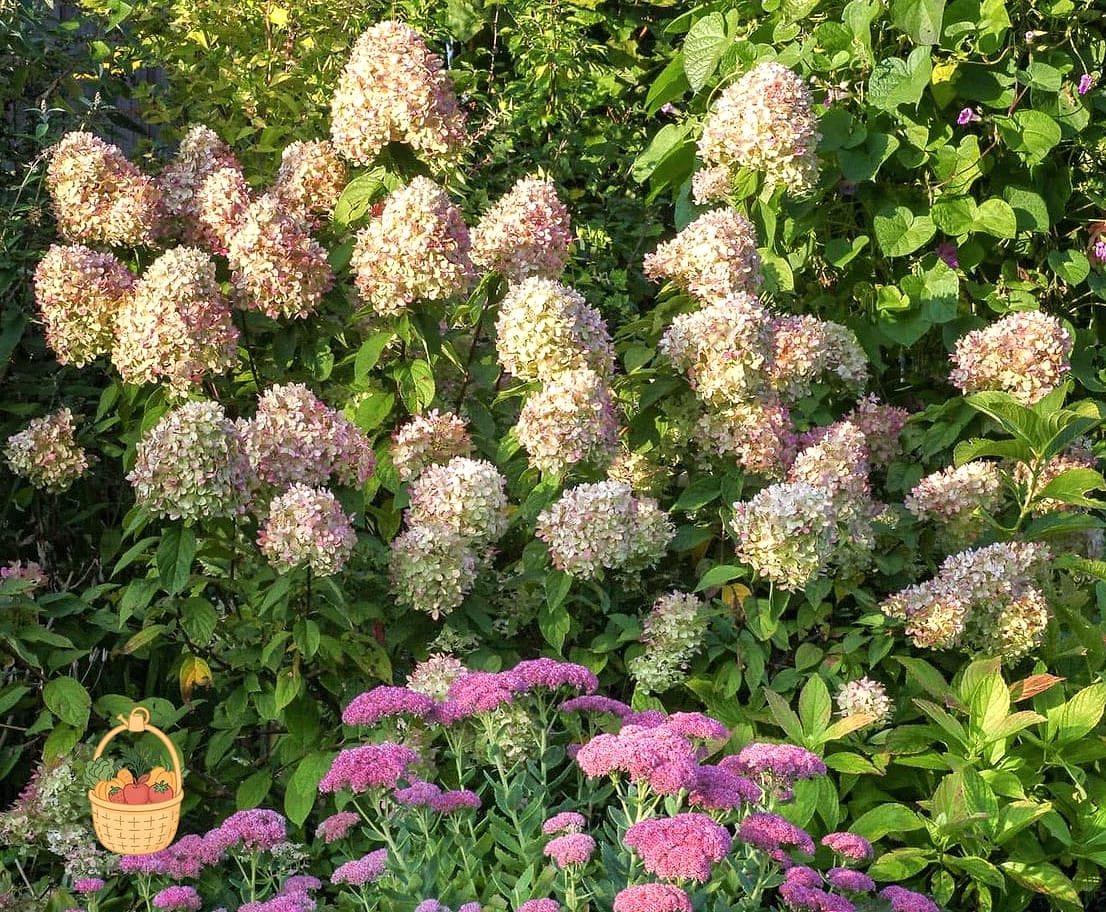
Sedum brings succulent, drought-tolerant foliage and late-season flower clusters that shift from pink to rusty red as they age, right around when hydrangea blooms are starting to fade and take on their own antique color. It prefers full sun to light shade and well-draining soil, and it needs noticeably less water than hydrangeas, so plant it at the drier edge of the bed. It’s a favorite of late-season pollinators and adds a nice textural contrast with its fleshy leaves.
Building a bed around hydrangeas really comes down to matching moisture needs, layering bloom times, and mixing up textures so nothing feels flat. Some of these companions, like hostas and ferns, are practically a given for shady spots, while others, like sedum or lavender, work best at the sunnier, drier fringes of your planting. Start with two or three from this list, see how they settle in with your hydrangeas over a season, and build out from there. Gardens like this tend to improve with a little trial and error anyway, so don’t feel like you need to get it perfect on the first try.